

 Preview
 Send
Send Share
Share
 Details

 Download
 Similars
 X-Ray
X-Ray Diaporama
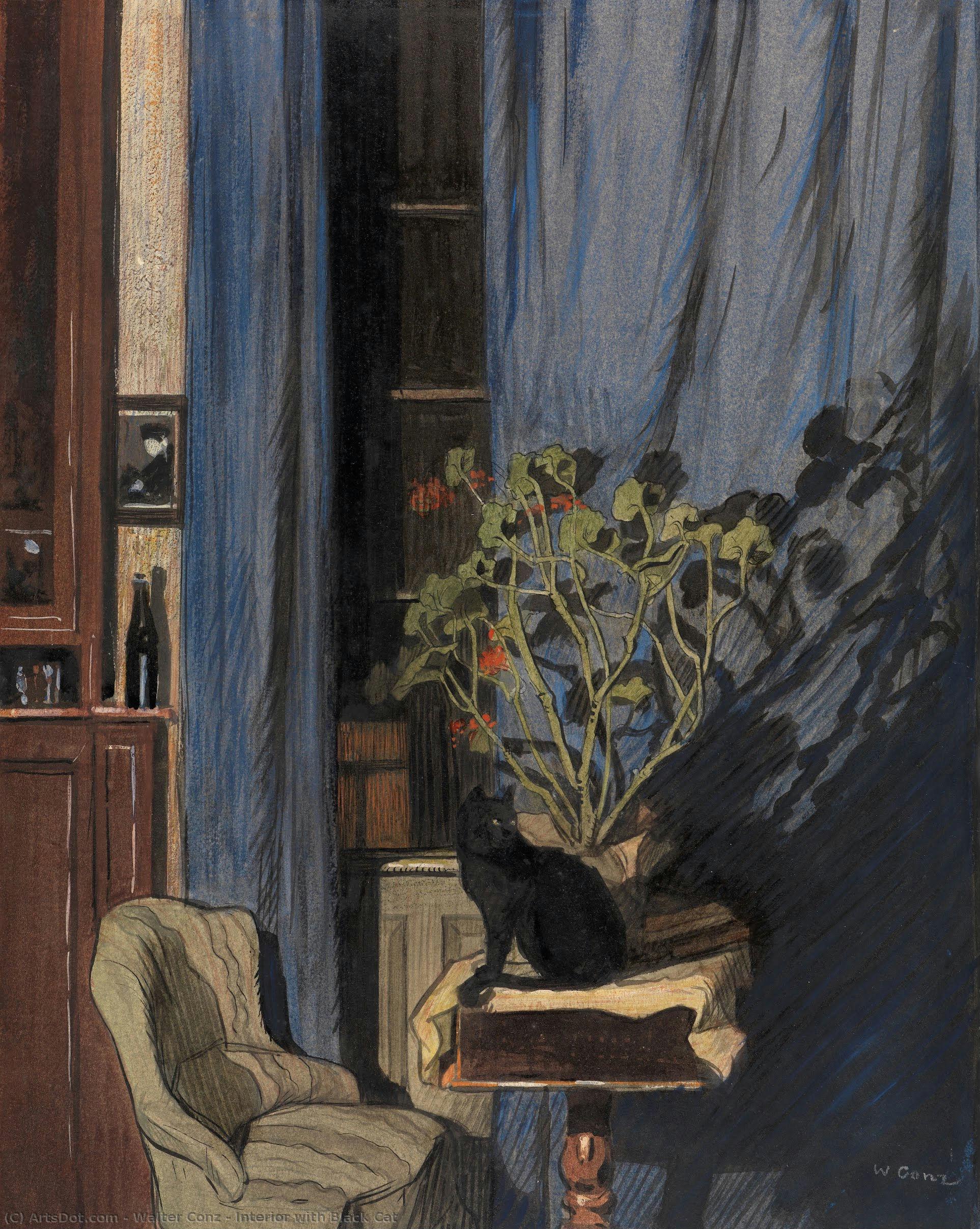
Interior with Black Cat


 Read More
Giclée / Art Print
Museum-quality giclée or canvas print with fast production and flexible finish options. ( Buy Hand Made Painting Buy Image)




































Pick from our preset sizes that match the artwork's original proportions.

You may enter your own dimensions to fit a specific frame or space. If your selected size does not match the original image's proportions, we will either crop the artwork or extend the image with a mirrored or solid-fill edge. A digital mockup will be sent for your approval before production begins.
Please note that the on-screen preview does not reflect the actual cropping or extension. Only the mockup will accurately show the final composition.
While custom sizes are available, we recommend selecting a dimension from the predefined list to preserve the original proportions.
Worldwide Delivery () in 2 weeks instead of standard 4/5 weeks. (14 August)

Free Worldwide Express Shipping

High-Quality Linen Canvas

Full Shipping Insurance

Customs Tax Refund Guarantee

True Color Matching Guarantee

60-Day Return Policy (Defects Only)

100% Money-Back Guarantee

Bulk Discount Offer
 Glass option is only available in size under 110 CM

Interior with Black Cat
Giclée / Art Print
Reproduction Size
-


Total Price
$ 63
Related Artworks


Artist Biography
John Everett Millais: A Pre-Raphaelite Pioneer of Light and Nature
Born in Southampton, England, on June 8th, 1829, John Everett Millais was a figure of immense importance within the vibrant artistic landscape of Victorian Britain. His life, marked by both prodigious talent and personal complexities, intertwined with the rise of the Pre-Raphaelite Brotherhood – a movement that irrevocably altered the course of art history. From humble beginnings as a child prodigy to becoming one of the most celebrated painters of his era, Millais’s journey is a testament to artistic vision and enduring influence.
Millais's early life was shaped by his family’s social standing and access to education. His father, John William Millais, was a successful businessman, and his mother, Mary Jane Holland, fostered his artistic inclinations from a young age. He displayed remarkable skill at an astonishingly young age, entering the Royal Academy Schools in 1840 at just eleven years old – a feat rarely achieved. This early immersion into formal training laid the foundation for his future success, though he quickly chafed against the rigid conventions of academic art.
The formation of the Pre-Raphaelite Brotherhood in 1848 proved to be a pivotal moment in Millais’s career and artistic development. Alongside William Holman Hunt and Dante Gabriel Rossetti, he sought to break free from the perceived artificiality of contemporary painting, drawing inspiration from the art and ideals of the Renaissance – particularly those preceding Raphael (hence “Pre-Raphaelite”). The Brotherhood championed a return to naturalism, meticulous detail, and a reverence for beauty found in nature. Their manifesto advocated for honest representation, rejecting idealized forms and embracing vibrant colors and direct observation.
Key Works and Artistic Style
Millais’s artistic style evolved dramatically throughout his career, reflecting both the influence of the Pre-Raphaelite movement and his own developing aesthetic sensibilities. His early works, such as *Pizarro Seizing the Inca of Peru* (1849), showcased a dramatic flair and meticulous attention to detail, characteristic of the Brotherhood’s initial style. However, it was *Ophelia* (1851-52), arguably his most famous painting, that truly cemented his reputation and sparked considerable controversy.
*Ophelia*, depicting the tragic heroine from Shakespeare's play drowning in a stream, is a masterpiece of Romanticism and Pre-Raphaelite aesthetics. Millais’s painstaking rendering of the water lilies, the foliage, and Ophelia’s delicate features captivated audiences but also drew criticism for its perceived realism – some found it unsettlingly lifelike. Later works, like *Christ in the House of His Parents* (1851-52), demonstrated a shift towards a more direct and naturalistic approach, capturing the everyday life of a rural family with remarkable accuracy and emotional resonance.
Millais’s later paintings often focused on idyllic scenes of nature, particularly flowers. *Autumn Leaves* (1856) is a prime example, showcasing his mastery of color and light as he depicted the vibrant hues of falling foliage. His portraits, too, evolved over time, moving beyond mere likeness to capture the personality and character of his subjects – exemplified in his portrait of Tennyson.
Personal Life and Artistic Evolution
Millais’s personal life was inextricably linked to his artistic development. His marriage to Effie Chalmers, formerly married to critic John Ruskin, proved a complex and ultimately unhappy one. The annulment of their marriage fueled speculation about its impact on Millais's artistic style, with some critics suggesting that it led him away from the Pre-Raphaelite Brotherhood’s ideals. However, this narrative is debated by scholars today.
Despite these personal challenges, Millais continued to produce a prolific body of work throughout his career. In the mid-1850s, he began to move away from the overtly symbolic and allegorical themes favored by the Pre-Raphaelites, embracing a more direct and realistic style influenced by contemporary artistic trends. This shift was partly driven by commercial success – his paintings were highly sought after by wealthy patrons – but also by a genuine desire to explore new avenues of expression.
Legacy and Historical Significance
John Everett Millais’s legacy extends far beyond his individual works. He played a crucial role in shaping the course of British art during the Victorian era, challenging established conventions and paving the way for future generations of artists. His commitment to naturalism, meticulous detail, and emotional resonance profoundly influenced the development of Impressionism and other modern artistic movements.
Millais’s paintings continue to resonate with audiences today, admired for their beauty, technical skill, and evocative power. *Ophelia*, in particular, remains one of the most iconic images in art history, a testament to Millais's genius and his enduring contribution to the world of art.
He was made an Associate of the Royal Academy in 1853, and a full member in 1863. He was created a baronet in 1896 and died on August 13th, 1896, in London. His work is held by many museums around the world.

walter conz
1896 - 1948 , Germany
Quick Facts
- Artistic Movement Or Style: Pre-Raphaelite Brotherhood
- Artists Or Movements Influenced By This Artist:
- William Morris
- Modernism
- Artists Who Influenced This Artist:
- William Holman Hunt
- Dante Gabriel Rossetti
- Date Of Birth: June 8, 1829
- Date Of Death: August 13, 1896
- Full Name: John Everett Millais
- Nationality: English
- Notable Artworks:
- Ophelia
- Christ in the House of His Parents
- Place Of Birth: Southampton, England
Related Articles

Dark Masterpieces: 10 Iconic Paintings Dominated by Black Tones |
Explore 10 iconic paintings dominated by black tones, from Rembrandt’s chiaroscuro to Goya's dark expressions. Discover the stories behind these masterpieces & find museum-quality art reproductions for your home at .

The Enduring Legacy of Oil on Canvas: Technique, History & Aesthetic Impact
Explore the rich history & techniques of oil painting – from Renaissance masters to Impressionism. Discover pigments, layering methods, and why this timeless medium endures. Expert insights for artists & art enthusiasts.

Oil on Canvas: A Historical & Technical Exploration of a Timeless Artistic Medium
Explore the rich history & enduring techniques of oil painting on canvas. Discover the science behind its longevity, conservation practices, and contemporary relevance. Expert insights for art enthusiasts.

The Enduring Power of Painting: A Historical & Contemporary Exploration of Form and Emotion
Explore the rich history & enduring techniques of oil painting with ArtsDot. Discover masterpieces, learn about art collecting, and find authentic handmade reproductions crafted by skilled artists.

Oil on Board Masters: 10 Paintings That Redefined Art | ArtsDot
Explore 10 legendary 'Oil on Board' masterpieces by Van Gogh, Monet & more! Discover art history, iconic styles like Impressionism, and find museum-quality reproductions to elevate your home decor. Explore the full collection online at ArtsDot.com.


