

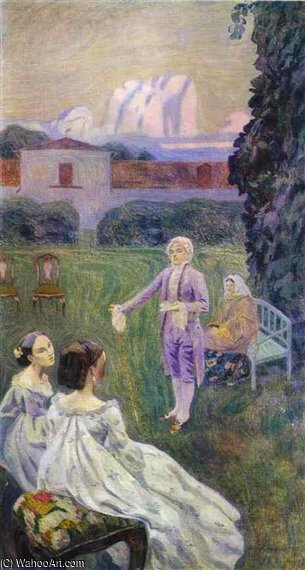
 Preview
 Send
Send Share
Share
 Details

 Download
 Similars
 X-Ray
X-Ray Diaporama
Harmony
 Read More
Giclée / Art Print
Museum-quality giclée or canvas print with fast production and flexible finish options. ( Switch to hand made Painting Switch to Image)




































Pick from our preset sizes that match the artwork's original proportions.

You may enter your own dimensions to fit a specific frame or space. If your selected size does not match the original image's proportions, we will either crop the artwork or extend the image with a mirrored or solid-fill edge. A digital mockup will be sent for your approval before production begins.
Please note that the on-screen preview does not reflect the actual cropping or extension. Only the mockup will accurately show the final composition.
While custom sizes are available, we recommend selecting a dimension from the predefined list to preserve the original proportions.
Worldwide Delivery () in 2 weeks instead of standard 4/5 weeks. (10 August)

Free Worldwide Express Shipping

High-Quality Linen Canvas

Full Shipping Insurance

Customs Tax Refund Guarantee

True Color Matching Guarantee

60-Day Return Policy (Defects Only)

100% Money-Back Guarantee

Bulk Discount Offer
 Glass option is only available in size under 110 CM

Harmony
Giclée / Art Print
Reproduction Size
-


Total Price
$ 63
Related Artworks


Artist Biography
Victor Borisov-Musatov: A Dream Weaver of Russian Symbolism
Born in Saratov, Russia, in 1870, Victor Borisov-Musatov remains a captivating enigma within the annals of late 19th and early 20th-century art. His life was tragically short – he died in 1905 at the age of thirty-five – yet his artistic output, characterized by intensely personal dreamscapes and ethereal figures, left an indelible mark on Russian Symbolism and continues to resonate with viewers today. While biographical details remain somewhat sparse, a careful examination of his work reveals a deeply sensitive artist grappling with themes of memory, loss, and the elusive nature of reality.
Musatov’s artistic journey began in St. Petersburg, where he received a formal education at the Imperial Academy of Arts. However, he quickly rejected the rigid academic traditions of the institution, finding himself drawn to the burgeoning Symbolist movement – a reaction against realism and impressionism that sought to express ideas and emotions through suggestive imagery rather than direct representation. This rejection wasn’t merely stylistic; it reflected a profound dissatisfaction with the superficiality of bourgeois society and a yearning for something deeper, more spiritual.
The Language of Dreams
Musatov's paintings are immediately recognizable by their atmospheric quality and haunting beauty. He eschewed sharp outlines and precise details in favor of hazy forms, diffused light, and an almost hallucinatory sense of space. His landscapes aren’t simply depictions of nature; they are embodiments of mood and emotion – often melancholic or unsettling. He frequently employed a technique he called “color dreams,” layering translucent washes of paint to create shimmering surfaces that seemed to shift and change with the viewer's perspective. This approach, combined with his deliberate blurring of edges and figures, fostered an intensely subjective experience for the observer.
A key element in Musatov’s style was his use of memory and suggestion. He rarely painted directly from life, preferring instead to draw upon his own recollections and dreams. His paintings are less about portraying a specific scene than they are about evoking a particular feeling or state of mind. Consider “A Caucasian Study,” where the landscape is rendered with textured brushwork that feels both familiar and strangely distant – a visual representation of fragmented memories.
Influences and Artistic Development
Musatov’s artistic development was shaped by a diverse range of influences. He admired the works of artists like Gustave Moreau, whose Symbolist paintings explored similar themes of mythology and dream imagery; and the Japanese prints that were gaining popularity in Europe at the time, with their emphasis on suggestion and asymmetry. The writings of Russian poets such as Alexander Blok and Konstantin Balmont, who similarly sought to express abstract ideas through evocative language, also profoundly impacted his artistic vision.
Early in his career, Musatov’s work leaned towards a more realistic style, but he quickly evolved toward the Symbolist aesthetic. His later paintings demonstrate a growing confidence and experimentation with color and form. “Two Ladies,” for example, showcases a remarkable ability to capture a sense of serenity and grace within a seemingly simple scene – a testament to his developing mastery of light and atmosphere.
Legacy and Historical Significance
Despite the brevity of his career, Victor Borisov-Musatov’s influence on Russian art is considerable. He is considered one of the key figures in the development of Russian Symbolism, paving the way for later artists such as Mikhail Vrubel and Alexandre Benois. His paintings continue to be admired for their poetic beauty, emotional depth, and innovative use of color and technique.
Today, Musatov’s work is primarily found in the Saratov Museum of Art, where it offers a poignant glimpse into the mind of a truly unique artist – a man who sought to capture the intangible realities of the human experience through the evocative language of dreams. Reproductions of his paintings, available through platforms like ArtsDot.com, allow viewers around the world to connect with this remarkable visionary and appreciate the enduring power of his art.

victor borisov mtov
1870 - 1905 , Russia
Quick Facts
- Artistic Movement Or Style: Russian Symbolism
- Date Of Birth: 1870, Saratov, Russia
- Date Of Death: 1905
- Full Name: Victor Borisov-Musatov
- Nationality: Russian
- Notable Artworks:
- A Caucasian Study
- Two Ladies
- Place Of Birth: Saratov, Russia



