

 Preview
 Send
Send Share
Share
 Details
 Guide
Guide

 Download
 Similars
 X-Ray
X-Ray Diaporama
 Q&A
Q&A Stats
StatsWarrior

 Read More
Giclée / Art Print
Museum-quality giclée or canvas print with fast production and flexible finish options. ( Buy Hand Made Painting Switch to Digital Image)




P118B $10

P118H $10

P118W $10

P438Z $10

P508JH $12

P508YH $12

P805H $10

P805Z $10

P919BZ $10

P919G $10

P919XJ $10

P959ZH $10

P968JZ $12

W106C $8

W218G $10

W218JH $8

W218Y $10

W307PJ $10

W316G $10

W316PJ $8

W316Y $10

W398PJ $8

W4111J $10

W500HY $15

W500JH $15

W692G $12

W849H $8

W940BG $15

W953PJ $8




Pick from our preset sizes that match the artwork's original proportions.

Type the width and the height you need, to fit your frame or your wall. A print can only be cut, never made bigger than the picture, so a size with a different shape loses a part of the image. We send you a digital mockup to approve before we print anything. The picture shown on this page does not show the real cut — only the mockup does.
Worldwide Delivery () in 2 weeks instead of standard 4/5 weeks. (10 November)

Free Worldwide Express Shipping

High-Quality Linen Canvas

Full Shipping Insurance

Customs Tax Refund Guarantee

True Color Matching Guarantee

100-Day Return Policy (Defects Only)

100% Money-Back Guarantee

Bulk Discount Offer
 Glass option is only available in size under 110 CM

Warrior
Giclée / Art Print
Reproduction Size
-


Total Price
$ 63
Dynamic Subject and Cultural Significance
This captivating artwork vividly captures the essence of a formidable Japanese warrior, embodying strength, courage, and resilience. The figure’s powerful stance and intense expression evoke a sense of determination and readiness, reflecting the valor and honor deeply rooted in Japan’s samurai tradition. The scene may depict a legendary or mythic hero, emphasizing themes of bravery and martial prowess that resonate across centuries of Japanese history. Rich in cultural symbolism, the warrior’s attire, armor, and weaponry evoke a storied past, inviting viewers to explore the legendary narratives and moral virtues associated with Japan’s warrior class.Artistic Style and Technique
Created in the distinctive ukiyo-e style, this piece showcases the masterful craftsmanship characteristic of traditional Japanese woodblock printing. The artwork features bold, clean lines and flat, vibrant color blocks that define the contours and details of the figure and surrounding elements. The restrained yet expressive palette—dominated by greens, reds, and blues—enhances the visual impact while maintaining harmony. The technique emphasizes clarity and precision, with minimal shading and a focus on stylized forms that convey movement and emotion. The textured surface and crisp outlines exemplify the meticulous craftsmanship of Japanese printmaking, making this piece a timeless example of ukiyo-e artistry.Historical Context and Artistic Legacy
Produced during a period of profound cultural transition in Japan, this artwork reflects the enduring legacy of ukiyo-e as a medium for storytelling and national identity. The late Edo and early Meiji eras saw artists like Yoshitoshi pushing the boundaries of traditional printmaking, blending historical themes with innovative compositions. This piece embodies the spirit of that era—balancing reverence for tradition with a desire to capture the dynamism of Japanese history and mythology. As a work by Tsukioka Yoshitoshi, one of the last great masters of ukiyo-e, it also symbolizes the resilience of Japanese artistic heritage amid rapid modernization.Symbolism and Emotional Impact
Beyond its visual appeal, this artwork is rich with symbolism. The warrior’s fierce expression and poised stance evoke a sense of unwavering resolve, inspiring feelings of empowerment and admiration. The surrounding landscape and symbolic motifs subtly reinforce themes of vitality, honor, and the eternal struggle between good and evil. The bold lines and vivid colors evoke a sense of energy and immediacy, making the viewer feel connected to the intense emotions and heroic ideals represented. Whether displayed in a private collection or a sophisticated interior, this piece offers a powerful visual narrative that elevates any space with its historical depth and emotional resonance.A Timeless Addition to Any Collection or Interior
Perfect for art lovers, collectors, and interior designers seeking a high-quality reproduction, this artwork offers a rare glimpse into Japan’s rich artistic and cultural history. Its striking composition and profound symbolism make it an ideal centerpiece for a gallery wall, study, or elegant living space. As a testament to the enduring beauty of traditional Japanese art, this piece not only enhances aesthetic appeal but also invites reflection on themes of heroism, tradition, and cultural identity. Invest in a timeless masterpiece that bridges history and artistry, inspiring admiration and conversation for generations to come.Questions & Answers
How many people view "Warrior"?
The Stats page of "Warrior" by Tsukioka Yoshitoshi presents public visit statistics: monthly visits of this artwork, a comparison with the artist's most viewed works, and where its visitors come from.
What color leads the composition of "Warrior" by Tsukioka Yoshitoshi?
The dominant color of "Warrior" by Tsukioka Yoshitoshi is espresso (#41492c).
What is the format of "Warrior"?
The format of "Warrior" is portrait. This is useful when planning where a reproduction will be placed.
Related Artworks


Artist Biography
The Life and Identity of Tsukioka Yoshitoshi
Born Owariya Yonejiro on 30 April 1839, the man who would become known as Tsukioka Yoshitoshi entered a world in flux. He was raised in the Shimbashi district of old Edo, which is known today as Tokyo. His life was marked by a transition in identity, as he also used the name Taiso Yoshitoshi. He lived through the end of the Edo period and the beginning of the Meiji era, a time when the very fabric of Japanese society was being rewoven by rapid modernization and Western influence.
His career as a Japanese printmaker was defined by a constant struggle to maintain the traditions of his craft while the world around him moved toward new technologies like photography. He worked with a deep sense of purpose, often focusing on the tension between the old ways and the new. This period of upheaval was not merely a backdrop for his art; it was the environment that shaped his perspective and his ability to capture the human condition during a time of profound social change.
The end of his life came unexpectedly at the age of 53. He died on 9 June 1892, following a cerebral hemorrhage. He left behind a significant body of work that documented the shifting landscape of his country, capturing both the quiet moments of daily life and the intense drama of historical legends.
Early Life, Family and Training
Born Owariya Yonejiro in the Shimbashi district of old Edo, the boy who would become Yoshitoshi grew up in a household shaped by social ambition. His father was a wealthy merchant who had successfully purchased his way into samurai status, providing a life of relative stability. However, the family structure changed early on. At the age of three, he left his home to live with his uncle, a pharmacist who had no son of his own. This change in environment would prove fundamental to his development.
By the age of five, he began to show a clear interest in art. He spent his childhood taking lessons from his uncle, finding a sense of purpose in the act of creation. This early instruction provided the foundation for a formal path in the traditional arts. In 1850, at the age of 11, he entered a rigorous apprenticeship under the master Utagawa Kuniyoshi. It was during this time that his mentor gave him the name Yoshitoshi, marking his official entry into the Utagawa School.
Technique and Artistic Style
Yoshitoshi’s hand moved with a precision that captured the very essence of a changing Japan. He was a pioneer in using new printmaking techniques, constantly seeking ways to achieve finer details and more intense colors. His work often blended traditional Japanese aesthetics with Western influences that arrived during the Meiji era. This fusion allowed him to create complex compositions that felt both grounded in history and strikingly modern. He had a particular talent for depicting movement, making a static woodblock print feel as though it were caught in a single, fleeting moment of action.
His subject matter often drifted between the historical and the mythological. He could render a legendary warrior with a sense of psychological depth, or portray a supernatural creature with startling realism. This ability to convey deep emotion was central to his style. Whether he was depicting a scene of quiet contemplation or a moment of intense struggle, his prints carried a weight of feeling that resonated with his audience. He did not rely on mere decoration; instead, he used vivid colors and sharp lines to pull the viewer into the narrative of the print.
- Saito Oniwakamaru on a Carp (1839–1892)
- The Battle of Okehazama (1866)
- The Death of Kiyomori (1883)
Key Works and Famous Series
Yoshitoshi’s output often mirrored the heavy, unsettled atmosphere of the era he lived through. In 1866, he produced a series of prints known as Muzan-e, often called "bloody prints." These works focused on graphic violence and death, reflecting the social unrest and personal tragedies that marked his life. He moved between these darker themes and more narrative-driven subjects, such as his series Tsūzoku saiyūki, also known as A Modern Journey to the West. He also looked toward folklore and legend in Wakan hyaku monogatari, or One Hundred Stories of China and Japan.
As the years passed, his focus shifted toward more contemplative and varied subjects. Between 1885 and 1892, he worked on One Hundred Aspects of the Moon, a series that explored the moon through different perspectives. His later years also saw the creation of New Forms of 36 Spirits between 1889 and 1892, and 32 Aspects of Women in 1888. These series demonstrate his ability to handle both the supernatural and the human form with a sense of psychological depth.
- Tokugawa Iemitsu Receiving Lords in Audience (about 1875)
- Uesugi Kenshin Nyudo Terutora Riding into Battle (about 1883)
- Kiyohime changing into a serpent at Hidaka River (about 1890)
- Murasaki Shikibu at Ishiyamadera Temple (about 1892)
Legacy and Enduring Influence
Yoshitoshi’s career acted as a bridge between two eras, spanning the final years of the Edo period and the dawn of the Meiji era. He lived through a time when the old social structures were dissolving and Western influences were beginning to reshape Japanese life. While many artists struggled to find their footing amidst this rapid change, he was recognized as one of the form's greatest innovators. His ability to adapt his craft to a changing world allowed him to remain relevant even as traditional woodblock printing faced new competition from photography and lithography.
His standing in the art community was solidified by his skill and his lineage. He is now recognized as the most important pupil of Kuniyoshi, having taken the lessons of his master and pushed them into new directions. By 1885, his prominence was undeniable when he was ranked as the number-one ukiyo-e artist in Tokyo. He did not merely follow the traditions of the Utagawa School; he expanded them, bringing a sense of psychological depth to his subjects that helped define the twilight of the ukiyo-e genre.
- Musha Burui
- One Hundred Aspects of the Moon
- New Forms of Thirty-six Spirits
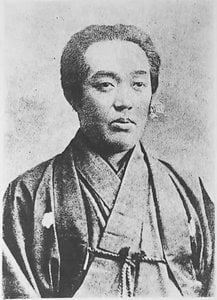
Tsukioka Yoshitoshi
1839 - 1892 , Japan
Quick Facts
- Artistic Movement Or Style: Ukiyo-e
- Artists Who Influenced This Artist: ['Utagawa Kuniyoshi']
- Full Name: Tsukioka Yoshitoshi
- Nationality: Japanese
- Notable Artworks:
- Tokugawa Iemitsu Receiving Lords
- Uesugi Kenshin Nyudo Terutora
- Kiyohime changing into a serpent
- Murasaki Shikibu at Ishiyamadera Temple
- Place Of Birth: Tokyo, Japan
- Date Of Birth: 1839
- Date Of Death: 1892
Related Articles

Ukiyo-e: Exploring Japan's Floating World & Enduring Artistic Legacy
Explore the captivating world of Ukiyo-e – Japan's iconic woodblock prints! Discover masters like Hokusai & Hiroshige, learn about Edo period culture, and find expert art collecting guidance at ArtsDot.

Japonisme: How Japanese Woodblock Prints Revolutionized Western Art
Explore the profound impact of Japonisme on Western art. Discover how Japanese ukiyo-e woodblock prints revolutionized perspective, color, and composition for masters like Monet and Van Gogh, forever changing the course of modern art history.

Tsukioka Yoshitoshi: A Master of Ukiyo-e's Final Flourish – Narrative, Innovation, and the Meiji Transition
Explore the life & art of Tsukioka Yoshitoshi, the last great master of ukiyo-e woodblock printing. Discover his dramatic warrior prints, innovative series like 'One Hundred Aspects of the Moon,' and legacy reflecting Japan's Meiji transition.

Mastering the Great Wave: The Top 25 Iconic Artworks by Katsushika Hokusai
Explore 25 iconic Hokusai masterpieces and the soul of Ukiyo-e. Discover museum-quality art on ArtsDot.com.

The Enduring Legacy of Woodblock Printmaking: Technique, History & Artistic Expression
Explore the rich history of woodblock printmaking – from ancient techniques to Ukiyo-e masterpieces. Discover expert insights on collecting, preserving & appreciating this enduring art form.


