

 Preview
 Send
Send Share
Share
 Details

 Download
 Similars
 X-Ray
X-Ray Diaporama
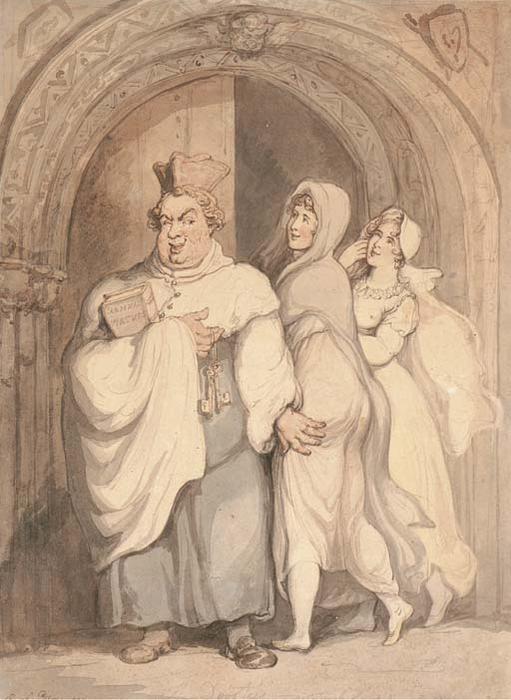
The Devotees

 Read More
Hand Made Oil Reproduction
Hand-painted oil on canvas in your size and frame, made to order by our artists. ( Buy Print Buy Image)




































Pick from our preset sizes that match the artwork's original proportions.

You may enter your own dimensions to fit a specific frame or space. If your selected size does not match the original image's proportions, we will either crop the artwork or extend the painting with additional hand-painted elements. A digital mockup will be sent for your approval before production begins.
Please note that the on-screen preview does not reflect the actual cropping or extension. Only the mockup will accurately show the final composition.
While custom sizes are available, we recommend selecting a dimension from the predefined list to preserve the original proportions.
After order, ArtsDot.com team will email client for instructions and provide a mockup preview
Worldwide Delivery () in 3/4 weeks instead of standard 5 weeks. (16 August). No compromise on quality.

Free Worldwide Express Shipping

High-Quality Linen Canvas

Full Shipping Insurance

Customs Tax Refund Guarantee

True Color Matching Guarantee

60-Day Return Policy (Defects Only)

100% Money-Back Guarantee

Bulk Discount Offer
 Glass option is only available in size under 110 CM

The Devotees
Reproduction Medium
Reproduction Size
-


Total Price
$ 313
Related Artworks


Artist Biography
A Life Etched in Satire: The World of Thomas Rowlandson
Born amidst the bustling streets of Old Jewry, London, on July 13th, 1756 (baptized July 23rd, 1757), Thomas Rowlandson emerged as a defining voice – and pen – of Georgian England. His life, initially shadowed by his father’s financial struggles that necessitated a move to Richmond, North Yorkshire in 1759, would ultimately blossom into an artistic career marked by unparalleled wit and incisive social commentary. Rowlandson wasn't merely documenting his era; he was holding a mirror to its follies, exaggerating its vanities, and immortalizing its characters with a uniquely satirical eye. From humble beginnings, nurtured by an uncle’s support that allowed him access to education at Dr. Barwis’ school in Soho Square, Rowlandson embarked on a path that would see him become one of the most celebrated – and controversial – caricaturists of his time. Even as a schoolboy, his innate talent manifested itself in playful sketches adorning the margins of his books, foreshadowing a career dedicated to visual storytelling with a mischievous edge.
Formative Years and Artistic Development
Rowlandson’s formal artistic training began at the Royal Academy in 1772, where he honed his skills for six years, including a period of study in Paris under Jean-Baptiste Pigalle. This exposure to continental techniques proved invaluable, laying the foundation for his distinctive style – a blend of delicate draughtsmanship and bold exaggeration. However, it was upon returning to England that Rowlandson truly found his voice. Initially attempting portraiture, he soon discovered his true calling lay not in flattering representation but in pointed satire. The financial pressures following his aunt’s death further propelled him towards caricature as a means of livelihood, yet this shift wasn't merely pragmatic; it was an artistic awakening. He began to dissect the social landscape with ruthless accuracy, targeting politicians, aristocrats, and everyday citizens alike. His early works were characterized by a remarkable facility for line and a keen understanding of human expression, qualities that would become hallmarks of his mature style.
Collaboration and The Rise to Prominence
The true flowering of Rowlandson’s career came through his fruitful collaboration with publisher Rudolph Ackermann. This partnership yielded some of his most enduring works, including the immensely popular *The Schoolmaster's Tour* (1809), a series of plates accompanied by verses from Dr. William Combe, and the iconic *Tour of Dr. Syntax in Search of the Picturesque* (1812). The *Dr. Syntax* series, with its subsequent installments – *Dr. Syntax in Search of Consolation* (1820) and *The Third Tour of Dr. Syntax in Search of a Wife* (1821) – captivated audiences with its whimsical narrative and Rowlandson’s masterful illustrations. These works weren't simply visual accompaniments to text; they were integral to the storytelling, enhancing the humor and social commentary through dynamic compositions and expressive characterizations. The delicate color washes and precise reed-pen outlines became synonymous with Rowlandson’s style, showcasing his technical brilliance and artistic flair. His ability to capture both the grandeur of landscapes and the absurdity of human behavior cemented his reputation as a leading artist of the era.
A Legacy of Satire and Social Observation
Rowlandson's impact extends far beyond the immediate popularity of his works during his lifetime. He left behind an extensive body of art – over 381 artworks are cataloged at ArtsDot.com alone – that provides a vivid and often unflattering portrait of Georgian society. His caricatures weren’t merely about ridicule; they were astute observations on the political climate, social customs, and human foibles of his time. He fearlessly lampooned figures like the Duchess of Devonshire, William Pitt the Younger, and Napoleon Bonaparte, exposing their vulnerabilities and challenging established power structures. Beyond the overtly satirical, Rowlandson also produced a wealth of illustrations for novels and topographical works, demonstrating his versatility as an artist. His legacy continues to inspire artists and art enthusiasts today, offering a unique window into a bygone era. The enduring appeal of his work lies in its timeless relevance – the human tendencies towards vanity, hypocrisy, and absurdity that he so brilliantly captured remain remarkably consistent across centuries. His influence can be seen in subsequent generations of cartoonists and illustrators who have embraced satire as a means of social commentary.
Preserving Rowlandson’s Vision
Today, Rowlandson's work is preserved in numerous museum collections worldwide, including those accessible through platforms like ArtsDot.com, which offers an extensive catalog of his creations alongside works by contemporaries such as Samuel Henry Gordon Alken and William Hogarth. Pieces like *Hengar House the Seat of Matthew Mitchell Esq., Cornwall* (1812) and *Glorious Defeat of the Dutch Navy* (1797) stand as testaments to his artistic skill and historical significance. Exploring these collections allows us to appreciate not only Rowlandson’s technical mastery but also the depth of his social insight. His art serves as a reminder that laughter can be a powerful tool for critique, and that even in the most frivolous of subjects, there is often a profound truth waiting to be revealed. The continued accessibility of his work ensures that Thomas Rowlandson's satirical vision will continue to provoke thought and inspire amusement for generations to come.

Thomas Rowlandson
1756 - 1827 , United Kingdom
Quick Facts
- Artistic Movement Or Style: Caricature, Satire
- Artists Who Influenced This Artist:
- Peter Paul Rubens
- Thomas Gainsborough
- Date Of Birth: July 13, 1756
- Date Of Death: April 21, 1827
- Full Name: Thomas Rowlandson
- Nationality: British
- Notable Artworks:
- Schoolmaster's Tour
- Dr. Syntax series
- Weeping
- The Horse Dealer
- Dinner
- Glorious Defeat
- Place Of Birth: London, UK
Related Articles

Thomas Sandby: Pioneering Watercolourist & Topographer of Georgian England
Explore the life & art of Thomas Sandby (1721-1798), a pioneering English watercolourist and architect. Discover his innovations, role in founding the Royal Academy, and lasting legacy at ArtsDot.
David Teniers the Younger: Genre Painting & Social Commentary in Baroque Flanders
Explore the captivating world of David Teniers the Younger, a leading Flemish Baroque painter. Discover his genre scenes, social commentary, and lasting influence on 17th-century art. Learn about his life, techniques & legacy.

Thomas Rowlandson: Satire, Society & the Art of Caricature in Georgian England
Explore the witty world of Thomas Rowlandson, master Georgian caricaturist! Discover his satirical prints & insightful social commentary on 18th-century England. Learn about his life, techniques, and enduring influence.

William Hogarth: Satire, Social Commentary & the Birth of Modern British Art
Explore the satirical world of William Hogarth, pioneering British painter & engraver. Discover his iconic works like *A Rake's Progress* and insightful social commentary on 18th-century London life.
The Sharpest Wit: A Critical Exploration of Satire in Art History – From Hogarth to Contemporary Critique
Explore the history of satire in art! From Hogarth's London to contemporary critique, discover how artists use wit & visual power to reflect and challenge society. Expert insights at ArtsDot.



