Preview
 Send
Send Share
Share
 Details
 Guide
Guide

 Download
 Similars
 X-Ray
X-Ray Diaporama
 Q&A
Q&A Stats
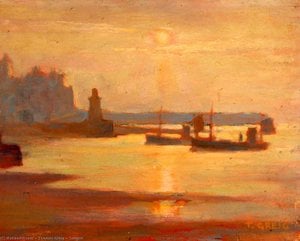
StatsSunrise

- 25.0 x 31.0 cm
 Read More
The artwork displayed on this page is protected by copyright law, which means we cannot legally create or sell an identical reproduction. This protection is enforced under international agreements such as the Berne Convention and by national laws, including those outlined by the U.S. Copyright Law - Title 17.
This method fully complies with copyright regulations because it does not involve copying or duplicating the protected artwork. Instead, it is a creative reinterpretation - a new painting that is influenced by the original but not identical to it.
Giclée / Art Print
Museum-quality giclée or canvas print with fast production and flexible finish options. ( Buy Hand Made Painting Switch to Digital Image)




































Pick from our preset sizes that match the artwork's original proportions.

Type the width and the height you need, to fit your frame or your wall. A print can only be cut, never made bigger than the picture, so a size with a different shape loses a part of the image. We send you a digital mockup to approve before we print anything. The picture shown on this page does not show the real cut — only the mockup does.
Worldwide Delivery () in 2 weeks instead of standard 4/5 weeks. (2 November)

Free Worldwide Express Shipping

High-Quality Linen Canvas

Full Shipping Insurance

Customs Tax Refund Guarantee

True Color Matching Guarantee

100-Day Return Policy (Defects Only)

100% Money-Back Guarantee

Bulk Discount Offer
 Glass option is only available in size under 110 CM

Sunrise
Giclée / Art Print
Reproduction Size
-


Total Price
$ 63
Related Artworks


Artist Biography
A Life Immersed in British Scenes: The World of Thomas Greig
Thomas Greig, a name resonating within the annals of 19th-century British art, stands as a compelling chronicler of his era. While biographical details remain somewhat elusive – a common trait for artists whose fame rests more on their canvases than personal notoriety – Greig’s work speaks volumes about his keen observation and dedication to portraying the evolving landscape of Victorian Britain. He wasn't merely painting scenes; he was documenting a nation in flux, capturing the spirit of industrial progress alongside the enduring beauty of rural life. His paintings offer a fascinating glimpse into a period defined by both rapid change and steadfast tradition.The Rise of an Industrial Painter
Greig’s artistic focus centered on the burgeoning industries that were reshaping England. Steelworks, factories, and bustling urban scenes became his primary subjects. This wasn't simply a matter of documenting progress; Greig imbued these industrial settings with a sense of drama and human presence often absent in purely topographical depictions. His Steelworks, for example, isn’t just an image of machinery and smoke; it’s a vibrant tableau of labor, energy, and the sheer scale of Victorian enterprise. The fiery glow illuminating the faces of workers, the intricate details of the iron structures, all contribute to a powerful narrative about the human cost and ambition inherent in industrialization. He wasn't necessarily making a political statement, but his work implicitly acknowledges the social impact of these changes.Portraits and Historical Echoes
Beyond industry, Greig demonstrated a talent for portraiture and historical scenes. These works reveal a mastery of technique and an ability to capture not just likeness, but also character and emotion. While less frequently discussed than his industrial paintings, they showcase a versatility that underscores his skill as an artist. His portraits often depict individuals connected to the world he so meticulously documented – factory owners, merchants, or members of the growing middle class. These are not grand, idealized portrayals; rather, they feel grounded and realistic, offering intimate glimpses into the lives of those shaping Victorian society. The historical scenes, though fewer in number, suggest a fascination with England’s past and a desire to connect the present with its rich heritage.Influences and Artistic Development
Pinpointing specific artistic influences on Greig is challenging due to limited documentation. However, one can discern echoes of the Realist movement within his work – a commitment to depicting subjects as they are, without romanticization or idealization. Artists like Gustave Courbet, who championed everyday life and social realism, likely resonated with Greig’s approach. Furthermore, the topographical tradition in British art, exemplified by painters such as J.M.W. Turner and John Constable, undoubtedly played a role in shaping his landscape sensibilities. He seems to have synthesized these influences, creating a unique style that blended realistic detail with a dramatic sense of atmosphere.Legacy and Historical Significance
Thomas Greig’s legacy lies not in groundbreaking innovation but in the consistent quality and insightful portrayal of Victorian life. His paintings serve as invaluable historical documents, offering a visual record of an era undergoing profound transformation. He captured the energy, ambition, and social complexities of 19th-century Britain with remarkable skill and sensitivity. While perhaps not a household name today, his work continues to captivate viewers with its authenticity and evocative power. His paintings are found in museums and private collections, ensuring that his vision of Victorian England endures for generations to come.
Quick Facts
- Artistic Movement Or Style: 19th-century art
- Current Biography: Evocative paintings of British life & landscapes.
- Full Name: Thomas Greig
- Nationality: British
- Notable Artworks: ['Steelworks']