


 Preview
 Send
Send Share
Share
 Details
 Guide
Guide

 Download
 Similars
 X-Ray
X-Ray Diaporama
 Stats
StatsTalbott Place


 Read More
Hand Made Oil Reproduction
Hand-painted oil on canvas in your size and frame, made to order by our artists. ( Switch to Print Switch to Digital Image)




P118B $10

P118H $10

P118W $10

P438Z $10

P508JH $12

P508YH $12

P805H $10

P805Z $10

P919BZ $10

P919G $10

P919XJ $10

P959ZH $10

P968JZ $12

W106C $8

W218G $10

W218JH $8

W218Y $10

W307PJ $10

W316G $10

W316PJ $8

W316Y $10

W398PJ $8

W4111J $10

W500HY $15

W500JH $15

W692G $12

W849H $8

W940BG $15

W953PJ $8




Pick from our preset sizes that match the artwork's original proportions.

Type the width and the height you need, to fit your frame or your wall. This is hand-painted, so for a size with a different shape the artist can paint a bit more around the picture, or cut a bit — you choose. We send you a digital mockup to approve before the painting starts. The picture shown on this page does not show the real result — only the mockup does.
After order, ArtsDot.com team will email client for instructions and provide a mockup preview
Worldwide Delivery () in 3/4 weeks instead of standard 5 weeks. (21 October). No compromise on quality.

Free Worldwide Express Shipping

High-Quality Linen Canvas

Full Shipping Insurance

Customs Tax Refund Guarantee

True Color Matching Guarantee

100-Day Return Policy (Defects Only)

100% Money-Back Guarantee

Bulk Discount Offer
 Glass option is only available in size under 110 CM

Talbott Place
Reproduction Medium
Reproduction Size
-


Total Price
$ 263
A Luminous Escape into Impressionism
In the quietude of Theodore Clement Steele’s 1897 masterpiece, Talbott Place, the viewer is invited to step into a world where time seems to decelerate. This exquisite oil painting serves as a breathtaking window into an era of tranquil leisure, capturing a park scene that feels less like a static image and more like a fleeting, sun-drenched memory. Steele, a luminary of American Impressionism, masterfully orchestrates a composition that draws the eye along a central pathway, leading the soul toward a distant, stately building nestled within a lush landscape. The painting is not merely a depiction of a location; it is an atmospheric poem written in pigment, where the soft, diffused light creates a hazy, dreamlike veil over the verdant scenery.
The technique employed by Steele is a testament to his rigorous training and his profound emotional connection to the American landscape. Utilizing the hallmarks of the Impressionist movement, he applies oil paints with short, broken brushstrokes that dance across the canvas, creating a shimmering effect that mimics the way light filters through canopy leaves. There is a palpable texture to the work; the visible, rhythmic application of paint lends a tactile quality to the grass and foliage, suggesting the rustle of wind and the warmth of a summer afternoon. By prioritizing color and light over rigid anatomical or architectural precision, Steele achieves a sense of movement and vitality that breathes life into every leaf and shadow.
The Harmony of Color and Nature
The color palette of Talbott Place is a sophisticated study in warmth and balance. Dominated by deep, organic greens and earthy reds, the work evokes the rich fertility of the landscape, while subtle infusions of blue and gray in the sky provide a necessary breath of coolness. This careful calibration of tones ensures that the composition remains grounded yet ethereal. The shapes within the painting—the sturdy trunks of trees, the soft mounds of grass, and the structured silhouette of the background architecture—are rendered with an organic fluidity. Steele avoids harsh, jarring lines, opting instead for soft edges that allow the elements of nature to bleed into one another, mirroring the interconnectedness of a healthy, thriving ecosystem.
For the discerning collector or interior designer, this piece offers more than just aesthetic beauty; it provides an emotional anchor. The symbolism within the work is subtle yet profound, centered on the themes of serenity, peace, and the restorative power of nature. In an increasingly chaotic modern world, Talbott Place stands as a sanctuary of stillness. Its presence in a room can transform a space, lending an air of classical elegance and contemplative calm. Whether placed in a sunlit gallery or a sophisticated living area, this reproduction serves as a timeless tribute to the enduring beauty of the natural world and the masterful hand of an American master.
Questions & Answers
What is the recommended use of a print of "Talbott Place"?
The suggested use for "Talbott Place" by Theodore Clement Steele is relaxation. It can serve other purposes as well.
What space is suggested for "Talbott Place" by Theodore Clement Steele?
"Talbott Place" by Theodore Clement Steele is recommended for a wellness center. This suggestion is based on the work's subject, colors and mood.
Can the image of "Talbott Place" by Theodore Clement Steele be freely reproduced?
"Talbott Place" by Theodore Clement Steele is in the public domain - its copyright has expired. This status governs how the image of the work may be reproduced.
Related Artworks


Artist Biography
A Luminary of the American Landscape: The Life and Art of Theodore Clement Steele
Theodore Clement Steele, a name synonymous with the blossoming of American Impressionism, stands as a pivotal figure in the nation’s artistic heritage. Born in 1847 amidst the rolling hills of Owen County, Indiana, Steele's journey was one of dedicated study, transatlantic influence, and ultimately, a profound commitment to capturing the unique beauty of his native land. His life unfolded against a backdrop of rapid change – a period where American art sought to define itself, moving beyond mere imitation of European masters towards an authentic visual language reflective of its own identity. From humble beginnings sketching in rural Indiana, Steele embarked on a path that would lead him to Munich’s prestigious Royal Academy and back again, forever transformed by his experiences yet deeply rooted in the landscapes he held dear. He wasn't simply painting what he saw; he was translating an emotional connection with nature onto canvas, imbuing each work with a sense of serene contemplation.European Training and the Embrace of Impressionism
Steele’s early artistic inclinations were nurtured through initial studies at Indiana State University, providing him with a foundational skillset in drawing and painting. However, recognizing the need for more rigorous training, he ventured to Europe in 1880, settling in Munich – a vibrant hub for artistic innovation. It was here that Steele truly came into his own, immersing himself in the burgeoning Impressionist movement. The influence of French masters like Monet and Pissarro is palpable in his evolving style; a shift away from the darker, more academic palettes towards brighter, more luminous colors and broken brushstrokes. This wasn’t merely a technical adoption, but a philosophical one. Steele began to prioritize capturing the fleeting effects of light and atmosphere, seeking to convey not just *what* he saw, but *how* it felt to be present in a particular moment. His time in Munich instilled within him a dedication to plein air painting – working outdoors directly from nature – a practice that would become central to his artistic process. This commitment allowed him to translate the immediacy of experience onto canvas with remarkable fidelity and emotional resonance.The Hoosier Group and a Distinctly American Vision
Upon returning to Indiana in 1885, Steele became a leading figure within the “Hoosier Group,” a collective of artists dedicated to establishing a distinctly American style of painting. Alongside contemporaries like William Forsyth, J. Ottis Adams, Richard B. Gruelle, and Otto Stark, he championed landscape painting that celebrated the beauty of the Midwest. While influenced by European techniques, Steele and his colleagues were determined to depict *American* subjects – the rolling hills, lush forests, and tranquil waterways of their homeland. He skillfully balanced the lessons learned abroad with a deep-seated love for Indiana’s natural splendor. This synthesis resulted in works that possessed both technical sophistication and an authentic sense of place. His portraits also garnered recognition, including commissions to paint official portraits of several Indiana governors, demonstrating his versatility as an artist. However, it was his landscapes – such as *Indian Summer* and *The Artist's Garden* – that truly captured the public’s imagination and cemented his reputation as a master of American Impressionism.Legacy and The House of the Singing Winds
Steele’s influence extended beyond his paintings; he was also an educator, lecturer, and advocate for the arts within his community. He actively participated in art juries, helping to shape the direction of artistic exhibitions both nationally and internationally. In 1907, Steele and his second wife, Selma Neubacher Steele, established “The House of the Singing Winds” in Brown County, Indiana – a home and studio that became a focal point for artists and a catalyst for the development of the renowned Brown County Art Colony. This idyllic setting provided him with endless inspiration and allowed him to fully immerse himself in his artistic pursuits. Today, The House of the Singing Winds stands as a State Historic Site, preserving Steele’s legacy and offering visitors a glimpse into the life and work of this remarkable artist. His contribution wasn't just about creating beautiful paintings; it was about fostering a vibrant artistic community and championing the importance of art in society.A Lasting Impression on American Art
Theodore Clement Steele’s work continues to resonate with audiences today, not only for its aesthetic beauty but also for its historical significance. He bridged the gap between European traditions and American innovation, helping to forge a uniquely American artistic identity. His paintings are held in prestigious collections across the country, including the Indianapolis Museum of Art, the Los Angeles County Museum of Art, and the Indiana University Art Museum. Steele’s legacy is one of dedication, passion, and a profound connection to the natural world. He remains an enduring symbol of American artistic achievement, inspiring generations of artists to embrace their own vision and capture the beauty that surrounds them. His ability to translate light, color, and emotion onto canvas ensures his place as a true luminary in the history of American art.
Theodore Clement Steele
1847 - 1926 , United States of America
Quick Facts
- Full Name: Theodore Clement Steele
- Nationality: American
- Date Of Birth: 1847
- Date Of Death: 1926
- Place Of Birth: Owen County, United States of America
- Notable Artworks:
- Indian Summer
- The Artist's Garden
- Beech Trees
- Pleasant Run
- Artistic Movement Or Style: American Impressionism
- Artists Who Influenced This Artist: ['French Impressionists']
- Artists Or Movements Influenced By This Artist: ['American Impressionists']
Related Articles

Impressionistic Landscapes: 10 Masterpieces That Changed Art & Decor
Journey into the heart of Impressionism! Explore 10 masterpieces by Monet, Renoir & Degas that revolutionized landscape art. Discover their stories, techniques & find museum-quality reproductions to elevate your home decor on ArtsDot.com.

Theodore Clement Steele: American Impressionism's Hoosier Visionary – A Comprehensive Exploration of Life, Art, and Legacy
Explore the life & art of Theodore Clement Steele, a leading American Impressionist painter. Discover his luminous Indiana landscapes, contributions to the Hoosier Group, and enduring legacy. A comprehensive guide for art enthusiasts.

Grant Wood & American Regionalism: Identity, Myth & the Rural Landscape
Explore the world of Grant Wood & American Regionalism with ArtsDot. Discover the symbolism behind 'American Gothic', recurring themes, and the movement's lasting impact on art history. High-quality reproductions available.

Evocations of Place: A Historical Journey Through Landscape Art
Explore the rich history of landscape art with ArtsDot. Discover renowned artists, movements like Impressionism & Romanticism, and expert guidance for collecting timeless pieces. Find your perfect serene escape today!
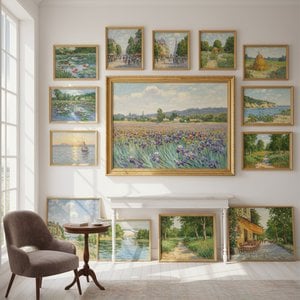
Impressionist Landscapes: 10 Masterpieces for Your Home | ArtsDot
Journey through 10 iconic Impressionist landscapes by Monet, Renoir & Degas. Explore the history, techniques & emotions behind these masterpieces. Find museum-quality reproductions for your home at ArtsDot.com – where art comes to life! Discover all masterpieces on ArtsDot.com


