

 Preview
 Send
Send Share
Share
 Details
 Guide
Guide

 Download
 Similars
 X-Ray
X-Ray Diaporama
 Q&A
Q&A Stats
StatsAir Sea Rescue

- 64.0 x 76.0 cm


 Read More
The artwork displayed on this page is protected by copyright law, which means we cannot legally create or sell an identical reproduction. This protection is enforced under international agreements such as the Berne Convention and by national laws, including those outlined by the U.S. Copyright Law - Title 17.
This method fully complies with copyright regulations because it does not involve copying or duplicating the protected artwork. Instead, it is a creative reinterpretation - a new painting that is influenced by the original but not identical to it.
Giclée / Art Print
Museum-quality giclée or canvas print with fast production and flexible finish options. ( Buy Hand Made Painting Switch to Digital Image)




P118B $10

P118H $10

P118W $10

P438Z $10

P508JH $12

P508YH $12

P805H $10

P805Z $10

P919BZ $10

P919G $10

P919XJ $10

P959ZH $10

P968JZ $12

W106C $8

W218G $10

W218JH $8

W218Y $10

W307PJ $10

W316G $10

W316PJ $8

W316Y $10

W398PJ $8

W4111J $10

W500HY $15

W500JH $15

W692G $12

W849H $8

W940BG $15

W953PJ $8




Pick from our preset sizes that match the artwork's original proportions.

Type the width and the height you need, to fit your frame or your wall. A print can only be cut, never made bigger than the picture, so a size with a different shape loses a part of the image. We send you a digital mockup to approve before we print anything. The picture shown on this page does not show the real cut — only the mockup does.
Worldwide Delivery () in 2 weeks instead of standard 4/5 weeks. (5 November)

Free Worldwide Express Shipping

High-Quality Linen Canvas

Full Shipping Insurance

Customs Tax Refund Guarantee

True Color Matching Guarantee

100-Day Return Policy (Defects Only)

100% Money-Back Guarantee

Bulk Discount Offer
 Glass option is only available in size under 110 CM

Air Sea Rescue
Giclée / Art Print
Reproduction Size
-


Total Price
$ 63
A Tempestuous Encounter: Stephen Bone’s ‘Air Sea Rescue’
Stephen Bone's 1943 oil painting, *Air Sea Rescue*, is a powerful depiction of human courage pitted against the raw force of nature. Measuring 64 x 76 cm, this work isn’t merely a seascape; it’s a visceral representation of wartime anxieties and the unwavering dedication of those involved in vital rescue operations. The scene focuses on a small, bright yellow boat – a beacon of hope – relentlessly battling through towering, turbulent waves under a brooding sky. A lone figure at the helm embodies resolute determination, navigating the treacherous waters with focused intensity. Bone masterfully captures a moment suspended between peril and perseverance, offering a poignant glimpse into the realities faced during World War II.Style & Technique: Impasto and Expressive Realism
Bone’s artistic approach in *Air Sea Rescue* blends realism with expressive brushwork. The painting is characterized by its striking impasto technique – thick layers of paint applied to the canvas, creating a rich texture that vividly conveys the movement and instability of both water and vessel. Diagonal lines dominate the composition, mirroring the direction of the waves and the boat’s trajectory, further amplifying the sense of dynamic energy. While grounded in representational accuracy, Bone doesn't shy away from emotional expression; his brushstrokes are bold and unrestrained, imbuing the scene with a palpable sense of drama. The color palette is deliberately limited – primarily yellows and blues punctuated by greys and whites – enhancing the painting’s somber yet striking visual impact. This technique isn’t simply about depicting a storm; it's about *feeling* one.Historical Context & Wartime Service
Created in 1943, during the height of World War II, *Air Sea Rescue* is deeply rooted in its historical context. Stephen Bone served as an official war artist for both the Royal Air Force and the Royal Navy, documenting crucial aspects of the conflict. The painting reflects the critical role played by Air Sea Rescue services in saving downed airmen from the sea – a dangerous and often overlooked aspect of wartime operations. Bone’s work provides valuable insight into British naval life during this period, moving beyond grand battleships to focus on the everyday heroism of those involved in rescue missions. Several other works by Bone depict these launches, including “Air Sea Rescue Launch Being Overhauled” and "Air Sea Rescue Launch 'D' Type", demonstrating his sustained engagement with this subject matter. His paintings served not only as documentation but also as morale boosters, reminding the public of the bravery and dedication of those serving their country.Symbolism & Emotional Resonance
Beyond its historical significance, *Air Sea Rescue* resonates on a symbolic level. The small boat represents humanity’s tenacious spirit in the face of overwhelming odds – a fragile vessel confronting the immense power of nature. The lone figure at the helm embodies courage, resilience, and unwavering commitment to duty. The stormy sea itself can be interpreted as a metaphor for the chaos and uncertainty of war. The painting evokes a complex range of emotions: struggle, determination, anxiety, and perhaps even a glimmer of hope. It’s a work that invites contemplation on themes of human vulnerability, perseverance, and the enduring power of the human spirit. The artwork's lasting appeal lies in its ability to connect with viewers on an emotional level, transcending its specific historical context to speak to universal experiences of challenge and resilience.Questions & Answers
Is Stephen Bone, creator of "Air Sea Rescue", known under other names?
Other names recorded for Stephen Bone, creator of "Air Sea Rescue", include Muirhead Bone, Mary Adshead, Quentin Bone.
Where can I download "Air Sea Rescue" by Stephen Bone?
"Air Sea Rescue" by Stephen Bone can be downloaded from the artwork's Download page, as a high-resolution digital image download.
Who made "Air Sea Rescue", and when?
The author of "Air Sea Rescue" is Stephen Bone, and the work is dated 1943.
Related Artworks


Artist Biography
Stephen Bone: Life and Art
Early Life and Education
- Born: Chiswick, United Kingdom (1904)
- Died: 1958
- Stephen Bone was the son of renowned artist Sir Muirhead Bone and writer Gertrude Helena Dodd. This familial artistic background profoundly influenced his early development.
- He received his education at Bedales School before enrolling at the Slade School of Fine Art in 1922.
- However, he became disillusioned with the academic approach at the Slade and left in 1924 to pursue book illustration.
Early Career & Artistic Development
- Bone initially achieved success as a woodcut illustrator, creating works for his mother and other writers. He won the gold medal for wood engraving at the International Exhibition in Paris in 1925.
- In 1926, he exhibited jointly with Rodney Joseph Burn and Robin Guthrie at the Goupil Gallery, marking a significant step in his artistic recognition.
- He painted a mural for the Piccadilly Circus underground station in 1928, demonstrating his versatility and expanding artistic scope.
- Marriage to artist Mary Adshead in 1929 led to extensive travels across Britain and Europe. These journeys were crucial in developing his signature style of bright landscape painting, capturing scenes *en plein air* regardless of weather conditions.
The 1930s: Landscape Painting & Exhibitions
- During the 1930s, Bone exhibited widely at prestigious galleries including the Fine Art Society, Lefevre Gallery, and Redfern Gallery.
- In 1936, he presented a series of 41 paintings depicting British counties at the Ryman Gallery in Oxford, showcasing his dedication to capturing the essence of the British landscape.
- He also exhibited in Stockholm during 1936 and 1937, expanding his international exposure.
War Artist & WWII Contributions
- With the outbreak of World War II, Bone enlisted as an officer in the Civil Defence Camouflage Establishment.
- In 1943, he was appointed a full-time salaried artist by the War Artists' Advisory Committee, specializing in Admiralty subjects. This role had previously been held by his father, Muirhead Bone, but was taken up by Stephen following the death of their son Gavin.
- Significant WWII Works: He produced numerous paintings depicting coastal installations and naval craft, including scenes painted aboard submarines.
- Bone witnessed and documented the Normandy landings in 1944, painting scenes in Caen and Courseulles. He also recorded the assault on Walcheren Island in the Netherlands.
- He travelled to Norway in late 1944, documenting the wreck of the *Tirpitz* and recording captured naval bases, as well as mass graves of prisoners of war.
Post-War Career & Legacy
- After the war, Bone found his style somewhat out of fashion. Despite continuing to paint, he faced difficulties exhibiting his work.
- He transitioned into art criticism, writing for the *Manchester Guardian*, and contributed humorous pieces to the *Glasgow Herald*.
- Bone also worked in television and radio for the BBC and collaborated with his wife on children's books. They jointly organized a mural painting course at Dartington.
- In 1957, he was appointed Director of the Hornsey College of Art.
- Death: Stephen Bone died of cancer on September 15, 1958, at St Bartholomew's Hospital, London.
- Stephen Bone’s work provides a valuable visual record of mid-20th century Britain, encompassing both the tranquility of its landscapes and the harsh realities of wartime.

Stephen Bone
1904 - 1958 , United Kingdom
Quick Facts
- Birth Date: 1904
- Death Date: 1958
- Influenced: None, 'influenced by': 'Muirhead Bone', 'movement': ['Woodcut Illustration', 'Landscape Painting', 'War Art'], 'name': 'Stephen Bone', 'nationality': 'British', 'notable works': ['Two Aircraft Carriers', 'The Midnight Sun', 'Railway Men', 'Sunset on the Normandy Beaches',
- Birth Place: Chiswick, United Kingdom
- Date Of Birth: 1904
- Date Of Death: 1958
- Place Of Birth: Chiswick, United Kingdom
Related Articles

William Owen: A Poetic Vision of War & Landscape in British Modernism
Explore the poignant war poetry of Wilfred Owen, a key figure in British Modernism. Discover his innovative style, themes of loss & camaraderie, and lasting impact on 20th-century literature. Analysis & historical context included.

Capturing Ephemeral Light: Plein Air Painting from Impressionism to Today
Explore the history of plein air painting, from its origins with the Barbizon school to Impressionism's revolution & contemporary practice. Discover techniques, artists like Monet & Renoir, and find museum-quality reproductions at ArtsDot.

The Allure of Open Airs: Exploring Representations of Outdoors in Art History
Explore the rich history of outdoor painting! From Romantic landscapes to Impressionism's revolution, discover key artists, techniques & the enduring legacy of capturing light and nature in art. Learn more at ArtsDot.

Stephen Bone: A Reassessment of Colour, Form & the British Neo-Romantic Landscape Tradition
Explore the vibrant world of Stephen Bone (1904-1958), a key figure in British Neo-Romanticism. Discover his captivating landscapes, impactful war art & unique artistic style. Learn about his life, influences & legacy.
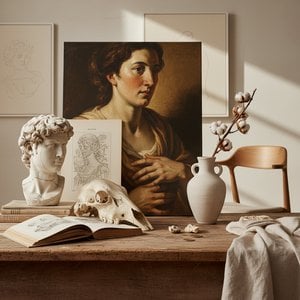
Bone Tones in Art History: 10 Masterpieces & Decor Ideas |
Explore 10 iconic paintings dominated by 'bone' tones – from Rembrandt & Caravaggio to Goya. Discover art history, techniques & find museum-quality reproductions for your home decor at . Explore the full collection online.


