


 Preview
 Send
Send Share
Share
 Details
 Guide
Guide

 Download
 Similars
 X-Ray
X-Ray Diaporama
 Stats
StatsHawks


 Read More
Giclée / Art Print
Museum-quality giclée or canvas print with fast production and flexible finish options. ( Buy Hand Made Painting Switch to Digital Image)




































Pick from our preset sizes that match the artwork's original proportions.

You may enter your own dimensions to fit a specific frame or space. If your selected size does not match the original image's proportions, we will either crop the artwork or extend the image with a mirrored or solid-fill edge. A digital mockup will be sent for your approval before production begins.
Please note that the on-screen preview does not reflect the actual cropping or extension. Only the mockup will accurately show the final composition.
While custom sizes are available, we recommend selecting a dimension from the predefined list to preserve the original proportions.
Worldwide Delivery () in 2 weeks instead of standard 4/5 weeks. (24 September)

Free Worldwide Express Shipping

High-Quality Linen Canvas

Full Shipping Insurance

Customs Tax Refund Guarantee

True Color Matching Guarantee

100-Day Return Policy (Defects Only)

100% Money-Back Guarantee

Bulk Discount Offer
 Glass option is only available in size under 110 CM

Hawks
Giclée / Art Print
Reproduction Size
-


Total Price
$ 63
Related Artworks


Artist Biography
The Legacy of Soga Nichokuan: Master of the Avian Spirit
In the golden era of the Edo period, few artists captured the intersection of wild majesty and aristocratic grace as profoundly as Soga Nichokuan. Born in the vibrant port city of Sakai, Japan, around 1630, Nichokuan was not merely a painter but a custodian of a prestigious artistic lineage. As the son of the renowned Soga Chokuan, the founder of the Sakai Soga school, his life and brushwork were inextricably linked to a family tradition dedicated to the meticulous study of nature. This heritage provided him with a unique vantage point, allowing him to inherit a specialized mastery of avian imagery that would eventually define his place in the annals of Japanese art history.
The essence of Nichokuan’s work lies in his ability to breathe life into the subjects of falconry, particularly the formidable hawk-eagles known as kumataka. To look upon his screens is to witness a world where the ferocity of a predator meets the delicate elegance of a floral arrangement. His training, believed to have been conducted under the rigorous guidance of his father, instilled in him a profound command over sumi-e, the monochrome ink wash technique. Through this method, he learned to translate the weight of a bird's gaze and the subtle texture of downy feathers into simple, yet powerful, strokes of black ink. This foundation allowed him to move beyond mere imitation, reaching toward a spiritual representation of his subjects that resonated with the Zen Buddhist ideals of harmony and contemplative stillness.
Technique and the Radiance of Color
While many of his contemporaries adhered to the restrained elegance of monochrome palettes, Nichokuan dared to embrace a more luminous and vibrant aesthetic. He became celebrated for a style that utilized bold, striking hues to depict birds amidst lush, blooming landscapes, creating a visual tension between the predatory focus of the hawk and the soft beauty of the flora. A hallmark of his technical prowess was his use of gosho-e, a sophisticated method of applying pigment directly onto silk. This technique granted his masterpieces an unparalleled depth and a shimmering, textural richness that made the plumage of a hawk appear almost tactile to the viewer.
His compositions often achieved a breathtaking balance between complexity and clarity. In works such as Hawks on Plum Trees, one can observe how he utilized gold paint in the background to evoke a sense of boundless atmosphere and divine light, framing his subjects within a celestial glow. Whether depicting a solitary owl perched upon an ancient pine or a hawk poised upon an oak branch, Nichokuan’s brushwork was characterized by:
- A layered approach to ink tones that effectively conveyed the intricate textures of feathers.
- The use of reserve techniques to create the striking effect of a full moon behind nocturnal subjects.
- A precise, geometric sense of composition that brought order to the wildness of his natural subjects.
Historical Significance and Artistic Impact
The historical importance of Soga Nichokuan extends far beyond the borders of the Sakai school. He served as a vital bridge in the evolution of Japanese bird-and-flower painting, carrying forward the traditions of his father while injecting a new, vibrant energy that appealed to the tastes of the era's elite. His depictions of falconry were not merely decorative; they were symbols of status and power, often commissioned by prominent samurai who saw their own strength reflected in the disciplined ferocity of the hawk. Through his art, the ritualistic beauty of takagari (falconry) was immortalized for posterity.
Even as the centuries have passed, Nichokuan’s ability to evoke emotion through a single, well-placed stroke remains undiminished. His work continues to captivate modern audiences, offering a window into a lost world of aristocratic refinement and natural wonder. By blending the disciplined precision of ink wash with the opulent beauty of colored pigments, Soga Nichokuan ensured that the spirit of the hawk would forever soar within the landscape of Japanese classical art.

soga nichokuan
Japan
Quick Facts
- Artistic Movement Or Style: Takagari Style
- Artists Or Movements Influenced By This Artist: ['Falconry']
- Artists Who Influenced This Artist: ['Soga Chokuan']
- Full Name: Soga Nichokuan
- Nationality: Japanese
- Notable Artworks: ['Dragon']
- Place Of Birth: Sakai, Japan
Related Articles

Hokusai's Masterpieces: 25 Iconic Prints & Paintings for Art Lovers | ArtsDot
Journey through Katsushika Hokusai’s 25 most iconic artworks, including *The Great Wave*. Explore the ukiyo-e master's history, style & timeless Japanese woodblock prints. Find museum-quality reproductions for your home at ArtsDot.com.

The Beauty of Ink Wash: Discover Serene & Soulful Art for Your Home
Discover the tranquil beauty of ink wash painting. Explore how Sumi-e and monochrome landscapes bring Zen-inspired serenity and soulful elegance to your home decor through expert curation and timeless East Asian aesthetics.

Ephemeral Lines: Exploring Emotional Resonance in Ink Sketching Traditions
Explore the profound art of ink sketching! Discover techniques to express emotion, master line work, and cultivate artistic sensitivity. Learn from historical masters & unlock your creative potential.

Ephemeral Expressions: Exploring the Nuances of Ink on Paper Through History & Contemporary Art
Explore the captivating world of ink wash painting – from its ancient origins to contemporary masters. Discover techniques, symbolism & conservation insights with ArtsDot.com.
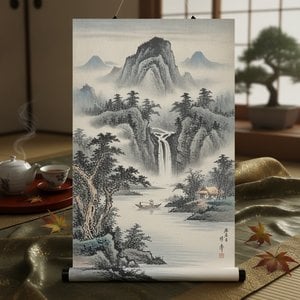
Serenity on Canvas: A Guide to the Timeless Beauty of Japanese Landscape Painting
Discover the serene beauty of Japanese landscape painting. From Hokusai's iconic woodblock prints to meditative sumi-e ink washes, explore a visual journey through the 'floating world' and learn how to bring this timeless Zen aesthetic into your modern home decor.


