

- 36.0 x 46.0 cm


The picture follows your choices: , .
Collectible Description
Explore Sir Alfred Munnings’ "A Cloud Study." An atmospheric Impressionistic seascape featuring dramatic clouds & textured brushstrokes. Discover this unique 19th-century oil painting.
 Read More
Artist Biography
A master of equine Impressionism and Royal Academy President. Explore his vibrant depictions of rural English life and horses today.
Hand Made Oil Reproduction
Hand-painted oil on canvas in your size and frame, made to order by our artists. ( Switch to Print Switch to Digital Image)
This Artwork Is Under Copyright Protection
The artwork displayed on this page is protected by copyright law, which means we cannot legally create or sell an identical reproduction. This protection is enforced under international agreements such as the Berne Convention and by national laws, including those outlined by the U.S. Copyright Law - Title 17.
As a respectful and legal alternative, we offer custom, hand-painted artworks inspired by the original. Our skilled and professional artists carefully study the original's style, mood, and artistic essence to create a new, unique piece that evokes the same feeling - while remaining an original creation in its own right.
This method fully complies with copyright regulations because it does not involve copying or duplicating the protected artwork. Instead, it is a creative reinterpretation - a new painting that is influenced by the original but not identical to it.
More about this painting
 Preview
 Send
Send Share
Share
 Details
 Guide
Guide

 Download
 Similars
 X-Ray
X-Ray Diaporama
 Q&A
Q&A Stats
StatsOrder your painting in four simple steps
Take your time. You can change any answer; the price in your order card follows each choice.
1 Step one of four
Which size would you like?
These sizes keep the proportions of the original painting. The drawing shows your choice on a wall, above a two-metre sofa.
Or give your own measurements
Pick from our preset sizes that match the artwork's original proportions.

Type the width and the height you need, to fit your frame or your wall. This is hand-painted, so for a size with a different shape the artist can paint a bit more around the picture, or cut a bit — you choose. We send you a digital mockup to approve before the painting starts. The picture shown on this page does not show the real result — only the mockup does.
2 Step two of four
How should it be prepared: rolled, stretched or framed?
The prices below are for the size you chose in step one.
Choose the edges of the stretched canvas
Choose your frame

White $1

Blurside $1

Extended $1

P118B $10

P118H $10

P118W $10

P438Z $10

P508JH $12

P508YH $12

P805H $10

P805Z $10

P919BZ $10

P919G $10

P919XJ $10

P959ZH $10

P968JZ $12

W106C $8

W218G $10

W218JH $8

W218Y $10

W307PJ $10

W316G $10

W316PJ $8

W316Y $10

W398PJ $8

W4111J $10

W500HY $15

W500JH $15

W692G $12

W849H $8

W940BG $15

W953PJ $8

H24-GOLD $30

H24-SILVER $30

H36-GOLD $45

H36-SILVER $45
Framed
Moulding: . Overall size with the frame: .
3 Step three of four
Would you like anything changed in the painting?
Most people answer no. Because each painting is made by hand, our artist can also adapt it for you.
After order, ArtsDot.com team will email client for instructions and provide a mockup preview
4 Step four of four
A few finishing options
All of them are optional. The answers already selected cost nothing extra.
Who paints it?
Worldwide Delivery () in 3/4 weeks instead of standard 5 weeks. (10 November). No compromise on quality.
A nameplate, as in a museum?
Engraved Bronze Plaque Details
This elegant plaque features the artist's name and the title of the artwork, finely engraved for a timeless presentation.
It is made from bronze with a refined, elegant finish. The text is precisely laser-engraved for a sharp and permanent result. Measuring 9x2 cm, the plaque is compact yet easy to read. It's built to be durable and scratch-resistant, offering a professional, museum-quality look. Mounting is simple thanks to the included adhesive backing.
Transparent Acrylic Plaque Details
The plaque includes essential engraved details such as the artist's name, the title of the artwork, the date it was created, the type of media used-like oil on canvas or watercolor-a brief description of the piece, and a QR code that links to the complete artwork information.
It is crafted from clear acrylic, offering a sleek, modern appearance. The text is UV-engraved in black to ensure strong visual contrast. With a size of 10x15 cm, it ensures optimal readability. It comes equipped with two metal hooks for secure wall mounting. The plaque is designed to be weather-resistant, making it suitable for various environments, and it includes interactive features that work seamlessly with smartphone scanning.
Black Acrylic Plaque Details
This elegant plaque includes engraved information such as the artist's name, the title of the artwork, the date it was created, the type of media used (like oil on canvas or watercolor), a short description of the artwork, and a QR code for quick access to more information.
The plaque itself is made from refined black acrylic with a premium finish. The text is laser-engraved in white for high contrast and readability. Its size is 10x15 cm, designed to be easy to read. It comes with two metal hooks for professional mounting. The design is sleek and fits any interior style. It is also weather-resistant and durable, with built-in digital integration for mobile compatibility.
A protective varnish?
When do you need it?
✓ Check and order
Your painting, as you ordered it

A Cloud Study
Reproduction Medium
Reproduction Size
-

Elite Senior Artist
More detail, finesse, and extra production time
-

Reproduction Frame
-
-
For artworks or reproductions larger than 105 cm (approximately 41 inches) on any side, the frame will be shipped as a kit, disassembled. This method ensures safe delivery and prevents damage during transport.
Professional assembly required - this is not a DIY product.
The kit must be assembled and the canvas stretched by an experienced professional framer, using wood glue (not supplied), a canvas stretching plier and clamps to hold the bars square while the glue dries. Incorrect assembly or uneven canvas tension can permanently damage the artwork and is not covered by our warranty.
 For artworks or reproductions larger than 105 cm (approximately 41 inches) on any side, the frame will be shipped as a kit, disassembled. This method ensures safe delivery and prevents damage during transport.
All solid wood bars are included, precisely cut to size.
Assembled with the screws provided, plus wood glue for the corner joints, which is not supplied and must be sourced by your framer.
Professional tools are required and not included: a canvas stretching plier (tensioner) and clamps to hold the bars square while the glue dries.
Important:
The corner joints require wood glue, the bars must be held with clamps until the glue is fully dry, and tightening the canvas on the assembled frame requires a canvas stretching plier. None of these are included in the kit. Please arrange an experienced professional framer before ordering this size.

Nameplate
-
-

Protective Varnish
Glossy Varnish (enhances colors, protects against light/moisture)
-

Customize My Artwork
Examples of what can be changed: Replace face with customer photo; Add pet (e.g., replace cat with dog); Include hidden message in background; Change background landscape or elements.
-

Urgent
Worldwide Delivery () in 3/4 weeks instead of standard 5 weeks. (10 November). No compromise on quality.
-
Express Shipping
Worldwide Delivery () in 5 weeks. (17 November).
Included
Total Price
$ 263
Glass option is only available in size under 110 CM
Included with every order
- Free Worldwide Express Shipping
- High-Quality Linen Canvas
- Full Shipping Insurance
- Customs Tax Refund Guarantee
- True Color Matching Guarantee
- 100-Day Return Policy (Defects Only)
- 100% Money-Back Guarantee
- Bulk Discount Offer


Identification of A Cloud Study
The sky unfolds in A Cloud Study, an Impressionistic landscape by Sir Alfred James Munnings. Executed around 1906, the work captures a fleeting moment of atmospheric movement. The scene focuses entirely on the shifting drama of cloud formations, turning the vast expanse of the heavens into a tangible, living presence. It is a study of light and air, where the weight of the atmosphere feels almost palpable.
In this work, the artist turns his gaze toward the heavens to document the restless energy of the weather. The subject matter remains purely atmospheric, eschewing the traditional focus on terrestrial figures or animals to instead explore the transient nature of the sky. This specific piece belongs to a period of intense observation, where the goal is to translate the sensation of a passing storm or a sudden change in light into a visual form. The clouds dominate the view, asserting their power over the landscape below.
Composition and Visual Elements
A tempestuous Exmoor vista unfolds across a wide, horizontal plane, pulling the eye toward a restless horizon. The scene is dominated by towering cumulonimbus clouds that swell and churn within the sky. These massive, swirling formations command the upper reaches of the frame, casting a sense of weight and movement over the landscape below. The sky and the earth meet in a way that emphasizes the vastness of the natural world, capturing a fleeting moment of atmospheric tension.
The color palette remains cool and somber, relying heavily on a range of blues and greys. These tones mirror the brooding mood of an approaching storm, wrapping the rural scene in a layer of quiet intensity. Light appears diffused, as if filtered through the heavy moisture of the air, softening the edges of the clouds and the distant terrain. The interplay of these muted colors creates a sense of depth, where the sky feels immense and the landscape feels deeply immersed in the weather's shifting energy.
Technique and Artistic Materials
The oil paint clings to the canvas with a heavy, physical presence. Munnings works with a characteristic loose brushstroke technique, letting the movement of the hand remain visible in every stroke. There is a palpable energy in the way the paint is applied, particularly through the use of thick impasto. These heavy layers of color build up on the surface, creating a textured landscape study that feels as though the weather is still in motion. The paint does not merely sit flat; it rises from the cloth in ridges and swells.
Visible brushstrokes define the swirling masses of the sky, capturing the restless energy of the atmosphere. The artist uses broken color and layering to suggest the depth of the clouds and the shifting light of the Exmoor sky. This approach allows the texture to become part of the subject itself, where the physical ridges of the oil paint mimic the turbulent, churning nature of the air and the sea. The medium allows for a sense of immediacy, as if the scene was captured in a single, urgent moment of observation.
Where to See This Artwork
The atmosphere of this study remains preserved within the walls of The Munnings Art Museum. Located in Colchester, United Kingdom, this museum offers a quiet space to observe the artist's vision. Visitors find the work housed in a setting that feels deeply connected to the life and surroundings of the painter himself.
Known also as the Munnings Museum, this institution has been a guardian of these works since it was established in 1964. The museum occupies Castle House, where the artist once lived and worked. Walking through this space allows one to experience the environment that shaped such expressive observations of the sky and the landscape.
While you wander through the collection, you might encounter other pieces from the artist's life, such as:
Questions & Answers
How is "A Cloud Study" situated historically?
Historically, "A Cloud Study" is an Impressionism work of the broader Modern era.
Where should a reproduction of "A Cloud Study" by Sir Alfred James Munnings be hung?
With its landscape shape, a reproduction of "A Cloud Study" is suggested for a living room.
Is "A Cloud Study" by Sir Alfred James Munnings a bright or a dark artwork?
In terms of perceived brightness, "A Cloud Study" by Sir Alfred James Munnings is balanced.
Related Artworks


Sir Alfred James Munnings
1878 - 1959, United Kingdom
Artist Biography
The Life of Sir Alfred James Munnings
The story of Sir Alfred James Munnings began in the quiet, industrious atmosphere of Mendham Mill. Born on 8 October 1878, he entered a world defined by the steady rhythms of the river and the mill. He was the second of four sons born to John and Ellen Munnings, and his early years were shaped by the presence of his father, a miller. This mill sat in Mendham, Suffolk, positioned right across the River Waveney from Harleston in Norfolk, a place where the movement of water and the labor of animals were constant companions.
Growing up in such a setting, the boy was surrounded by the activity of a working mill, where horses and horse-drawn carts arrived daily to attend to the needs of the community. This early exposure to the strength of animals and the practicalities of rural life would eventually find its way onto his canvases. He was a child of the Suffolk countryside, a land of rolling fields that would remain a central character in his life and his work for many decades to come.
Early Life, Family and Training
Born in 1878 at Mendham Mill, on the border between Suffolk and Norfolk, Alfred James Munnings was the second of four sons. His father, John, was a miller, and his mother, Emily, came from a family of farmers. The boy grew up amidst the constant, rhythmic activity of a working mill, where the arrival of horses and heavy, horse-drawn carts provided a steady backdrop to his childhood. This early immersion in the movement of animals and the labor of the countryside would later inform his keen eye for the equine form.
His path toward art began quite early, at the age of fourteen, when he entered an apprenticeship with Page Brothers, a printing house in Norwich. This period of training was essential, as it taught him the discipline of design and the precision of observation through the creation of advertising posters. While working his apprenticeship, he sought further instruction at the Norwich School of Art, attempting to balance the practical demands of the printing house with his growing ambitions as a painter.
A sudden and painful accident in 1898 threatened to derail his burgeoning career. While out in the fields, a bramble and a hound puppy caused him to lose sight in his right eye. Such a blow might have ended the aspirations of a lesser man, but he continued his studies and his work. By 1899, his talent was already being recognized by the Royal Academy of Arts, where his first two paintings were accepted for the Summer Exhibition.
Artistic Development and Newlyn School
As the young man moved away from the practicalities of the printing house, his eyes began to seek the light of the natural world. He spent his early years painting en plein air, a practice that allowed him to capture the shifting atmosphere of the countryside directly from the source. This commitment to working outdoors helped him develop a keen sense of how light interacts with the landscape. His early subjects were drawn from the life he knew so well, often focusing on the rural scenes of the Suffolk countryside. He found much inspiration in the sight of horses and the presence of gypsies roaming through the fields, subjects that would remain central to his vision for many years.
By 1912, his path led him toward the Newlyn School of artists, where he remained associated with the group until 1914. This period was vital for his growth, as he moved deeper into the traditions of representational painting. He was not merely a student of form, but a man deeply invested in the rhythms of the land and the animals that inhabited it. His time with the Newlyn artists helped refine his ability to translate the movement and spirit of his subjects onto the canvas, moving beyond simple observation toward a more profound understanding of his chosen themes.
War Artist and Official Commissions
The Great War pulled Munnings away from the quietude of the English countryside and into the heavy atmosphere of military service. In 1917, his intimate understanding of equine anatomy and temperament led him to work as an army horse examiner at Calcot Park, near Reading, Berkshire. This role required a keen eye for the physical condition of the animals essential to the war effort. His expertise was soon recognized on a larger scale when he was engaged as an official war artist with the Canadian Cavalry Brigade. By early 1918, he found himself embedded with the Canadian Expeditionary Force, witnessing the realities of the front lines firsthand.
This period of conflict left a lasting mark on his perspective, as he moved from observing the simple rhythms of rural life to documenting the vital, often harrowing, logistical and combat roles played by horses in war. His ability to capture these subjects led to further significant recognition after the hostilities had ceased. He was engaged by Lord Beaverbrook's Canadian War Memorials Fund to create works that would memorialize the Canadian war effort. Through these commissions, Munnings transitioned from a painter of local scenes to a chronicler of a nation's sacrifice, securing his place among the most significant artists of his generation.
Patrons, Commissions and Social Circles
As his reputation grew, Munnings found himself moving through the most influential circles of British society. He became a sought-after portraitist, finding steady work among the aristocracy and the high-stakes world of horse racing. These prestigious commissions brought him significant wealth, allowing him to secure Castle House in Dedham, Essex, where he lived and worked for many years. His social standing was reflected in the company he kept; he was a member of Sir Winston Churchill’s Other Club and maintained deep, lifelong friendships with figures such as the artist Dame Laura Knight and the Poet Laureate John Masefield.
His ability to capture the spirit of his subjects allowed him to navigate both the formal halls of the establishment and the more spirited gatherings of the elite. He moved with ease between the quietude of his studio and the lively atmosphere of the racing world. This social fluidity was a hallmark of his middle years, as he transitioned from a young man observing the rural life of Suffolk to a central figure in the nation's cultural landscape. His connections were not merely professional; they were the threads that wove his personal life into the very fabric of mid-century British life.
Technique and Artistic Style
His brush moved with a certain freedom, favoring loose brushwork that allowed a palpable sense of movement to settle upon the canvas. He did not merely seek to replicate a scene but to capture a feeling, often employing a palette that felt alive and full of light. This approach was particularly evident when he turned his attention to the equine form. He possessed a deep mastery of equine portraiture, understanding the way muscle and sinew shifted under skin, a skill that allowed him to portray horses with a profound sense of their spirit and power.
This dedication to the physical reality of his subjects was a constant throughout his career. He aimed to create art that would fill a man's soul with admiration and sheer joy, a goal he pursued through a commitment to representational skill. His ability to translate the energy of a landscape or the tension of a race was recognized on a grand scale, as his work was included in the Olympic art competitions held in 1928, 1932, and 1948. He sought to find the essence of the English countryside, focusing on the rhythms of rural life and the light that washed over the fields.
- The Red Prince Mare
- Before the Start, Newmarket
- Winter Exercise
Later Years and Royal Academy Presidency
The twilight of his career saw Munnings ascend to the very heights of the British art establishment. In 1944, he was elected President of the Royal Academy of Arts, a position he held until 1949. This period marked a significant era of recognition for his lifelong devotion to traditional representation. During that same year, he was knighted a Bachelor, a distinction that reflected his standing within the nation's cultural life. His influence within these institutions was profound, even as he remained a vocal defender of classical values against the shifting tides of modernism.
His honors continued to grow as he moved through the late 1940s. In 1947, he was appointed a Knight Commander of the Royal Victorian Order, further cementing his prestige. He spent much of this time at Castle House in Dedham, Essex, where he continued to work and live. The artist remained active in his pursuits until his death on 17 July 1959. His life, which began in the quiet milllands of Suffolk, had come to a close after decades of documenting the movement and spirit of the English countryside.
Legacy and Enduring Influence
Munnings remained a steadfast guardian of the old ways, even as the winds of change swept through the galleries of Europe. He held a deep conviction in the necessity of preserving traditional artistic values, a stance that often placed him at odds with the shifting tides of his era. This defiance was most famously heard during a 1949 BBC radio broadcast, where he launched a sharp and candid critique against the rise of Cubism and Surrealism. He did not merely observe these movements from afar; he actively challenged their departure from the representational skill he held dear.
His life was a constant struggle to capture a vanishing England, a pursuit that left behind a vast body of work documenting the rhythms of the countryside and the spirit of the horse. This dedication to the tangible and the real ensured that his vision would persist long after the subjects themselves had faded from the landscape. Even his personal life was marked by a certain intensity of character, a trait that saw him rise from the son of a Suffolk miller to the highest echelons of the British art establishment. Upon his passing, his ashes were interred at St Paul's Cathedral in London, a final resting place befitting a man of such public prominence and conviction.
Where to See the Works Today
To walk through the rooms of the Munnings Art Museum in Dedham, Essex, is to step into the very space where the artist once lived and worked. This museum preserves the atmosphere of his studio, offering a view into the quiet life he built at Castle House. It remains a vital place for those seeking to understand the man through the objects and canvases that surrounded his daily existence.
In Colchester, the Munnings Museum provides a different perspective, holding a collection of approximately 150 paintings and drawings. This site allows for a close study of his technical skill and his devotion to the equestrian subjects that defined his career. Beyond these dedicated spaces, his presence is felt in the great institutions of the capital. The British Museum holds works by the artist, while the National Army Museum in London exhibits his paintings, including those that document the vital role of horses during the Great War.
- The Red Prince Mare
- The State Procession to Ascot
- Winter Exercise
- The gypsy


Related Articles

Impressionistic Landscapes: 10 Masterpieces That Changed Art & Decor
Journey into the heart of Impressionism! Explore 10 masterpieces by Monet, Renoir & Degas that revolutionized landscape art. Discover their stories, techniques & find museum-quality reproductions to elevate your home decor on ArtsDot.com.

Alfred Sisley: Capturing the Ephemeral Essence of Impressionist Landscape
Explore the life & art of Alfred Sisley, a master of Impressionist landscape painting. Discover his dedication to 'en plein air' techniques and serene depictions of nature. Learn about his legacy & find high-quality reproductions at ArtsDot.
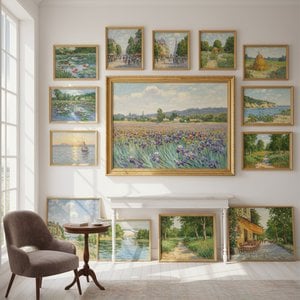
Impressionist Landscapes: 10 Masterpieces for Your Home | ArtsDot
Journey through 10 iconic Impressionist landscapes by Monet, Renoir & Degas. Explore the history, techniques & emotions behind these masterpieces. Find museum-quality reproductions for your home at ArtsDot.com – where art comes to life! Discover all masterpieces on ArtsDot.com