

 Preview
 Send
Send Share
Share
 Details

 Download
 Similars
 X-Ray
X-Ray Diaporama
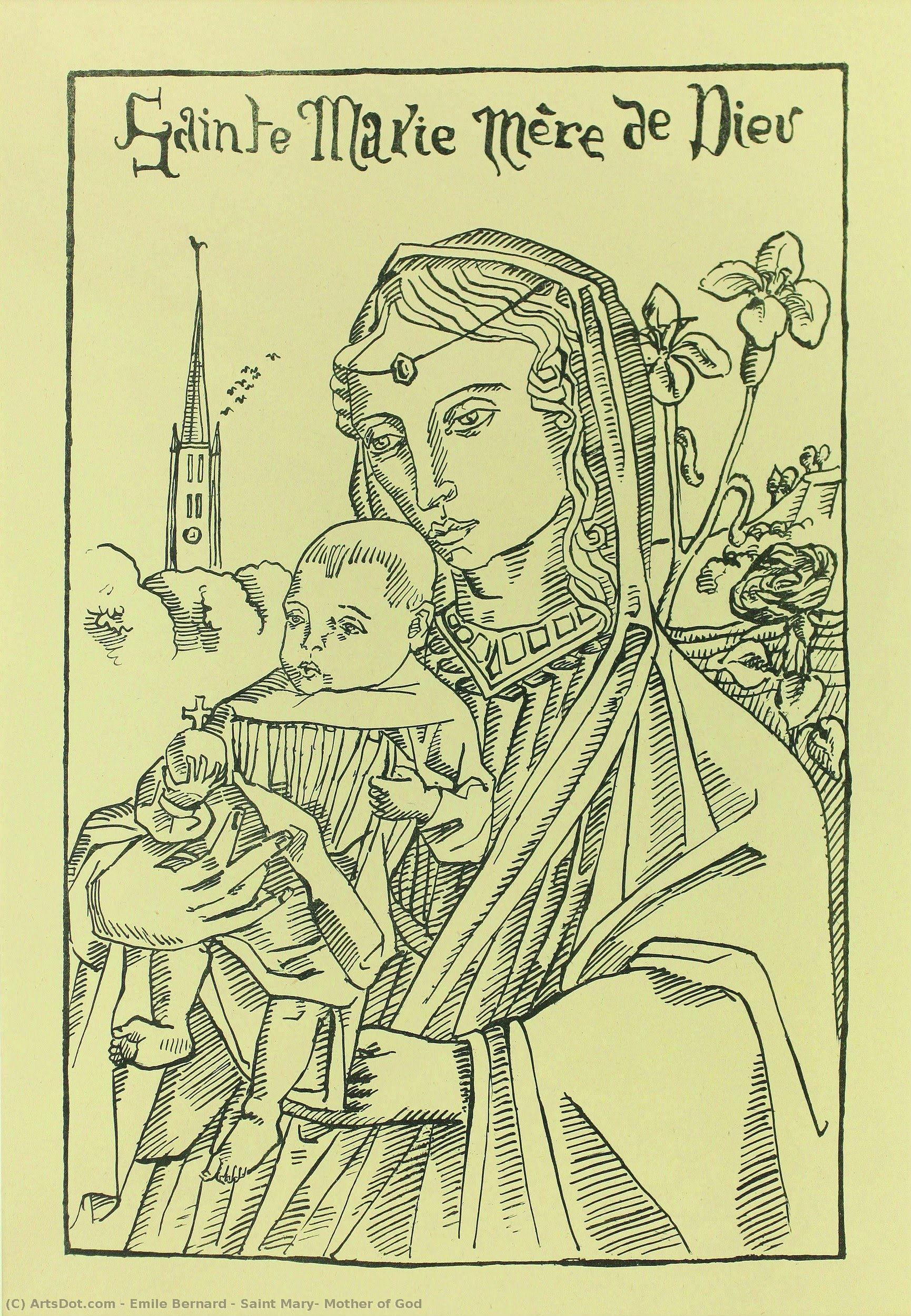
Saint Mary, Mother of God
 Lithograph
- Post-Impressionist Movement
 1895
1895- 19th Century
 48.0 x 41.0 cm
 Musée de Pont-Aven
 Read More
Hand Made Oil Reproduction
Hand-painted oil on canvas in your size and frame, made to order by our artists. ( Switch to Print Switch to Image)




P118B $10

P118H $10

P118W $10

P438Z $10

P508JH $12

P508YH $12

P805H $10

P805Z $10

P919BZ $10

P919G $10

P919XJ $10

P959ZH $10

P968JZ $12

W106C $8

W218G $10

W218JH $8

W218Y $10

W307PJ $10

W316G $10

W316PJ $8

W316Y $10

W398PJ $8

W4111J $10

W500HY $15

W500JH $15

W692G $12

W849H $8

W940BG $15

W953PJ $8




Pick from our preset sizes that match the artwork's original proportions.

You may enter your own dimensions to fit a specific frame or space. If your selected size does not match the original image's proportions, we will either crop the artwork or extend the painting with additional hand-painted elements. A digital mockup will be sent for your approval before production begins.
Please note that the on-screen preview does not reflect the actual cropping or extension. Only the mockup will accurately show the final composition.
While custom sizes are available, we recommend selecting a dimension from the predefined list to preserve the original proportions.
After order, ArtsDot.com team will email client for instructions and provide a mockup preview
Worldwide Delivery () in 3/4 weeks instead of standard 5 weeks. (7 August). No compromise on quality.

Free Worldwide Express Shipping

High-Quality Linen Canvas

Full Shipping Insurance

Customs Tax Refund Guarantee

True Color Matching Guarantee

60-Day Return Policy (Defects Only)

100% Money-Back Guarantee

Bulk Discount Offer
 Glass option is only available in size under 110 CM

Saint Mary, Mother of God
Reproduction Medium
Reproduction Size
-


Total Price
$ 263
Artwork Description
A Reverie in Black and White: Émile Bernard’s Saint Mary
Émile Bernard's "Saint Mary, Mother of God," executed in 1895, is more than simply a depiction of the Virgin; it’s a poignant meditation on faith, motherhood, and the enduring power of nature. This lithograph, measuring 48 x 41 cm, reveals the artist’s distinctive Post-Impressionist style – characterized by a deliberate flattening of perspective and an emphasis on expressive line rather than photographic realism. The stark contrast of black and white amplifies the emotional weight of the scene, drawing the viewer into a world of quiet contemplation.
The Figure of Mary: Symbolism and Expression
At the heart of the composition stands Saint Mary, rendered with a remarkable sensitivity to form and gesture. Her crown, a subtle yet potent symbol of her divine status, is juxtaposed against the humble posture of holding two children – representing Christ and John the Baptist according to tradition. Bernard’s meticulous attention to detail in Mary's face—the furrowed brow suggesting sorrow or perhaps quiet contemplation—elevates her beyond a static religious icon. The positioning of the children, one closer to her left side and the other nearer to her right, subtly emphasizes the duality inherent in motherhood: nurturing love and protective strength.
Technique and Process – A Lithograph’s Legacy
Created as a lithograph, "Saint Mary" showcases Bernard's mastery of this intricate printmaking technique. The process began with a hand-drawn matrix, meticulously etched to transfer the image onto paper. This method allowed for subtle gradations in tone and texture, contributing significantly to the artwork’s expressive quality. The presence of smaller figures scattered throughout – angels, natural elements, perhaps even hints of Breton folklore – adds layers of complexity and reinforces Bernard's interest in exploring themes beyond purely religious iconography. The intricate details are a testament to the labor-intensive nature of lithography, resulting in a remarkably tactile and visually rich piece.
Historical Context and Artistic Influence
Born in Lille in 1868, Émile Bernard emerged as a key figure within the Post-Impressionist movement. His early years were marked by a profound influence from Impressionism and Pointillism, honed during his studies at the École des Arts Décoratifs and the Atelier Cormon. Following a suspension from the École des Beaux-Arts, a transformative journey through Brittany ignited Bernard’s artistic vision, deeply connecting him with local traditions and landscapes. This period profoundly shaped his style, characterized by emotional intensity and a rejection of academic conventions. "Saint Mary" exemplifies this shift – a departure from purely representational art towards a more subjective and emotionally resonant expression.
Related Artworks


Artist Biography
Émile Bernard: A Post-Impressionist Pioneer
Early Life and Education
- Born: April 28, 1868, in Lille, France.
- Émile Henri Bernard’s early life was shaped by his sister's illness, leading to him being raised primarily by his grandmother, who ran a laundry in Lille. This supportive environment fostered his artistic inclinations.
- In 1878, the family relocated to Paris, where Bernard attended the Collège Sainte-Barbe.
- He began formal art studies at the École des Arts Décoratifs and later joined the Atelier Cormon in 1884. Here, he experimented with Impressionism and Pointillism.
- His expressive tendencies led to a suspension from the École des Beaux-Arts, prompting a formative journey through Brittany on foot.
Artistic Development and Influences
- Bernard’s artistic development was significantly influenced by his travels in Brittany, where he encountered local traditions and landscapes that deeply resonated with him.
- Key Relationship: A pivotal moment came in August 1886 when he met Paul Gauguin in Pont-Aven. This encounter sparked a close artistic friendship and profoundly impacted both artists’ styles.
- Bernard's style played a crucial role in shaping Gauguin’s mature work, particularly his exploration of symbolism and flattened forms.
- He also associated with Vincent van Gogh, forming part of the “School of Petit-Boulevard” alongside Anquetin and Toulouse-Lautrec.
Key Artistic Movements
- Cloisonnism: Bernard is considered a pioneer of Cloisonnism, a style characterized by bold, flat shapes separated by dark contours – reminiscent of stained glass.
- Synthetism: He also played a key role in the development of Synthetism, which emphasized the creation of art based on subjective experience and symbolic meaning rather than direct observation of nature.
- These movements represented a departure from Impressionism, focusing instead on structure, symbolism, and emotional expression.
Notable Works
- La Grandmère (1887): A poignant portrait of his grandmother, showcasing the artist’s early mastery of expressive form and color. This work is considered one of his most iconic pieces.
- Numerous Breton landscapes capturing the essence of rural life in Brittany.
- Religious works such as “The Adoration of the Shepherds” demonstrating his exploration of symbolic themes.
Literary Contributions and Historical Significance
- Beyond painting, Bernard was a prolific writer, producing plays, poetry, and art criticism. His writings provide valuable first-hand insights into the development of modern art during his time.
- Legacy: Émile Bernard’s contributions to Post-Impressionism, particularly his role in shaping Cloisonnism and Synthetism, left a lasting impact on the course of modern art.
- His work paved the way for subsequent movements like Fauvism and Expressionism, influencing generations of artists to explore subjective expression and symbolic representation.
- He died in 1941, leaving behind a body of work that continues to be celebrated for its originality and artistic innovation.

Émile Bernard
1868 - 1941 , France
Quick Facts
- Birth Date: April 28, 1868
- Birth Place: Lille, France
- Death Date: 1941
- Influenced: ['Paul Gauguin']
- Movement:
- Post-Impressionism
- Cloisonnism
- Synthetism
- Name: Émile Bernard
- Nationality: French
- Notable Works: ['La Grandmère']
Related Articles

Met Museum's 25 Masterpieces: Art History & Decor Inspiration | ArtsDot
Journey through 25 iconic artworks at the Metropolitan Museum of Art! Explore Van Gogh, Monet, Rembrandt & more. Discover art history, inspiring stories, and museum-quality reproductions to elevate your home decor. Explore the full collection on ArtsDot.com.

DIA's Masterpieces: Explore 25 Iconic Artworks & Bring Detroit's Spirit Home
Journey through 25 iconic artworks at the Detroit Institute of Arts! Explore Van Gogh, Monet, Rembrandt & more. Discover art history, stunning techniques & find museum-quality reproductions to elevate your home decor on ArtsDot.com.
National Gallery of Art's Masterpieces: 25 Iconic Paintings for Your Home Decor
Explore 25 iconic artworks from Washington DC's National Gallery of Art! Discover masterpieces by Cézanne, Matisse & Picasso. Find museum-quality art reproductions and elevate your home decor with timeless paintings. Explore the full collection online at ArtsDot.com.

Whistler's Masterpieces: Explore 25 Iconic Paintings & Aesthetic Art for Your Home
Journey through 25 iconic James Abbott McNeill Whistler paintings! Explore his masterpieces of Aestheticism, from 'Nocturne in Black and Gold' to captivating portraits. Find museum-quality art reproductions & elevate your home decor with ArtsDot.com. Discover the full collection online.
Van Gogh's Masterpieces: Explore 25 Iconic Paintings & Art for Your Home
Journey through Vincent van Gogh's 25 most iconic paintings! Explore 'Starry Night', 'Sunflowers,' and more—discover the stories, techniques & emotions behind these Post-Impressionist masterpieces. Find museum-quality art reproductions for your home at ArtsDot.com.



