


 Send
Send Share
Share
 Details
 Guide
Guide

 Download
 Similars
 Diaporama
 Stats
StatsSitting Bull or Tata
 Black and White Photography
- Photo
 1887
1887- 19th Century
 13.0 x 19.0 cm
 Amon Carter Museum of American Art
 Read More
Hand Made Oil Reproduction
Hand-painted oil on canvas in your size and frame, made to order by our artists. ( Switch to Print Switch to Digital Image)




































Pick from our preset sizes that match the artwork's original proportions.

You may enter your own dimensions to fit a specific frame or space. If your selected size does not match the original image's proportions, we will either crop the artwork or extend the painting with additional hand-painted elements. A digital mockup will be sent for your approval before production begins.
Please note that the on-screen preview does not reflect the actual cropping or extension. Only the mockup will accurately show the final composition.
While custom sizes are available, we recommend selecting a dimension from the predefined list to preserve the original proportions.
After order, ArtsDot.com team will email client for instructions and provide a mockup preview
Worldwide Delivery () in 3/4 weeks instead of standard 5 weeks. (23 September). No compromise on quality.

Free Worldwide Express Shipping

High-Quality Linen Canvas

Full Shipping Insurance

Customs Tax Refund Guarantee

True Color Matching Guarantee

100-Day Return Policy (Defects Only)

100% Money-Back Guarantee

Bulk Discount Offer
 Glass option is only available in size under 110 CM

Sitting Bull or Tata
Reproduction Medium
Reproduction Size
-


Total Price
$ 263
A Glimpse Through the Lens of History
In the quiet, monochromatic depths of David Francis Barry’s 1887 portrait, Sitting Bull—or Tata—emerges not merely as a subject, but as a profound testament to a vanishing era. This evocative black and white photograph captures the essence of a legendary Lakota leader, presented within a delicate circular frame that lends the piece an intimate, heirloom quality. The composition is anchored by the commanding presence of the man, whose traditional Indian garb and intricate headdress serve as silent narrators of a rich, complex heritage. As the eye wanders across the textures of the feathers and the weathered details of his attire, one feels transported to the late 19th-century American West, where every shadow holds a story of resilience and strength.
The artistry of Barry, often affectionately known as the "little shadow catcher" by the Lakota people, lies in his ability to transcend simple documentation. Through his masterful use of light and contrast, he captures more than just a likeness; he captures a spirit. The photographic technique of the era, characterized by its subtle tonal gradations, imbues the image with a painterly quality that blurs the line between reality and myth. For the discerning collector or interior designer, this piece offers a sophisticated interplay of light and dark, making it an ideal focal point for spaces that celebrate historical depth, cultural reverence, and the timeless beauty of monochrome fine art.
Symbolism and the Weight of Legacy
Every element within this portrait is heavy with symbolic significance. The headdress, meticulously detailed, is not merely an ornament but a symbol of status, wisdom, and the sacred connection to the natural world. The backdrop of feathers creates a rhythmic texture that surrounds the subject, framing him in a way that suggests both protection and a deep-rooted connection to the earth. This visual layering invites the viewer to contemplate the duality of Sitting Bull’s life: the fierce warrior of the plains and the venerable statesman of his people. The circular vignette acts as a portal, focusing our emotional energy entirely on the subject's gaze, creating an inescapable psychological connection between the historical figure and the modern observer.
Integrating such a powerful work into a contemporary interior provides more than just aesthetic value; it introduces a narrative of endurance. Whether displayed in a curated gallery wall or as a standalone statement piece in a study, this reproduction serves as a conversation starter that honors the dignity of the Lakota people. It is an invitation to reflect on the fleeting nature of time and the enduring power of identity. For those seeking to decorate with purpose, this photograph offers a rare opportunity to possess a fragment of American history, rendered with a grace that remains as striking today as it was in 1887.
Related Artworks


Artist Biography
early life and career
david francis barry was a 19th-century photographer of the american west, born on march 6, 1854, in honeoye falls, new york. he moved with his family to otsego, wisconsin, and later to columbus, where he assisted an itinerant photographer named orlando scott goff. in 1871, goff relocated to yankton, dakota territory, and barry joined him in 1878 as an apprentice. over time, their partnership grew, and barry became a skilled photographer in his own right.photographic legacy
between 1878 and 1883, barry traveled throughout the plains, capturing photographs of famous lakota people notables such as sitting bull, rain-in-the-face, gall (phizi), and john grass. his work earned him the nickname "little shadow catcher" among the lakota people. barry's photographs are now considered an important part of american history, offering a unique glimpse into the lives of native american communities during the 19th century.personal life and later years
barry married margaret "patty" young in chicago on march 27, 1884, and the couple remained childless. after returning to wisconsin in 1890, barry operated a successful gallery in superior until his death on march 6, 1934. for more information about david francis barry's life and work, visit david francis barry or wikipedia.notable works and collections
some of barry's notable works can be found in the collections of the rockwell museum of western art and the staedtische galerie im lenbachhaus. these museums showcase a range of american western art, including paintings by franz marc and alexej georgewitsch von jawlensky. to explore more about these artists and their works, visit rockwell museum of western art or staedtische galerie im lenbachhaus.- key dates: march 6, 1854 (born), march 27, 1884 (married), march 6, 1934 (died)
- notable works: photographs of lakota people notables, including sitting bull and rain-in-the-face
- museums: rockwell museum of western art and staedtische galerie im lenbachhaus

david francis barry
1854 - 1934 , United States of America
Quick Facts
- Artistic Movement Or Style: Photography
- Artists Who Influenced This Artist: ['Orlando Scott Goff']
- Date Of Birth: March 6, 1854
- Date Of Death: March 6, 1934
- Full Name: David Francis Barry
- Nationality: American
- Notable Artworks: ['Photographs of Lakota people notables']
- Place Of Birth: Honeoye Falls, United States
Related Articles

Dark Masterpieces: 10 Iconic Paintings Dominated by Black Tones |
Explore 10 iconic paintings dominated by black tones, from Rembrandt’s chiaroscuro to Goya's dark expressions. Discover the stories behind these masterpieces & find museum-quality art reproductions for your home at .
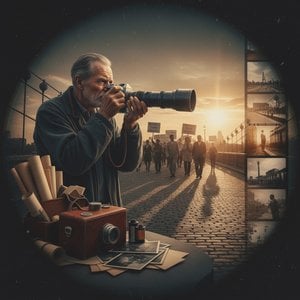
Witnessing History Through Lens & Light: Documentary Photography's Enduring Legacy
Explore the powerful history of documentary photography – from its origins to contemporary masters like Gordon Parks & W. Eugene Smith. Discover how this art form shapes our understanding of society and witness pivotal moments in time.

Pictorialism: A Search for Artistic Photography's Soul – Aesthetics, Techniques & Legacy
Explore the captivating world of Pictorialism – a pivotal movement that transformed photography into fine art. Discover key artists like Stieglitz & Käsebier, techniques, and collecting tips from experts.

Monochrome Visions: Exploring the Aesthetic & Historical Significance of Black & White Photography
Explore the rich history & artistic power of black and white photography. From early techniques to iconic masters like Ansel Adams, discover why monochrome continues to captivate art lovers today. Expert insights for collectors.

Beyond the Lens: Photography's Enduring Influence on Modern & Contemporary Art
Explore photography's pivotal role in shaping modern & contemporary art. Discover key movements, influential artists like Stieglitz, and expert collecting advice from ArtsDot.
