

 Preview
 Send
Send Share
Share
 Details

 Download
 Similars
 X-Ray
X-Ray Diaporama
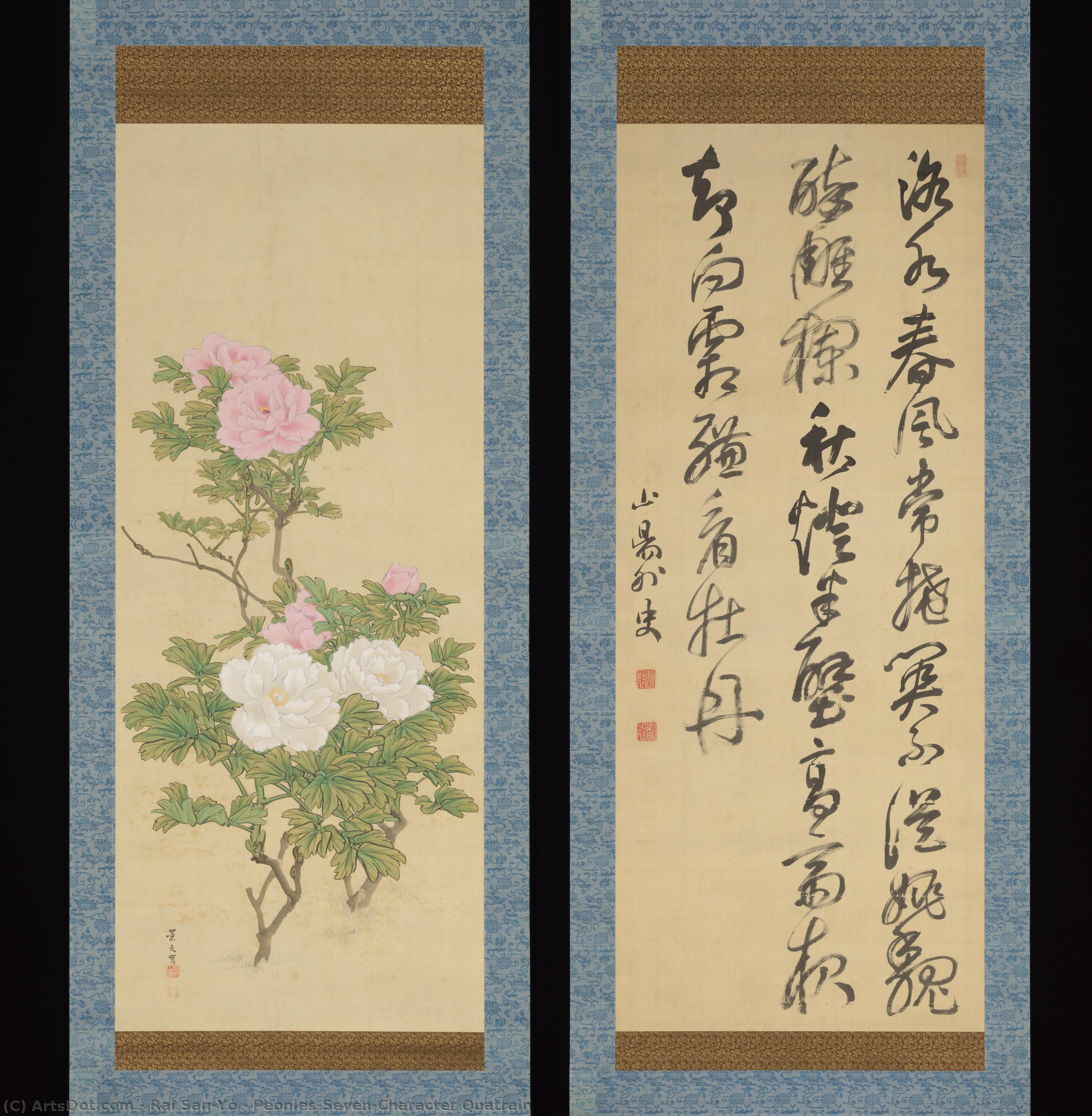
Peonies/Seven-Character Quatrain
 1830
1830 140.0 x 57.0 cm
 Read More
Hand Made Oil Reproduction
Hand-painted oil on canvas in your size and frame, made to order by our artists. ( Switch to Print Switch to Image)




































Pick from our preset sizes that match the artwork's original proportions.

You may enter your own dimensions to fit a specific frame or space. If your selected size does not match the original image's proportions, we will either crop the artwork or extend the painting with additional hand-painted elements. A digital mockup will be sent for your approval before production begins.
Please note that the on-screen preview does not reflect the actual cropping or extension. Only the mockup will accurately show the final composition.
While custom sizes are available, we recommend selecting a dimension from the predefined list to preserve the original proportions.
After order, ArtsDot.com team will email client for instructions and provide a mockup preview
Worldwide Delivery () in 3/4 weeks instead of standard 5 weeks. (9 August). No compromise on quality.

Free Worldwide Express Shipping

High-Quality Linen Canvas

Full Shipping Insurance

Customs Tax Refund Guarantee

True Color Matching Guarantee

60-Day Return Policy (Defects Only)

100% Money-Back Guarantee

Bulk Discount Offer
 Glass option is only available in size under 110 CM

Peonies/Seven-Character Quatrain
Reproduction Medium
Reproduction Size
-


Total Price
$ 263
Artwork Description
Related Artworks


Artist Biography
early life and education
rai san’yō, a prominent japanese artist, was born on january 21, 1780, in aki province. he hailed from a samurai family of the hiroshima domain. rai san’yō's early education involved studying humanities with his uncles, who were notable neo-confucian scholars. later, he attended the shōheikō, a prestigious training school for government bureaucrats in edo.artistic career and contributions
rai san’yō is celebrated for his multifaceted artistic talents, which include:- rai san’yō's work as a painter is characterized by its association with the nanga school, known for its emphasis on individual expression and personal interpretation.
- he was an accomplished calligrapher, as evident in his numerous works featuring intricate, cursive script.
- as a poet, rai san’yō penned chinese verses that showcased his mastery of language and form.
- unexpected meeting on the yodo river (1823) - a collaborative piece with tanomura chikuden, showcasing their artistic and literary bond. (view on ArtsDot)
- letter (ca. 1820–28) - a hanging scroll featuring rai san’yō's calligraphic prowess. (view on ArtsDot)
museums and collections
rai san’yō's works are featured in several prominent museums, including:- the metropolitan museum of art - housing a collection of his calligraphic pieces, such as "a chinese verse on 'compiling history'" (view on the met's website).
- the moa museum of art (japan) - although not specifically mentioned, the museum's focus on japanese and asian art makes it a relevant institution for studying rai san’yō's work. (learn more about the moa museum on ArtsDot).
legacy and later life
rai san’yō passed away on october 16, 1832, in kyoto. his legacy as a scholar, poet, and artist continues to inspire art enthusiasts and scholars alike. for more information on rai san’yō's life and works, visit ArtsDot, which features an extensive collection of his paintings and calligraphic pieces. important dates: * january 21, 1780: born in aki province * october 16, 1832: passed away in kyoto
rai san’yō
1780 - 1832 , Japan
Quick Facts
- Artistic Movement Or Style: Nanga School
- Artists Or Movements Influenced By This Artist: ['Neo-Confucianism']
- Artists Who Influenced This Artist: ['Tanomura Chikuden']
- Date Of Birth: January 21, 1780
- Date Of Death: October 16, 1832
- Full Name: Rai San’yō
- Nationality: Japanese
- Notable Artworks:
- Unexpected Meeting on the Yodo River
- Letter
- Peonies/Seven-Character Quatrain
- Place Of Birth: Aki Prefecture, Japan



