

 Preview
 Send
Send Share
Share
 Details

 Download
 Similars
 X-Ray
X-Ray Diaporama
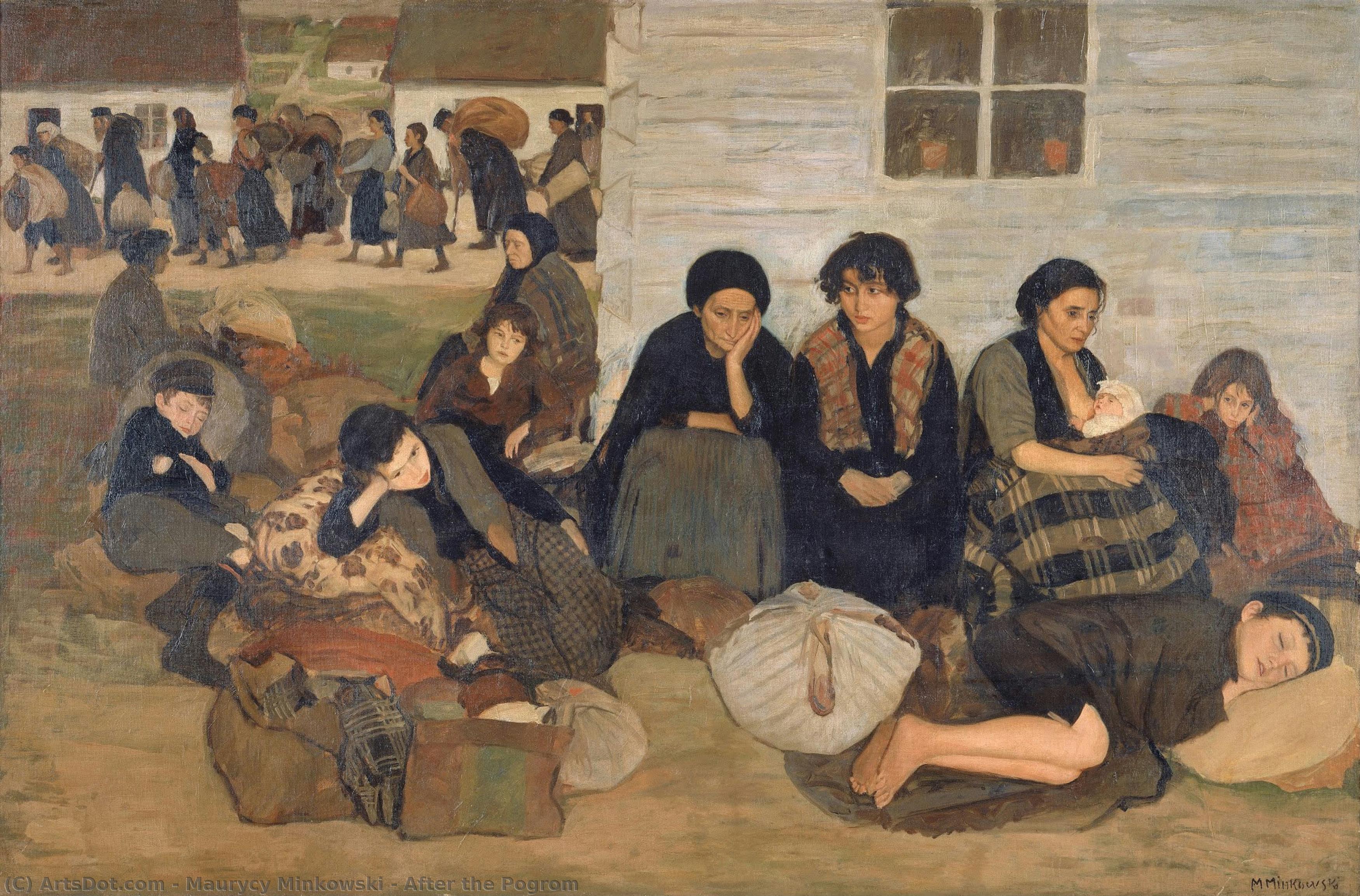
After the Pogrom
 Oil On Canvas
- WallArt
- Realism
 1910
1910- Modern
 103.0 x 152.0 cm
 The Jewish Museum
 Read More
Hand Made Oil Reproduction
Hand-painted oil on canvas in your size and frame, made to order by our artists. ( Switch to Print Switch to Image)




P118B $10

P118H $10

P118W $10

P438Z $10

P508JH $12

P508YH $12

P805H $10

P805Z $10

P919BZ $10

P919G $10

P919XJ $10

P959ZH $10

P968JZ $12

W106C $8

W218G $10

W218JH $8

W218Y $10

W307PJ $10

W316G $10

W316PJ $8

W316Y $10

W398PJ $8

W4111J $10

W500HY $15

W500JH $15

W692G $12

W849H $8

W940BG $15

W953PJ $8




Pick from our preset sizes that match the artwork's original proportions.

You may enter your own dimensions to fit a specific frame or space. If your selected size does not match the original image's proportions, we will either crop the artwork or extend the painting with additional hand-painted elements. A digital mockup will be sent for your approval before production begins.
Please note that the on-screen preview does not reflect the actual cropping or extension. Only the mockup will accurately show the final composition.
While custom sizes are available, we recommend selecting a dimension from the predefined list to preserve the original proportions.
After order, ArtsDot.com team will email client for instructions and provide a mockup preview
Worldwide Delivery () in 3/4 weeks instead of standard 5 weeks. (9 August). No compromise on quality.

Free Worldwide Express Shipping

High-Quality Linen Canvas

Full Shipping Insurance

Customs Tax Refund Guarantee

True Color Matching Guarantee

60-Day Return Policy (Defects Only)

100% Money-Back Guarantee

Bulk Discount Offer
 Glass option is only available in size under 110 CM

After the Pogrom
Reproduction Medium
Reproduction Size
-


Total Price
$ 263
Artwork Description
A Silent Witness to Displacement
In the hauntingly beautiful oil on canvas, After the Pogrom, Maurycy Minkowski captures a moment of profound stillness amidst the wreckage of human tragedy. The painting presents a somber assembly of women and children, refugees caught in the wake of violence, resting during their desperate flight. There is a heavy, palpable atmosphere that clings to the figures; their dark-hued garments and the makeshift bundles they carry serve as physical manifestations of their loss and displacement. Minkowski masterfully uses light and shadow to delineate a scene where the subjects, though physically grouped together, appear profoundly isolated within their own grief. Each face seems locked in a private reverie, contemplating a sorrowful present and an uncertain, frightening future that lies ahead.
The technique employed by Minkowski is one of deep empathy and observational precision. Through his use of rich, earthy tones and a controlled palette, he creates a sense of weight and gravity that anchors the viewer to the scene. The composition utilizes natural light to illuminate the textures of worn fabric and the weary expressions of the displaced, lending a tactile reality to their suffering. This is not merely a depiction of a historical event, but an exploration of the human spirit under duress. For the collector or interior designer, this piece offers more than just visual depth; it provides a powerful focal point that commands attention through its emotional gravity and masterful execution of light and form.
The Transformation of a Vision
To understand the soul of this work, one must look into the life of the artist himself. Born in Warsaw, Maurycy Minkowski lived a life defined by a unique kind of silence. Having lost his hearing and speech during childhood, he developed an acute sensitivity to the visual world, a trait that would later define his artistic legacy. While his early career was dedicated to the serene beauty of landscapes and the formal dignity of portraits, a pivotal moment in 1906 forever altered his creative trajectory. Witnessing the brutal pogrom in Bialystok, Minkowski found his purpose shifted from the aesthetic to the testimonial.
This painting stands as a testament to that transformation. The artist moved away from the tranquil and toward the visceral, using his brush to document the persecution of Eastern European Jews and the subsequent waves of mass migration. In After the Pogrom, we see the convergence of his personal experience with the collective trauma of a people. The work transcends simple reportage, becoming a symbolic landscape of resilience and despair. For those seeking to adorn a space with art that possesses historical significance and profound narrative depth, Minkowski’s work offers an unparalleled opportunity to engage with a vital chapter of human history through a lens of exquisite, silent strength.
Related Artworks


Artist Biography
A Life Silenced, A Vision Heard: The Poignant World of Maurycy Minkowski
Maurycy Minkowski (1881-1930) remains a compelling yet often overlooked figure in the landscape of early 20th-century art. Born into a prosperous Jewish family in Warsaw, Poland, his life was marked by an early tragedy – an illness at the age of five that robbed him of both hearing and speech. This profound silence, however, did not extinguish his creative spirit; rather, it seems to have intensified it, forging a unique artistic voice deeply attuned to the struggles and resilience of Jewish life in Eastern Europe. His story is one of overcoming adversity, capturing a vanishing world on canvas with an empathy born from personal experience, and ultimately, leaving behind a legacy that speaks volumes despite his own inability to audibly express himself. He was initially known as Maurice Minkowski or Minkovski.Early Training and Artistic Development
Despite the challenges posed by his deafness, Minkowski’s parents recognized and nurtured his burgeoning talent for drawing. He received private lessons before formally entering the Kraków Academy of Fine Arts in 1901, studying under esteemed artists like Józef Mehoffer, Jan Stanisławski, and Leon Wyczółkowski. This rigorous academic training provided him with a solid foundation in technique, but it was his personal experiences and observations that would ultimately shape his distinctive style. Early works demonstrate a proficiency in portraiture and landscape painting, yet even these pieces hint at the emotional depth and social consciousness that would come to define his mature oeuvre. He graduated from the Academy in 1905 with a gold medal, signaling early recognition of his potential.Capturing a World on the Brink: Shtetl Life and Social Commentary
The pivotal period in Minkowski’s artistic development coincided with the tumultuous events of the Polish Revolution in 1905 and the subsequent wave of pogroms that swept through Eastern Europe. These horrific acts of violence profoundly impacted him, shifting his focus from more conventional subjects to the plight of Jewish communities facing persecution and displacement. He began documenting the suffering he witnessed – families fleeing their homes, the desperation of refugees, the vulnerability of children – with a raw honesty and emotional intensity rarely seen in contemporary art. His paintings are not merely depictions of events; they are visceral expressions of empathy, capturing the psychological toll of trauma and the fragility of human existence. He became known for his genre scenes of *shtetl* life, offering intimate glimpses into the daily struggles and joys of a world on the brink of irreversible change. Works like “After the Pogrom” (1905) stand as powerful testaments to this period, portraying the aftermath of violence with haunting realism. “He Cast a Look and Went Mad” (1910), while less overtly dramatic, explores the tensions between Jewish tradition and modernity, reflecting the intellectual ferment of the time.A Legacy Rediscovered: Travels, Recognition, and Lasting Impact
Following the unrest in Poland, Minkowski embarked on a period of travel throughout Western Europe, seeking to broaden his artistic horizons and exhibit his work. He eventually settled in Paris around 1908, though he continued to return to Eastern Europe for exhibitions. While he achieved some recognition during his lifetime – an obituary in the *Jewish Chronicle* described him as “well-known” – his art remained largely underappreciated by mainstream audiences. His paintings were dispersed after his untimely death in a traffic accident in Buenos Aires in 1930, while on tour with an exhibition of over 200 works. For decades, his work faded into relative obscurity. However, recent years have witnessed a growing appreciation for Minkowski’s unique contribution to art history. The rediscovery of his paintings, particularly through the efforts of institutions like the Fundación IWO in Buenos Aires and the POLIN Museum of the History of Polish Jews in Warsaw, has brought his poignant vision to a wider audience. His work now stands as a vital record of a lost world, offering invaluable insights into the cultural, social, and political complexities of early 20th-century Jewish life.The Enduring Power of Silent Testimony
Maurycy Minkowski’s art is more than just historical documentation; it is a testament to the power of human empathy and the enduring strength of the human spirit. His paintings resonate with a profound sense of loss, but also with a quiet dignity and resilience that transcends cultural boundaries. Despite his own inability to speak, he gave voice to those who were often silenced – the victims of persecution, the marginalized communities struggling for survival, the ordinary people whose lives were irrevocably altered by historical forces beyond their control. His legacy serves as a powerful reminder of the importance of bearing witness, preserving memory, and honoring the stories that might otherwise be forgotten. His work continues to inspire reflection on themes of identity, displacement, and the enduring search for belonging in a world marked by conflict and change.
Maurycy Minkowski
1881 - 1930 , Poland
Quick Facts
- Artistic Movement Or Style:
- Cubism
- Surrealism
- Artists Or Movements Influenced By This Artist:
- Henri Matisse
- School of Paris
- Artists Who Influenced This Artist:
- Paul Cézanne
- Georges Braque
- Date Of Birth: October 25, 1881
- Date Of Death: April 8, 1973
- Full Name: Pablo Diego José Francisco de Paula Juan Nepomuceno María de los Remedios Cipriano de la Santísima Trinidad Ruiz y Picasso
- Nationality: Spanish
- Notable Artworks:
- Guernica
- Les Demoiselles d'Avignon
- The Weeping Woman
- Place Of Birth: Málaga, Spain
Related Articles

The Enduring Legacy of Oil on Canvas: Technique, History & Aesthetic Impact
Explore the rich history & techniques of oil painting – from Renaissance masters to Impressionism. Discover pigments, layering methods, and why this timeless medium endures. Expert insights for artists & art enthusiasts.

Oil on Canvas: A Historical & Technical Exploration of a Timeless Artistic Medium
Explore the rich history & enduring techniques of oil painting on canvas. Discover the science behind its longevity, conservation practices, and contemporary relevance. Expert insights for art enthusiasts.

Somber Masterpieces: 10 Artworks That Stir the Soul |
Delve into 10 somber masterpieces by Rembrandt, Munch & Van Gogh. Explore emotional art history, dark palettes & powerful expression. Find museum-quality reproductions & curated wall decor ideas at . Discover all masterpieces online.

The Enduring Power of Painting: A Historical & Contemporary Exploration of Form and Emotion
Explore the rich history & enduring techniques of oil painting with ArtsDot. Discover masterpieces, learn about art collecting, and find authentic handmade reproductions crafted by skilled artists.

The Enduring Muse: Women as Subject & Symbol in Art History
Explore the rich history of women in art – from iconic muses to groundbreaking artists. Discover feminist movements, global perspectives & reclaim female narratives with ArtsDot.



