

 Preview
 Send
Send Share
Share
 Details

 Download
 Similars
 X-Ray
X-Ray Diaporama
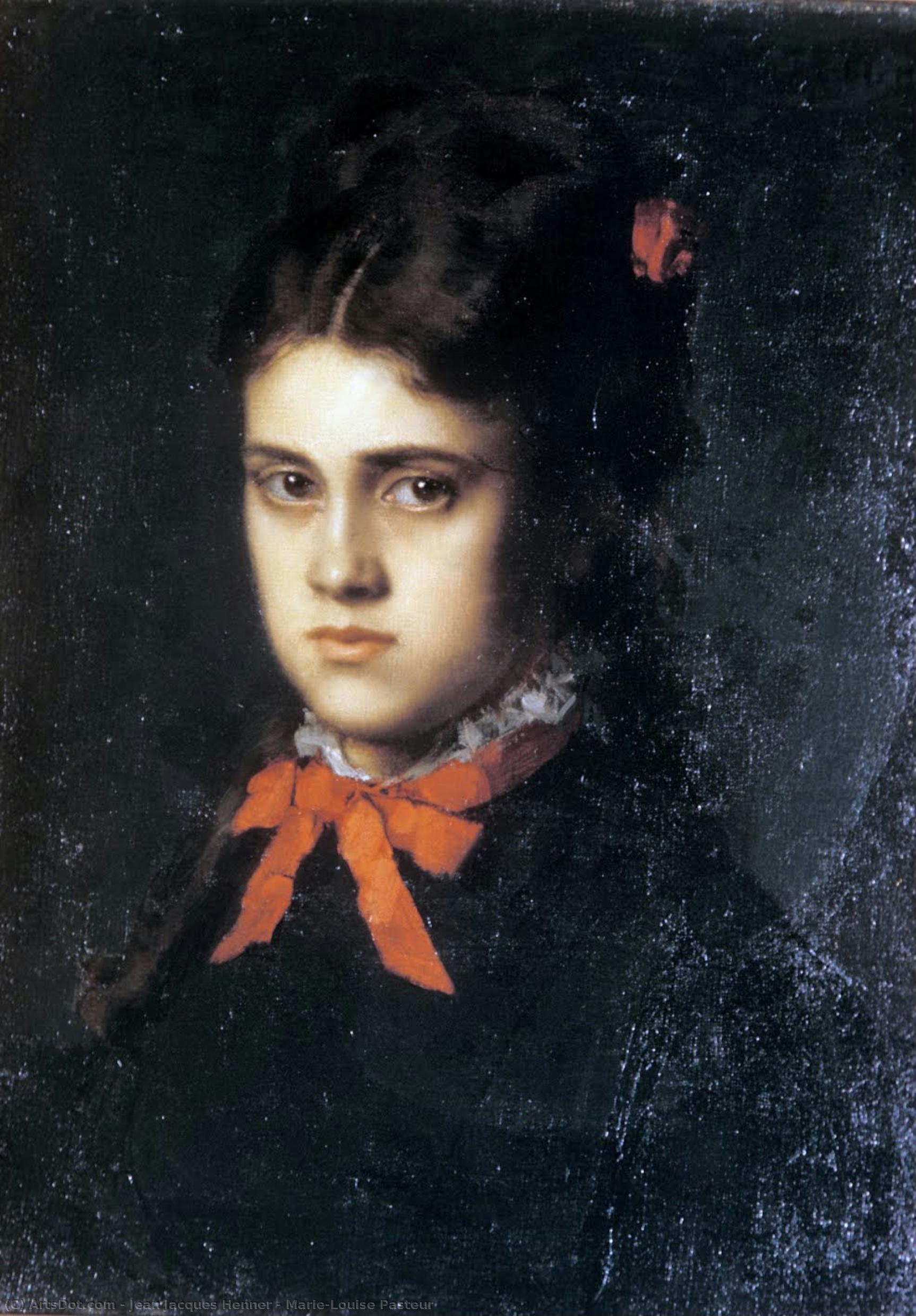
Marie-Louise Pasteur


 Read More
Hand Made Oil Reproduction
Hand-painted oil on canvas in your size and frame, made to order by our artists. ( Buy Print Buy Image)




P118B $10

P118H $10

P118W $10

P438Z $10

P508JH $12

P508YH $12

P805H $10

P805Z $10

P919BZ $10

P919G $10

P919XJ $10

P959ZH $10

P968JZ $12

W106C $8

W218G $10

W218JH $8

W218Y $10

W307PJ $10

W316G $10

W316PJ $8

W316Y $10

W398PJ $8

W4111J $10

W500HY $15

W500JH $15

W692G $12

W849H $8

W940BG $15

W953PJ $8




Pick from our preset sizes that match the artwork's original proportions.

You may enter your own dimensions to fit a specific frame or space. If your selected size does not match the original image's proportions, we will either crop the artwork or extend the painting with additional hand-painted elements. A digital mockup will be sent for your approval before production begins.
Please note that the on-screen preview does not reflect the actual cropping or extension. Only the mockup will accurately show the final composition.
While custom sizes are available, we recommend selecting a dimension from the predefined list to preserve the original proportions.
After order, ArtsDot.com team will email client for instructions and provide a mockup preview
Worldwide Delivery () in 3/4 weeks instead of standard 5 weeks. (12 August). No compromise on quality.

Free Worldwide Express Shipping

High-Quality Linen Canvas

Full Shipping Insurance

Customs Tax Refund Guarantee

True Color Matching Guarantee

60-Day Return Policy (Defects Only)

100% Money-Back Guarantee

Bulk Discount Offer
 Glass option is only available in size under 110 CM

Marie-Louise Pasteur
Reproduction Medium
Reproduction Size
-


Total Price
$ 263
Artwork Description
Marie-Louise Pasteur - Jean-Jacques Henner: A Portrait of Scientific Partnership
Jean-Jacques Henner’s “Portrait de Marie-Louise Pasteur” stands as a testament to the profound influence of artistic vision on scientific endeavor. Painted in 1876, shortly after Pasteur married René Vallery-Radot and established his renowned institute in Paris, this artwork transcends mere representation; it embodies the spirit of collaboration—a cornerstone of Pasteur’s groundbreaking discoveries.
- Subject Matter: The portrait captures Marie Laurent Pasteur (later Vallery-Radot), Pasteur's wife, gazing directly at the viewer with an expression of quiet dignity and intelligence. Her gaze conveys a sense of thoughtfulness and resilience—qualities mirroring Pasteur’s unwavering dedication to scientific research.
- Style & Technique: Henner employed sfumato – a technique perfected by Leonardo da Vinci – to achieve remarkable subtlety in capturing Marie's likeness. Layers of translucent glaze create an ethereal glow, softening the contours of her face and conveying an atmosphere of serene contemplation. The artist’s meticulous attention to detail is evident in the rendering of her hair and clothing, reflecting the prevailing academic style prevalent during the Belle Époque.
- Historical Context: Created amidst the fervor of scientific progress—Pasteur's work on germ theory revolutionized medicine—the portrait reflects the intellectual climate of its time. It speaks to the importance placed upon observation, experimentation, and reasoned inquiry – values deeply ingrained in Henner’s artistic sensibilities.
- Symbolism: The pose itself is significant. Marie’s direct gaze symbolizes confidence and intellect, qualities Pasteur admired greatly. Her stillness suggests inner strength—a reflection of Pasteur's steadfast perseverance in pursuing scientific breakthroughs despite numerous obstacles.
Displayed prominently at the Musée National Jean-Jacques Henner in Paris, “Portrait de Marie-Louise Pasteur” continues to captivate audiences with its luminous beauty and evocative portrayal of a remarkable woman—a companion who supported Louis Pasteur’s scientific pursuits. It serves as an enduring emblem of artistic inspiration fueled by intellectual curiosity.
The Musée National Jean-Jacques Henner, founded in 1924, houses over 130 paintings by Henner and celebrates his legacy as a master of sfumato and chiaroscuro—techniques that elevate this portrait beyond mere likeness into an exploration of emotion and atmosphere.
Artist Information: Jean-Jacques Henner
Jean-Jacques Henner (1829–1905) was born in Bernwiller, Alsace. He began his artistic journey at the École des Beaux Arts in Paris, guided by Michel Martin Drolling and François-Édouard Picot. His early training instilled in him a profound appreciation for classical aesthetics—a sensibility that profoundly shaped his oeuvre.
Henner’s mastery lay not merely in technical skill but in his ability to infuse his paintings with palpable emotion. He meticulously studied the works of Leonardo da Vinci and Rembrandt, absorbing their techniques of sfumato and chiaroscuro – methods he skillfully employed to create luminous landscapes and portraits that resonate with psychological depth.
Additional Research: The Musée Pasteur & Scientific Collaboration
The Musée National Jean-Jacques Henner’s dedication to preserving Henner's artistic legacy underscores the importance of recognizing the symbiotic relationship between art and science. As noted in its official website, the museum celebrates Henner’s contribution to French painting while simultaneously honoring his profound connection with Louis Pasteur—a partnership that exemplifies the transformative power of intellectual exchange.
Furthermore, research into Marie Laurent Pasteur reveals her unwavering support for Pasteur's scientific endeavors – a testament to their enduring bond. Her presence at Pasteur’s institute and her active involvement in his experiments underscore the significance of personal relationships in fostering innovation and advancing knowledge.
Related Artworks


Artist Biography
A Master of Shadow and Light: The Life and Art of Jean-Jacques Henner
Born in the tranquil Alsatian village of Bernwiller in 1829, Jean-Jacques Henner emerged as a pivotal figure in 19th-century French painting. His artistic journey, steeped in classical training yet imbued with a uniquely personal sensibility, led him to become celebrated for his evocative depictions of nudes, religious scenes, and portraits. Henner’s mastery lay not merely in technical skill—though he possessed that in abundance—but in his ability to conjure atmosphere and emotion through the subtle manipulation of light and shadow, a technique deeply rooted in the traditions of sfumato and chiaroscuro. From humble beginnings as the son of farmers, Henner's path was one guided by innate talent and nurtured by dedicated study, ultimately leading him to the highest echelons of artistic recognition in France. His early education at the College of Altkirch revealed a burgeoning aptitude for drawing, prompting his parents to support further studies with Gabriel-Christophe Guérin in Strasbourg before he ventured to Paris.Formative Years and Academic Triumph
The year 1848 marked a turning point as Henner entered the prestigious École des Beaux-Arts in Paris, immersing himself in the rigorous academic environment that would shape his artistic foundation. He initially studied under Michel Martin Drolling and later François-Édouard Picot, absorbing their techniques and approaches to composition and form. However, it was the coveted Prix de Rome, awarded in 1858 for his painting “Adam and Eve finding the Body of Abel,” that truly propelled Henner’s career forward. This prestigious prize afforded him a five-year residency at the Villa Medici in Rome, an invaluable opportunity to study the masterpieces of the Italian Renaissance firsthand. Under the guidance of Jean-Hippolyte Flandrin, he delved into the works of masters like Correggio and Titian, whose influence would become profoundly evident in his own artistic style. Rome wasn’t merely a place of study; it was an immersion into a world of light, color, and sentiment that deeply resonated with Henner's developing aesthetic sensibilities. He painted landscapes and copies of old masters during this period, honing his skills and establishing a reputation as a promising artist.A Style Defined by Nuance and Emotion
Henner’s artistic style is immediately recognizable for its delicate handling of light and shadow. He wasn't interested in harsh contrasts but rather in the subtle gradations that create an ethereal, dreamlike quality. The sfumato technique—borrowed from Leonardo da Vinci—allowed him to soften edges and blend colors seamlessly, creating a sense of atmospheric depth. This was coupled with a masterful use of chiaroscuro, employing dramatic contrasts between light and dark to heighten emotional intensity and draw the viewer’s eye to key focal points within his compositions. His subjects often included idealized female figures, frequently depicted in languid poses or imbued with religious symbolism. Works like “Chaste Susanna” (1865), now housed in the Musée d'Orsay, exemplify this approach—the figure of Susanna bathed in a soft, diffused light that emphasizes her vulnerability and innocence. Other notable works such as "Byblis turned into a Spring" (1867) demonstrate his ability to weave evocative narratives through painting, while “The Magdalene” (1878) offers a poignant depiction of religious devotion.Recognition and Legacy
Throughout the latter half of the 19th century, Henner’s career flourished. He consistently exhibited at the Salon, garnering critical acclaim and attracting a devoted following. His talent was formally recognized with numerous accolades, including being named a Knight of the Legion of Honor in 1873, an Officer in 1878, and a Commander in 1889. In 1889 he succeeded Cabanel at the Institut de France, solidifying his position among the most esteemed artists of his time. Beyond his own artistic achievements, Henner was also a dedicated educator. He established “the studio of the ladies” alongside Carolus-Duran, providing instruction to women artists who were often excluded from formal art academies—a testament to his progressive views and commitment to fostering talent regardless of gender. His influence extended to numerous pupils including Mathilde Mueden Leisenring, Dimitrie Serafim, Dorothy Tennant, and Suzanne Valadon. Perhaps the most curious legacy is linked to his painting “Saint Fabiola” (1885), the original of which is now lost but whose enduring appeal has resulted in over 500 reproductions across various media as part of Francis Alÿs’s "Fabiola Project." Jean-Jacques Henner died in 1905, leaving behind a rich artistic legacy that continues to captivate and inspire. His paintings remain testaments to his mastery of light, shadow, and the human form—a lasting contribution to the world of art.
Jean-Jacques Henner
1829 - 1905 , France
Quick Facts
- Artistic Movement Or Style: Academic realism
- Artists Or Movements Influenced By This Artist:
- Thérèse Schwartze
- Women artists
- Artists Who Influenced This Artist:
- Correggio
- Giorgione
- Flandrin
- Date Of Birth: March 5, 1829
- Date Of Death: July 23, 1905
- Full Name: Jean-Jacques Henner
- Nationality: French
- Notable Artworks:
- Bather Asleep
- Chaste Susanna
- Byblis turned into a Spring
- The Magdalene
- Saint Fabiola
- Place Of Birth: Bernwiller, France
Related Articles

The Enduring Allure of the Nude: A Historical & Artistic Exploration of the Human Form
Explore the captivating history of nude art! Discover iconic paintings & artists from classical to modern eras. Uncover symbolism, techniques & find museum-quality reproductions at ArtsDot.

Impressionism's Masterpieces: 10 Paintings That Defined a Movement | ArtsDot
Journey through Impressionism's heart with 10 iconic paintings by Monet, Renoir & Degas. Explore light, color & the stories behind these masterpieces. Find museum-quality art reproductions and elevate your home decor on ArtsDot.com.

Cézanne's Masterpieces: 25 Iconic Artworks to Transform Your Space
Journey through 25 iconic artworks by Paul Cézanne – a master of Impressionism and Post-Impressionism. Explore his landscapes, still lifes, and the stories behind these timeless masterpieces. Discover museum-quality reproductions & curated decor at ArtsDot.com.

The Enduring Legacy of Formal Portraiture: Power, Identity & Artistic Exploration
Explore the rich history of formal portraiture & its enduring power to capture identity and shape perception. Discover investment-worthy artworks, expert appraisals, and custom reproduction services at ArtsDot.

Fleeting Moments & Radiant Light: Exploring the Enduring Legacy of Impressionism
Explore the captivating world of Impressionism! Discover its history, key artists like Monet & Renoir, defining techniques, and lasting impact on modern art. Expert insights for collectors.



