


 Preview
 Send
Send Share
Share
 Details
 Guide
Guide

 Download
 Similars
 X-Ray
X-Ray Diaporama
 Stats
StatsSusanna and the Elders
 Baroque
 56.0 x 40.0 cm
 Read More
Hand Made Oil Reproduction
Hand-painted oil on canvas in your size and frame, made to order by our artists. ( Switch to Print Switch to Digital Image)




































Pick from our preset sizes that match the artwork's original proportions.

You may enter your own dimensions to fit a specific frame or space. If your selected size does not match the original image's proportions, we will either crop the artwork or extend the painting with additional hand-painted elements. A digital mockup will be sent for your approval before production begins.
Please note that the on-screen preview does not reflect the actual cropping or extension. Only the mockup will accurately show the final composition.
While custom sizes are available, we recommend selecting a dimension from the predefined list to preserve the original proportions.
After order, ArtsDot.com team will email client for instructions and provide a mockup preview
Worldwide Delivery () in 3/4 weeks instead of standard 5 weeks. (21 September). No compromise on quality.

Free Worldwide Express Shipping

High-Quality Linen Canvas

Full Shipping Insurance

Customs Tax Refund Guarantee

True Color Matching Guarantee

100-Day Return Policy (Defects Only)

100% Money-Back Guarantee

Bulk Discount Offer
 Glass option is only available in size under 110 CM

Susanna and the Elders
Reproduction Medium
Reproduction Size
-


Total Price
$ 263
Introduction to Jan Both and Baroque
Jan Both was a Dutch painter born in Utrecht in 1618, known for his landscapes and genre scenes. He was part of the second generation of Dutch Caravaggisti, who were influenced by the Italian master Michelangelo Merisi da Caravaggio's dramatic use of light and shadow. Baroque art emerged during the late Renaissance period in Rome around 1600 and expanded throughout Europe, characterized by exaggerated lighting, intense emotions, and release from restraint in a period of artistic sensationalism.Susanna and the Elders: The Biblical Story
The painting Susanna and the Elders is based on the biblical story found in the Book of Daniel (Chapter 13). Susanna, a virtuous Jewish woman, takes a bath in her garden when two elders secretly watch her. They later approach her with false accusations of adultery unless she submits to their sexual demands. Susanna refuses and is taken to court, where the prophet Daniel intervenes, exposing the elders' lies and saving Susanna's reputation.Jan Both's Interpretation
Susanna and the Elders by Jan Both depicts the moment when the two elders confront Susanna (Fig. 1). The painting is an oil on panel, measuring 56 x 40 cm, and it is assumed that the figures were painted by Jan's brother, Andries Both. The dramatic use of light and shadow highlights Susanna's vulnerability while emphasizing the elders' malicious intent.Jan Massys' Susanna and the Elders
Another notable version of this biblical story is Susanna and the Elders by Jan Massys (Fig. 2), an oil on panel painting from 1564. The composition features Susanna in a more prominent position, surrounded by lush vegetation, while the elders lurk in the background, spying on her.The Significance of Susanna and the Elders
Susanna and the Elders has been interpreted as an allegory of virtue versus vice, with Susanna representing innocence and purity, while the elders embody lust and deceit. The painting serves as a reminder of the importance of maintaining moral values in the face of adversity.Acquiring Your Own Hand-Painted Reproduction
If you are interested in acquiring a hand-painted reproduction of Susanna and the Elders by Jan Both or any other artwork, visit our museum collection. Our skilled artists create exquisite oil painting reproductions on high-grade canvas to bring your favorite masterpieces to life.- Both Paintings Susanna and the Elders by Jan Both is an entirely hand-painted oil painting reproduction by one of our talented oil painting artists.
Conclusion
Jan Both's Susanna and the Elders offers a powerful interpretation of the biblical story, highlighting Susanna's vulnerability and the elders' malicious intent. By acquiring a hand-painted reproduction from ArtsDot, you can enjoy this masterpiece in your own home or office, serving as a reminder of the importance of maintaining moral values in today's world. Note: All information provided is for educational purposes only and should not be considered legal advice.Related Artworks


Artist Biography
Jan Both (1610-1652): Master of Mediterranean Light
Jan Dirksz Both was a Dutch painter, draughtsman, and etcher who emerged as one of the foremost figures in the burgeoning “Italianate” landscape movement during the Dutch Golden Age. Born around 1615/1618 in Utrecht, he was the younger brother of Andries Both, and their father, Dirck Both, a glass painter or glazier, instilled in them an early appreciation for artistic craftsmanship. While biographical details remain somewhat sparse, scholarly research suggests that Jan’s training encompassed instruction from Abraham Bloemaert and Gerrit van Honthorst, marking him amongst the influential artists of his time.- Early Life & Training: Both's formative years were spent in Utrecht, where he honed his skills alongside his brother Andries, absorbing techniques from their father’s glazing practice – a craft deeply rooted in Flemish traditions.
- Roman Influence: Around 1638, Jan and Andries embarked on a transformative journey to Rome via France, immersing themselves in the artistic fervor of the papal court and encountering luminaries like Bloemaert and Gerrit van Honthorst. This exposure profoundly shaped their stylistic sensibilities.
The Romanate Style & Collaboration with Lorrain
Rome proved to be a crucible for Both’s artistic development. While Andries focused on genre scenes in the manner of Pieter van Laer, Jan dedicated himself primarily to landscape painting—a style heavily indebted to Claude Lorrain—capturing the ethereal beauty of the Mediterranean region with an unparalleled mastery of light and color. Notably, he collaborated closely with Herman van Swanevelt on a monumental project for the Buen Retiro Palace in Madrid, demonstrating his ambition and artistic prowess within the highest echelons of European patronage. This partnership cemented Both’s reputation as a leading landscape innovator.Notable Paintings & Artistic Characteristics
Both's oeuvre is characterized by expansive, imaginative landscapes bathed in a luminous golden light—a hallmark of Lorrain’s style and indicative of the broader artistic currents circulating throughout Europe. His masterpiece, “Landscape with Bandits Leading Prisoners” (Museum of Fine Arts, Boston), exemplifies this aesthetic brilliance. The diagonal road draws the eye into the scene, juxtaposing realistic figures against a backdrop of idyllic vistas populated by meticulously rendered vegetation. Recurring motifs include religious or mythological figures—as seen in “Judgement of Paris” (London, National Gallery)—often executed by fellow Utrecht artists like Cornelis van Poelenburch, underscoring Both’s engagement with humanist ideals and artistic conventions.Legacy & Influence
Jan Both's brother Andries tragically succumbed to illness in Venice during their return journey from Rome. Despite the brevity of his life, Andries established himself as a respected artist specializing in peasant scenes—a genre reflecting the social realities of the time. Jan Both’s artistic legacy extends beyond individual paintings; he served as a teacher to talented pupils like Barend Bispinck and Willem de Heusch, ensuring that his stylistic innovations would continue to inspire generations of artists. His work remains celebrated for its evocative atmosphere, masterful technique, and contribution to the development of Dutch landscape painting—a testament to Both’s enduring influence on European art history.Collections
- Fitzwilliam Museum at the University of Cambridge
- Hermitage, St. Petersburg
- Kunsthistorisches Museum, Vienna
- Louvre, Paris
- Mauritshuis Royal Picture Gallery

Jan Both
1610 - 1652 , Netherlands
Quick Facts
- Artistic Movement Or Style: Italianate Landscape Painting
- Artists Or Movements Influenced By This Artist: ['Claude Lorrain']
- Artists Who Influenced This Artist:
- Abraham Bloemaert
- Gerrit van Honthorst
- Date Of Birth: Utrecht, Netherlands (1610)
- Date Of Death: August 9, 1652
- Full Name: Jan Dirksz Both
- Nationality: Dutch
- Notable Artworks:
- Saint Anne with the Virgin and Child
- Landscape with bandits leading prisoners
- Judgement of Paris
- Place Of Birth: Utrecht
Related Articles

Golden Age Reflections: Dutch Baroque Painting & Cultural Innovation
Explore the Dutch Golden Age of painting! Discover key artists like Vermeer & ter Borch, their innovative techniques, and the rich cultural context behind these Baroque masterpieces. Learn about collecting & appreciating this iconic art period.
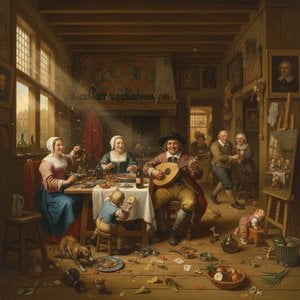
Jan Steen: A Master of Dutch Genre Painting & the Golden Age
Explore the life & art of Jan Steen, a leading Dutch Golden Age painter renowned for his humorous genre scenes & insightful social commentary. Discover his techniques, legacy, and collecting tips.

Dutch Baroque Masters: 10 Paintings That Shaped an Era | ArtsDot
Journey through the Golden Age with our guide to the Top 10 Dutch Baroque masterpieces! Explore iconic paintings by Rembrandt, Vermeer & Frans Hals. Find museum-quality art reproductions and elevate your home decor at ArtsDot.com.

Illuminating Innovation: Exploring the Dutch Golden Age of Painting
Explore the Dutch Golden Age of painting with ArtsDot. Discover Rembrandt, Vermeer & other Masters. Learn about key characteristics, iconic artworks, and lasting influence. Expert insights for collectors & enthusiasts.

Dutch Masters: 10 Golden Age Paintings That Still Inspire |
Journey into the Dutch Golden Age! Explore 10 iconic paintings by Rembrandt, Vermeer & Hals. Discover the stories behind these Baroque masterpieces and find museum-quality art reproductions to elevate your home decor on .


