

 Preview
 Send
Send Share
Share
 Details
 Guide
Guide

 Download
 Similars
 X-Ray
X-Ray Diaporama
 Q&A
Q&A Stats
StatsAutumn Maple

- 116.0 x 41.0 cm

 Read More
Giclée / Art Print
Museum-quality giclée or canvas print with fast production and flexible finish options. ( Buy Hand Made Painting Switch to Digital Image)




































Pick from our preset sizes that match the artwork's original proportions.

Type the width and the height you need, to fit your frame or your wall. A print can only be cut, never made bigger than the picture, so a size with a different shape loses a part of the image. We send you a digital mockup to approve before we print anything. The picture shown on this page does not show the real cut — only the mockup does.
Worldwide Delivery () in 2 weeks instead of standard 4/5 weeks. (4 November)

Free Worldwide Express Shipping

High-Quality Linen Canvas

Full Shipping Insurance

Customs Tax Refund Guarantee

True Color Matching Guarantee

100-Day Return Policy (Defects Only)

100% Money-Back Guarantee

Bulk Discount Offer
 Glass option is only available in size under 110 CM

Autumn Maple
Giclée / Art Print
Reproduction Size
-


Total Price
$ 63
Questions & Answers
What luminance does "Autumn Maple" by Sakai Hōitsu have?
"Autumn Maple" by Sakai Hōitsu has a gentle luminance luminance. Luminance describes how much light the colors appear to reflect.
Where can I buy a digital image of "Autumn Maple" by Sakai Hōitsu?
"Autumn Maple" is available as a high-resolution digital image download, purchased directly on its Digital Image page.
What color palette is used in "Autumn Maple" by Sakai Hōitsu?
"Autumn Maple" by Sakai Hōitsu uses a neutrals color palette. The palette summarizes the work's overall color character.
Related Artworks


Artist Biography
A Life Steeped in Tradition and Revival
Sakai Hōitsu, born Sakai Tadanao in 1761 in Edo (modern-day Tokyo), emerged from a world of privilege and refinement. As the second son of Lord Sakai of Himeji Castle, his upbringing was steeped in the traditions of the noble class—a foundation that afforded him access to both martial training and a comprehensive education in the literary arts. This unique blend would profoundly shape his artistic trajectory. His family’s lineage traced back through centuries of samurai history, instilling within him a deep respect for heritage and an appreciation for aesthetic discipline. However, Hōitsu's path wasn’t solely defined by ancestral expectations; he possessed an innate sensitivity to beauty and a restless spirit that led him on a journey of artistic exploration across various schools of Japanese painting. Initially immersed in the established Kanō school—renowned for its formal, classical style—he soon broadened his horizons, venturing into the dynamic world of ukiyo-e under the tutelage of Utagawa Toyoharu. This exposure to the “pictures of the floating world” introduced him to a more vibrant and accessible aesthetic, influencing his later work with elements of realism and everyday life. Further studies with Watanabe Nangaku of the Maruyama school and Sō Shiseki in the nanga style continued to refine his skills, but it was ultimately the art of Ogata Kōrin that would capture his imagination and define his legacy.Embracing the Rinpa Aesthetic
The turning point in Hōitsu’s artistic development came with a profound encounter with the works of Ogata Kōrin, a master of the Rinpa school who had passed away nearly half a century prior. Encouraged by Tani Bunchō, a prominent scholar and artist, Hōitsu dedicated himself to understanding and reviving Kōrin's distinctive style—a bold move that would solidify his place in art history. The Rinpa school, characterized by its decorative elegance, vibrant colors, and stylized depictions of nature, had experienced a period of decline after Kōrin’s death. Hōitsu recognized the enduring beauty and artistic merit of this tradition and embarked on a mission to restore it to prominence. This wasn't merely imitation; rather, it was an act of reverence combined with creative interpretation. He meticulously studied Kōrin’s techniques, absorbing his mastery of composition, color harmony, and expressive brushwork. The Sakai family possessed a significant collection of Kōrin’s paintings, providing Hōitsu with invaluable access to the artist's original works. This intimate familiarity allowed him to not only reproduce Kōrin’s masterpieces but also to infuse them with his own unique sensibility.A Master of Reproduction and Innovation
Hōitsu’s dedication to preserving Kōrin’s legacy manifested in several significant publications. He created Kōrin Hyakuzu (One Hundred Paintings by Kōrin) in 1815, followed by Kenzan Iboku Gafu (Album of Portraits by Kenzan) in 1823, and his own collection, Ōson Gafu. These woodblock print reproductions were instrumental in disseminating Kōrin’s art to a wider audience and re-establishing the Rinpa school's influence. However, Hōitsu was not simply a copyist; he brought his own artistic voice to these reinterpretations. He skillfully blended Kōrin’s decorative aesthetic with elements of realism gleaned from his earlier studies in ukiyo-e, creating a distinctive style that balanced elegance and detailed observation. Furthermore, Hōitsu experimented with materials and techniques, utilizing mineral pigments and organic substances on silk or paper to achieve unique visual effects. His innovative approach extended beyond reproduction; he created original compositions that showcased his mastery of the Rinpa aesthetic while reflecting his own artistic vision.Lasting Legacy and Enduring Appeal
In 1797, Hōitsu entered a Buddhist monastery, seeking solace and spiritual enlightenment. While this marked a period of seclusion, it did not diminish his artistic output; rather, it provided him with the space and tranquility to further refine his skills and deepen his understanding of art and nature. He continued to paint prolifically until his death in 1829, leaving behind a body of work that is celebrated for its beauty, technical skill, and profound connection to Japanese culture. His most renowned works, such as Flowers and Grasses of Summer and Autumn, exemplify his ability to capture the essence of nature with delicate detail and vibrant color. Other notable pieces include Persimmon Tree, Birds and Flowers of the Twelve Months and Autumn Maple, each showcasing his skill in portraying seasonal changes and evoking a sense of serenity. Hōitsu’s influence extended to subsequent generations of artists, most notably Suzuki Kiitsu, who continued to develop the Rinpa aesthetic. Today, his paintings are held in prestigious collections worldwide, including the Seiji Togo Memorial Yasuda Kasai Museum of Art, serving as a testament to his enduring legacy and the timeless appeal of his art. He remains a pivotal figure in Japanese art history—a master who not only revived a cherished tradition but also infused it with new life and vitality.
Sakai Hōitsu
1761 - 1829 , Japan
Quick Facts
- Full Name: Sakai Hōitsu
- Nationality: Japanese
- Date Of Birth: 1761
- Date Of Death: 1829
- Place Of Birth: Tokyo, Japan
- Notable Artworks:
- Flowers and Grasses...
- Persimmon Tree...
- Autumn Maple
- Cherry & Maple Trees
- Artistic Movement Or Style: Rinpa school
- Artists Who Influenced This Artist:
- Ogata Kōrin
- Utagawa Toyoharu
- Watanabe Nangaku
- Sō Shiseki
- Artists Or Movements Influenced By This Artist: ['Suzuki Kiitsu']
Related Articles

Japonisme: How Japanese Woodblock Prints Revolutionized Western Art
Explore the profound impact of Japonisme on Western art. Discover how Japanese ukiyo-e woodblock prints revolutionized perspective, color, and composition for masters like Monet and Van Gogh, forever changing the course of modern art history.

Suzuki Harunobu: Pioneering Ukiyo-e & the Refinement of Edo Period Printmaking
Discover the revolutionary world of Suzuki Harunobu, a pioneer of ukiyo-e printmaking. Explore his exquisite nishiki-e techniques, diverse subjects & lasting impact on Japanese art history. Learn more at ArtsDot.

Floating World: The Captivating Art and Legacy of Japanese Ukiyo-e
Explore the profound beauty of Japanese Ukiyo-e. Discover the history, masters like Hokusai, and the enduring legacy of the 'Floating World' through an expert art-historical lens.
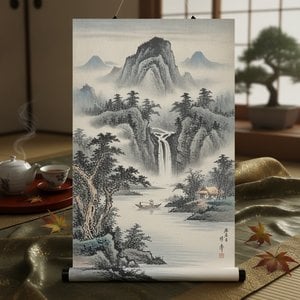
Serenity on Canvas: A Guide to the Timeless Beauty of Japanese Landscape Painting
Discover the serene beauty of Japanese landscape painting. From Hokusai's iconic woodblock prints to meditative sumi-e ink washes, explore a visual journey through the 'floating world' and learn how to bring this timeless Zen aesthetic into your modern home decor.

Mastering the Great Wave: The Top 25 Iconic Artworks by Katsushika Hokusai
Explore 25 iconic Hokusai masterpieces and the soul of Ukiyo-e. Discover museum-quality art on ArtsDot.com.


