

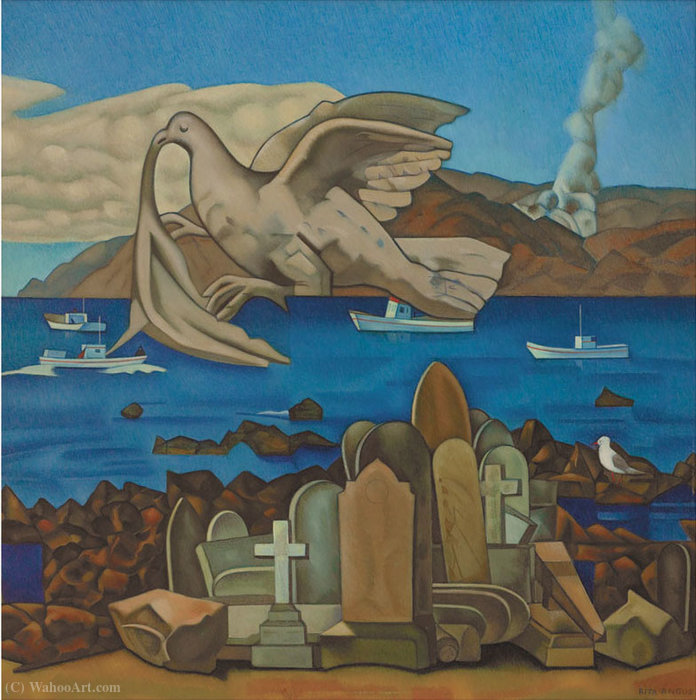
 Preview
 Send
Send Share
Share
 Details
 Guide
Guide

 Download
 Similars
 X-Ray
X-Ray Diaporama
 Stats
StatsFlight
 Read More
The artwork displayed on this page is protected by copyright law, which means we cannot legally create or sell an identical reproduction. This protection is enforced under international agreements such as the Berne Convention and by national laws, including those outlined by the U.S. Copyright Law - Title 17.
This method fully complies with copyright regulations because it does not involve copying or duplicating the protected artwork. Instead, it is a creative reinterpretation - a new painting that is influenced by the original but not identical to it.
Giclée / Art Print
Museum-quality giclée or canvas print with fast production and flexible finish options. ( Buy Hand Made Painting Switch to Digital Image)




































Pick from our preset sizes that match the artwork's original proportions.

You may enter your own dimensions to fit a specific frame or space. If your selected size does not match the original image's proportions, we will either crop the artwork or extend the image with a mirrored or solid-fill edge. A digital mockup will be sent for your approval before production begins.
Please note that the on-screen preview does not reflect the actual cropping or extension. Only the mockup will accurately show the final composition.
While custom sizes are available, we recommend selecting a dimension from the predefined list to preserve the original proportions.
Worldwide Delivery () in 2 weeks instead of standard 4/5 weeks. (13 October)

Free Worldwide Express Shipping

High-Quality Linen Canvas

Full Shipping Insurance

Customs Tax Refund Guarantee

True Color Matching Guarantee

100-Day Return Policy (Defects Only)

100% Money-Back Guarantee

Bulk Discount Offer
 Glass option is only available in size under 110 CM

Flight
Giclée / Art Print
Reproduction Size
-


Total Price
$ 63
Related Artworks


Artist Biography
A Pioneering Vision: The Life and Art of Rita Angus
Henrietta Catherine Angus, known to the world as Rita Angus, stands as a monumental figure in 20th-century New Zealand art. Born on March 12, 1908, in Hastings, she emerged from a family life marked by frequent relocation due to her father’s carpentry and construction work – a nomadic upbringing that perhaps fostered within her a keen observational eye and an independent spirit. As the eldest of seven children, Rita demonstrated artistic talent early on, receiving private lessons that nurtured her burgeoning passion. Her formal education at Palmerston North Girls' High School from 1922 to 1926 further solidified this path, with teachers recognizing and encouraging her innate abilities. This foundation led her to Canterbury College School of Art in Christchurch in 1927, where she immersed herself in traditional training – life drawing, still life, and landscape painting – under the tutelage of Richard Wallwork, Archibald Nicoll, Cecil Kelly, and Leonard Booth. Though she didn’t complete a diploma, her intermittent studies there until 1933 proved crucial, exposing her to Renaissance and medieval art which would profoundly shape her artistic sensibilities.Forging a Distinctive Style
The early years of Rita Angus's career were marked by both personal upheaval and artistic exploration. Her marriage in 1930 to fellow artist Alfred Cook was short-lived, ending in separation in 1934 and divorce five years later. This period, however, coincided with her emergence as an exhibiting artist, gaining recognition within the Canterbury Society of Arts for her portraits and landscapes. It was during these formative years that Angus began to develop a style uniquely her own – one characterized by clear, hard-edged forms, simplified shapes, and a vibrant, often emotionally charged color palette. She moved away from strict realism, embracing a modernist expression that prioritized personal vision over mere representation. This stylistic evolution wasn’t born in isolation; she was deeply influenced by Byzantine art, the geometric fragmentation of Cubism, and the work of English painter Christopher Perkins, particularly his evocative depiction of Mount Taranaki which captured the unique quality of New Zealand light. Angus also drew inspiration from Far Eastern aesthetics and philosophies, integrating these diverse influences into a cohesive artistic language. Crucially, she wasn’t striving to define a specifically *national* style; her ambition was more profound – to establish an authentic artistic voice that reflected her own inner world and “love of humanity and faith in mankind.”Landscapes of the Soul and Portraits of Identity
The 1930s and 40s saw Angus painting scenes primarily focused on the landscapes of Canterbury and Otago. It was during this period that she created *Cass* (1936), a deceptively simple depiction of a small railway station, which would later be voted New Zealand’s most-loved painting in a 2006 poll – a testament to its enduring resonance. But Angus's artistic response wasn't limited to the physical landscape; she was deeply affected by the political and social climate of her time. Her pacifist beliefs found expression in a series of three goddess images created during the 1940s, with *Rutu* becoming perhaps the most iconic representation of this theme – a powerful symbol of peace and resilience. In the early 1950s, she embarked on travels throughout New Zealand, resulting in evocative landscapes like *Central Otago*, capturing the stark beauty of the region. A move to Wellington in 1955 brought new subjects into focus: scenes of the city and Hawke’s Bay, alongside a continued dedication to portraiture. Angus was a prolific portraitist, skillfully capturing not just likeness but also the inner lives and personalities of her sitters. Equally compelling were her numerous self-portraits – over fifty in total – where she explored different roles and guises, offering intimate glimpses into her own evolving identity. Her 1958 New Zealand Art Societies’ Fellowship allowed for travel to London and Europe, broadening her exposure to both modern and traditional art forms, which further enriched her artistic vocabulary. She also undertook a significant commission, painting a mural at Napier Girls' High School commemorating the victims of the devastating 1931 Hawke’s Bay earthquake – a poignant tribute to loss and remembrance.Legacy and Enduring Influence
The later years of Rita Angus’s life were shadowed by mental illness; she spent time at Sunnyside Mental Hospital in the late 1940s, and her condition deteriorated leading up to her death from ovarian cancer on January 25, 1970, in Wellington. While recognition came relatively late during her lifetime, her reputation soared posthumously. Major exhibitions of her work were organized, solidifying her position as a central figure in New Zealand art history. Today, Rita Angus is celebrated not only for her artistic achievements but also for her pioneering spirit and unwavering commitment to her vision. Her unique style – the precise lines, bold colors, and symbolic depth – continues to inspire generations of artists. The preservation of her former home in Wellington as the Rita Angus Cottage, now an artist residency, stands as a tangible testament to her legacy, providing a space where contemporary artists can connect with her spirit and continue pushing creative boundaries. Angus’s commitment to art, coupled with her profound belief in its power to express peace, humanity, and individual identity, ensures that her work will resonate with audiences for years to come.Key Works
- Cass (1936): Perhaps her most famous painting, depicting a Canterbury railway station with striking clarity and symbolism.
- Rutu (1940s): A powerful representation of peace and feminine strength as part of her goddess series.
- Central Otago (early 1950s): An evocative landscape capturing the stark beauty of New Zealand’s interior.
- Fay and Jane Birkinshaw (1946): A compelling portrait showcasing her skill in capturing personality and relationships.
- Self-Portraits (various dates): Over fifty self-portraits offering intimate glimpses into the artist’s evolving identity.

Rita Angus
1908 - 1970 , New Zealand
Quick Facts
- Full Name: Henrietta Catherine Angus
- Nationality: New Zealander
- Date Of Birth: 1908
- Date Of Death: 1970
- Place Of Birth: Hastings, New Zealand
- Notable Artworks:
- Cass (1936)
- Rutu
- Central Otago
- Fay and Jane Birkinshaw
- Landscape (Wanaka)
- Artistic Movement Or Style: Modernism, Regionalism
- Artists Who Influenced This Artist:
- Vermeer
- Cézanne
- Christopher Perkins


