


 Preview
 Send
Send Share
Share
 Details
 Guide
Guide

 Download
 Similars
 X-Ray
X-Ray Diaporama
 Stats
Stats(Edith Roosevelt)


 Read More
Giclée / Art Print
Museum-quality giclée or canvas print with fast production and flexible finish options. ( Buy Hand Made Painting Switch to Digital Image)




P118B $10

P118H $10

P118W $10

P438Z $10

P508JH $12

P508YH $12

P805H $10

P805Z $10

P919BZ $10

P919G $10

P919XJ $10

P959ZH $10

P968JZ $12

W106C $8

W218G $10

W218JH $8

W218Y $10

W307PJ $10

W316G $10

W316PJ $8

W316Y $10

W398PJ $8

W4111J $10

W500HY $15

W500JH $15

W692G $12

W849H $8

W940BG $15

W953PJ $8




Pick from our preset sizes that match the artwork's original proportions.

Type the width and the height you need, to fit your frame or your wall. A print can only be cut, never made bigger than the picture, so a size with a different shape loses a part of the image. We send you a digital mockup to approve before we print anything. The picture shown on this page does not show the real cut — only the mockup does.
Worldwide Delivery () in 2 weeks instead of standard 4/5 weeks. (23 October)

Free Worldwide Express Shipping

High-Quality Linen Canvas

Full Shipping Insurance

Customs Tax Refund Guarantee

True Color Matching Guarantee

100-Day Return Policy (Defects Only)

100% Money-Back Guarantee

Bulk Discount Offer
 Glass option is only available in size under 110 CM

(Edith Roosevelt)
Giclée / Art Print
Reproduction Size
-


Total Price
$ 63
Questions & Answers
Where is the portrait format of "(Edith Roosevelt)" recommended to be displayed?
The portrait format of "(Edith Roosevelt)" by Philip Alexius De László is recommended for a living room. Format and space together guide the placement of a reproduction.
Do the colors of "(Edith Roosevelt)" appear strong or soft?
"(Edith Roosevelt)" by Philip Alexius De László shows a balanced color intensity.
What mood and emotion come together in "(Edith Roosevelt)"?
The recorded mood of "(Edith Roosevelt)" by Philip Alexius De László is classic, and its emotional tone is reflective.
Related Artworks


Artist Biography
Philip Alexius de László: Life and Legacy
Early Life and Education
Philip Alexius de László, born Fülöp Laub on April 30, 1869, in Budapest, Hungary, rose from humble beginnings to become a celebrated portrait painter of European royalty and aristocracy. His parents, Adolf and Johanna Laub, were a tailor and seamstress respectively, of Jewish origin. He initially apprenticed as a photographer while pursuing his artistic studies. He gained admission to the National Academy of Art in Budapest, studying under Bertalan Székely and Károly Lotz. Further studies in Munich and Paris broadened his artistic horizons.
Artistic Development and Influences
De László’s early work demonstrated a keen eye for detail and a developing mastery of realism. His influences included the academic traditions he learned at the Academy, as well as the prevailing trends in portraiture during the late 19th and early 20th centuries. He quickly distinguished himself with his ability to capture not only physical likeness but also the personality and social standing of his sitters. A pivotal moment came in 1900 when his portrait of Pope Leo XIII earned him a Grand Gold Medal at the Paris International Exhibition, establishing his international reputation.
Career and Major Achievements
Following his success in Paris, de László moved to Vienna in 1903 and then settled in London in 1907, where he remained for the rest of his life. He became a highly sought-after portraitist among the European elite. His clientele included monarchs, nobles, industrialists, scientists, and prominent figures from various fields.
- Notable Sitters: Sir Alfred East, Winifred Cavendish-Bentinck (Duchess of Portland), Lady Louise Mountbatten (Queen of Sweden), Vita Sackville-West, Pope Leo XIII, Augusta Victoria (German Empress), Princess Alice of Battenberg, and many others.
- Honors & Recognition: Invested as a Member of the Royal Victorian Order (MVO) by Edward VII in 1909. Ennobled by King Franz Joseph I of Hungary in 1912, adopting the name “de László de Lombos.”
Personal Life and Challenges
In 1900, de László married Lucy Madeleine Guinness, a member of the prominent banking family. They had six children and seventeen grandchildren. He converted to Anglicanism upon his marriage after an earlier interest in Catholicism. Despite his British citizenship and established life in England, he faced internment during World War I (1917-1918) due to suspicions surrounding his Austrian connections, a period of significant hardship.
Artistic Style and Themes
De László’s style is characterized by its realism, meticulous detail, and vibrant color palette. He was adept at capturing the textures of fabrics, jewelry, and skin tones. His portraits often convey a sense of elegance, sophistication, and social status. While primarily known for portraiture, he also created landscapes and genre scenes.
Historical Significance and Legacy
Philip de László’s work provides valuable insights into the lives and appearances of European high society during the late 19th and early 20th centuries. His portraits serve as historical documents, capturing a specific era and its social dynamics. Although sometimes criticized for being primarily a society portraitist, his technical skill and ability to capture character are undeniable. His oeuvre comprises nearly 4,000 works, including drawings, and a catalogue raisonné is currently in progress. He died on November 22, 1937, in London, leaving behind a lasting legacy as one of the foremost portrait painters of his time.

Philip Alexius De László
1869 - 1937
Quick Facts
- Name: Philip Alexius de László
- Movement: Realism, Portraiture
- Birth Date: 1869
- Death Date: 1937
- Birth Place: Budapest, Hungary
- Nationality: Hungarian, British
- Date Of Birth: 1869
- Date Of Death: 1937
- Influenced By:
- Bertalan Székely
- Károly Lotz
- Notable Works:
- Portrait of Pope Leo XIII
- Portraits of European royalty & aristocracy
Related Articles

Slate Blue Masterpieces: 10 Iconic Paintings & Timeless Home Decor Ideas
Immerse yourself in the captivating world of slate blue! Explore 10 iconic paintings by Monet, Van Gogh & Renoir. Discover their stories, techniques & find museum-quality art reproductions for your home at .

Philip de László: A Portrait of Aristocratic Society & the Cosmopolitan Painter's Evolution
Explore the life & art of Philip de László, master portraitist of European aristocracy. Discover his stunning paintings, royal commissions, and enduring legacy. A guide for discerning collectors.
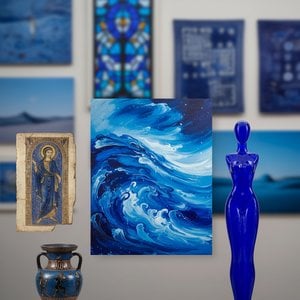
The Allure of Azure: Exploring the Symbolic & Aesthetic Depths of Blue in Art History
Explore the rich history of blue in art! Discover its symbolism, from ancient pigments to modern masterpieces by Kandinsky & Seurat. Uncover the psychological impact and cultural meanings behind this captivating hue.

Goya's Masterpieces: Explore 25 Iconic Paintings & Art Prints | ArtsDot
Delve into the world of Francisco Goya with ArtsDot. Explore 25 iconic paintings – from 'The Third of May' to his haunting Black Paintings. Discover the stories, techniques & emotions behind these Spanish masterpieces. Find museum-quality art reproductions for your home at ArtsDot.com!

About Us
Discover our story! We bring world-class art into your life through expert curation, personalized creations, and free previews. Trusted by individuals and businesses since 2000.


