
- Home

- Oil Painting Reproduction
- Peter Tillemans
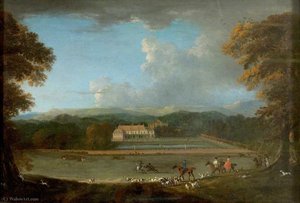
- A warwickshire hunt

 Preview
 Send
Send Share
Share
 Details

 Download
 Similars
 X-Ray
X-Ray Diaporama
A warwickshire hunt

 Read More
Hand Made Oil Reproduction
Hand-painted oil on canvas in your size and frame, made to order by our artists. ( Switch to Print Switch to Image)




































Pick from our preset sizes that match the artwork's original proportions.

You may enter your own dimensions to fit a specific frame or space. If your selected size does not match the original image's proportions, we will either crop the artwork or extend the painting with additional hand-painted elements. A digital mockup will be sent for your approval before production begins.
Please note that the on-screen preview does not reflect the actual cropping or extension. Only the mockup will accurately show the final composition.
While custom sizes are available, we recommend selecting a dimension from the predefined list to preserve the original proportions.
After order, ArtsDot.com team will email client for instructions and provide a mockup preview
Worldwide Delivery () in 3/4 weeks instead of standard 5 weeks. (4 August). No compromise on quality.

Free Worldwide Express Shipping

High-Quality Linen Canvas

Full Shipping Insurance

Customs Tax Refund Guarantee

True Color Matching Guarantee

60-Day Return Policy (Defects Only)

100% Money-Back Guarantee

Bulk Discount Offer
 Glass option is only available in size under 110 CM

A warwickshire hunt
Reproduction Medium
Reproduction Size
-


Total Price
$ 263
Related Artworks




Artist Biography
The Pioneer of the Sporting Landscape
In the vibrant tapestry of early eighteenth-century art, few threads are as dynamic or as uniquely English as those woven by Peter Tillemans. Born around 1684 in the illustrious artistic hub of Antwerp, Belgium, Tillemans emerged from a lineage of craftsmanship as the son of a diamond cutter. This early exposure to precision and fine detail likely laid the foundation for a career defined by meticulous observation. While his roots were firmly planted in the Flemish tradition, his spirit was drawn toward the burgeoning art scene of London, a move prompted in 1708 by the influential picture-dealer Turner. This migration would prove transformative, as Tillemans did not merely join an existing tradition but became a primary architect of a new movement: the English school of sporting painting.
Tillemans’s artistic journey was deeply intertwined with the stylistic currents of the Low Countries. Under the tutelage of various masters in Antwerp, he absorbed the rich, atmospheric techniques of his contemporaries, including a notable connection to his brother-in-law, the celebrated painter Pieter Casteels. These formative years instilled in him a mastery of light and landscape that would later allow him to elevate simple topographical views into dramatic narratives. His work was never static; it possessed a kinetic energy that mirrored the very subjects he sought to capture—the thundering hooves of racehorses, the breathless pursuit of the hunt, and the sweeping vistas of the British countryside.
A Legacy of Motion and Topography
What truly distinguished Tillemans from his peers was his ability to fuse the rigid accuracy of topographical art with the visceral, emotional thrill of sporting life. Alongside luminaries such as John Wootton and James Seymour, he spearheaded a revolution that rejected the stiff academic conventions of the era in favor of a more naturalistic and spirited approach. His canvases became windows into an age of aristocratic leisure, capturing the precise anatomy of horses and the rugged textures of the landscape with an eye for both scientific detail and atmospheric beauty. Whether depicting the intense drama of The Battle of Glenshield or the serene grandeur of East View of Newsterad Abbey, his work resonated with a sense of place and purpose.
The significance of Tillemans's contribution extends far beyond mere decoration. He helped establish a genre that celebrated the intersection of nature and human endeavor. His paintings served as both historical records of 18th-century sporting culture and as high art that commanded respect in the London galleries. The breadth of his repertoire was remarkable, encompassing:
- Equestrian Portraits: Capturing the grace and power of Thoroughbreds during the dawn of organized racing.
- Hunting Scenes: Documenting the social rituals and intense physical landscapes of the English hunt.
- Topographical Landscapes: Providing detailed, almost documentary-style views of significant British estates and landmarks.
- Battle and Action Scenes: Utilizing his mastery of movement to depict historical conflicts with cinematic flair.
Final Years and Enduring Influence
Despite his professional triumphs, Tillemans’s later years were marked by the physical toll of a chronic struggle with asthma. This ailment eventually led him to seek the more temperate air of Richmond, a quiet retreat that stood in stark contrast to the bustling London art markets he had once dominated. His death on December 5th, 1734, marked the end of an era for the sporting school, yet his influence continued to ripple through the generations of British landscape painters who followed. He left behind a legacy of technical excellence and a profound respect for the natural world.
Today, the works of Peter Tillemans are cherished not only as masterpieces of the Baroque-influenced English style but as vital cultural artifacts. They remind us of a time when art was used to capture the very pulse of life—the wind in the trees, the spray of mud from a galloping horse, and the enduring beauty of the land itself. Through his brush, the fleeting moments of 18th-century sport were granted a permanent, breathtaking immortality.

Peter Tillemans
1684 - 1734 , Belgium
Quick Facts
- Artistic Movement Or Style: English School
- Artists Or Movements Influenced By This Artist: ['Jacques Courtois']
- Artists Who Influenced This Artist: ['David Teniers']
- Date Of Birth: c. 1684
- Date Of Death: 1734
- Full Name: Peter Tillemans
- Nationality: Netherlandish
- Notable Artworks:
- Figures in a Landscape
- View Of Chester, With Two Figures By The River In The Foreground
- Place Of Birth: Antwerp
Related Articles

The Pursuit of Power & Prestige: Hunting Scenes in Western Art
Explore the rich history of hunting scenes in Western art, from royal pursuits to powerful allegories. Discover masterpieces & expert insights for discerning collectors. ArtsDot offers museum-quality reproductions.

Bridging Centuries: Digital Visualization & Classical Oil Painting Techniques in Contemporary Art Commissioning
Discover the art of commissioning bespoke oil paintings blending classical techniques with modern digital precision. Expert artists, personalized service & museum-quality results. Invest in a timeless masterpiece today.

Evoking Emotion & Transcendence: Romantic Landscape Painting (18th-19th Century)
Explore the emotional depth of Romantic landscape painting (18th-19th century). Discover key artists like Friedrich & Cole, and the concepts of the sublime. Expert insights for art lovers & collectors.

John Nost Sartorius: Equestrian Portraiture & the Shifting Social Landscape of 18th-Century England
Explore the captivating equestrian art of John Nost Sartorius (1759-1828). Discover his detailed paintings of racehorses, hunting scenes & aristocratic life. Learn about collecting Sartorius's work and its lasting value.
Historical Painting: A Comprehensive Exploration of Movements, Techniques & Enduring Legacies
Explore the rich history of painting! Discover iconic movements, masterful techniques & enduring legacies from Renaissance to modern art. Expert insights for collectors and enthusiasts.



