

- 46.0 x 55.0 cm


The picture follows your choices: , .
Collectible Description
Paul Signac’s "Antibes, thunderstorms" (1919) – a stunning Pointillist coastal scene. Explore this masterpiece of shimmering light & atmospheric perspective.
 Read More
Artist Biography
Discover Paul Signac (1863-1935), a key Neo-Impressionist painter & master of Pointillism. Explore vibrant coastal scenes, harbor views & his influence on modern art at ArtsDot!
Hand Made Oil Reproduction
Hand-painted oil on canvas in your size and frame, made to order by our artists. ( Switch to Print Switch to Digital Image)
More about this painting
 Preview
 Send
Send Share
Share
 Details
 Guide
Guide

 Download
 Similars
 X-Ray
X-Ray Diaporama
 Q&A
Q&A Stats
StatsOrder your painting in four simple steps
Take your time. You can change any answer; the price in your order card follows each choice.
1 Step one of four
Which size would you like?
These sizes keep the proportions of the original painting. The drawing shows your choice on a wall, above a two-metre sofa.
Or give your own measurements
Pick from our preset sizes that match the artwork's original proportions.

Type the width and the height you need, to fit your frame or your wall. This is hand-painted, so for a size with a different shape the artist can paint a bit more around the picture, or cut a bit — you choose. We send you a digital mockup to approve before the painting starts. The picture shown on this page does not show the real result — only the mockup does.
2 Step two of four
How should it be prepared: rolled, stretched or framed?
The prices below are for the size you chose in step one.
Choose the edges of the stretched canvas
Choose your frame

White $1

Blurside $1

Extended $1

P118B $10

P118H $10

P118W $10

P438Z $10

P508JH $12

P508YH $12

P805H $10

P805Z $10

P919BZ $10

P919G $10

P919XJ $10

P959ZH $10

P968JZ $12

W106C $8

W218G $10

W218JH $8

W218Y $10

W307PJ $10

W316G $10

W316PJ $8

W316Y $10

W398PJ $8

W4111J $10

W500HY $15

W500JH $15

W692G $12

W849H $8

W940BG $15

W953PJ $8

H24-GOLD $30

H24-SILVER $30

H36-GOLD $45

H36-SILVER $45
Framed
Moulding: . Overall size with the frame: .
3 Step three of four
Would you like anything changed in the painting?
Most people answer no. Because each painting is made by hand, our artist can also adapt it for you.
After order, ArtsDot.com team will email client for instructions and provide a mockup preview
4 Step four of four
A few finishing options
All of them are optional. The answers already selected cost nothing extra.
Who paints it?
Worldwide Delivery () in 3/4 weeks instead of standard 5 weeks. (3 November). No compromise on quality.
A nameplate, as in a museum?
Engraved Bronze Plaque Details
This elegant plaque features the artist's name and the title of the artwork, finely engraved for a timeless presentation.
It is made from bronze with a refined, elegant finish. The text is precisely laser-engraved for a sharp and permanent result. Measuring 9x2 cm, the plaque is compact yet easy to read. It's built to be durable and scratch-resistant, offering a professional, museum-quality look. Mounting is simple thanks to the included adhesive backing.
Transparent Acrylic Plaque Details
The plaque includes essential engraved details such as the artist's name, the title of the artwork, the date it was created, the type of media used-like oil on canvas or watercolor-a brief description of the piece, and a QR code that links to the complete artwork information.
It is crafted from clear acrylic, offering a sleek, modern appearance. The text is UV-engraved in black to ensure strong visual contrast. With a size of 10x15 cm, it ensures optimal readability. It comes equipped with two metal hooks for secure wall mounting. The plaque is designed to be weather-resistant, making it suitable for various environments, and it includes interactive features that work seamlessly with smartphone scanning.
Black Acrylic Plaque Details
This elegant plaque includes engraved information such as the artist's name, the title of the artwork, the date it was created, the type of media used (like oil on canvas or watercolor), a short description of the artwork, and a QR code for quick access to more information.
The plaque itself is made from refined black acrylic with a premium finish. The text is laser-engraved in white for high contrast and readability. Its size is 10x15 cm, designed to be easy to read. It comes with two metal hooks for professional mounting. The design is sleek and fits any interior style. It is also weather-resistant and durable, with built-in digital integration for mobile compatibility.
A protective varnish?
When do you need it?
✓ Check and order
Your painting, as you ordered it

Antibes, thunderstorms
Reproduction Medium
Reproduction Size
-

Elite Senior Artist
More detail, finesse, and extra production time
-

Reproduction Frame
-
-
For artworks or reproductions larger than 105 cm (approximately 41 inches) on any side, the frame will be shipped as a kit, disassembled. This method ensures safe delivery and prevents damage during transport.
Professional assembly required - this is not a DIY product.
The kit must be assembled and the canvas stretched by an experienced professional framer, using wood glue (not supplied), a canvas stretching plier and clamps to hold the bars square while the glue dries. Incorrect assembly or uneven canvas tension can permanently damage the artwork and is not covered by our warranty.
 For artworks or reproductions larger than 105 cm (approximately 41 inches) on any side, the frame will be shipped as a kit, disassembled. This method ensures safe delivery and prevents damage during transport.
All solid wood bars are included, precisely cut to size.
Assembled with the screws provided, plus wood glue for the corner joints, which is not supplied and must be sourced by your framer.
Professional tools are required and not included: a canvas stretching plier (tensioner) and clamps to hold the bars square while the glue dries.
Important:
The corner joints require wood glue, the bars must be held with clamps until the glue is fully dry, and tightening the canvas on the assembled frame requires a canvas stretching plier. None of these are included in the kit. Please arrange an experienced professional framer before ordering this size.

Nameplate
-
-

Protective Varnish
Glossy Varnish (enhances colors, protects against light/moisture)
-

Customize My Artwork
Examples of what can be changed: Replace face with customer photo; Add pet (e.g., replace cat with dog); Include hidden message in background; Change background landscape or elements.
-

Urgent
Worldwide Delivery () in 3/4 weeks instead of standard 5 weeks. (3 November). No compromise on quality.
-
Express Shipping
Worldwide Delivery () in 5 weeks. (10 November).
Included
Total Price
$ 263
Glass option is only available in size under 110 CM
Included with every order
- Free Worldwide Express Shipping
- High-Quality Linen Canvas
- Full Shipping Insurance
- Customs Tax Refund Guarantee
- True Color Matching Guarantee
- 100-Day Return Policy (Defects Only)
- 100% Money-Back Guarantee
- Bulk Discount Offer


Antibes, Thunderstorms – A Pointillist Masterpiece by Paul Signac
Paul Signac’s “Antibes, Thunderstorms,” painted in 1919, is more than just a depiction of a coastal scene; it's a meticulously constructed meditation on light, color, and the very nature of perception. This evocative work, measuring 46 x 55 cm, captures the dramatic beauty of Antibes, France, at dusk or dawn – a moment suspended in time where the sea, sky, and architecture converge under a brooding, storm-laden canopy. The painting’s immediate impact lies in its shimmering surface, created through Signac's revolutionary Pointillist technique, a method he pioneered alongside Georges Seurat.
- The Science of Color: Signac’s approach was deeply rooted in scientific principles. He believed that the eye could more effectively blend colors when presented with small dots of pure hue than when painted with broad strokes. This optical mixing is brilliantly demonstrated here, where countless tiny points of color – blues, greens, ochres, and whites – coalesce to create a luminous effect, mimicking the way light itself interacts with the landscape.
- A Harmonious Vision: The composition emphasizes atmospheric perspective, utilizing darker blues and greens in the distance to suggest depth while brighter colors draw the viewer’s eye towards the foreground elements. This careful manipulation of value and saturation creates a sense of spatial recession, characteristic of Pointillism's focus on visual sensation rather than strict realism.
The Birth of Pointillism
“Antibes, Thunderstorms” represents a crucial moment in the development of modern art. Signac’s work emerged from a desire to move beyond the limitations of Impressionism, which often struggled to capture the fleeting effects of light and atmosphere. He sought a more systematic approach, one that could harness the power of color theory to create paintings that were both visually stunning and intellectually rigorous. This pursuit led him and Seurat to develop Pointillism – a technique that would profoundly influence generations of artists.
The painting’s meticulous detail—the individual dots painstakingly applied layer upon layer—reflects Signac's belief in the importance of observation and scientific analysis. It wasn't simply about representing what he saw; it was about understanding *how* he saw it, translating his visual experience into a structured system of color and form.
Symbolism and Emotional Impact
Beyond its technical brilliance, “Antibes, Thunderstorms” possesses a subtle symbolic resonance. The depiction of a coastal scene, coupled with the dramatic presence of impending storms, evokes a sense of both tranquility and unease. The hazy atmosphere, created by Signac’s technique, lends the painting a dreamlike quality, inviting contemplation about the transient nature of beauty and the power of the natural world.
The shimmering light and textured surface create an immersive experience for the viewer, transporting them to the shores of Antibes. The work's emotional impact is one of quiet wonder – a reminder of the profound beauty that can be found in even the most fleeting moments.
Provenance and Significance
Painted in 1919, this artwork stands as a testament to Paul Signac’s enduring legacy. His innovative approach to color and composition continues to inspire artists today, and his work is held in prestigious collections worldwide. This hand-painted reproduction offers an exceptional opportunity to own a piece of art history – a window into the mind of one of modernism's most influential figures.
Questions & Answers
What is the emotional tone of "Antibes, thunderstorms" by Paul Signac?
"Antibes, thunderstorms" by Paul Signac conveys a tranquil emotional tone.
How does "Antibes, thunderstorms" balance light and dark?
"Antibes, thunderstorms" by Paul Signac is recorded as brilliant, with a bright balance luminance.
Where can I find statistics about "Antibes, thunderstorms" by Paul Signac?
A Stats page exists for "Antibes, thunderstorms". It charts the monthly visits of the artwork and of the artist's other works, with country and language breakdowns.
Related Artworks


Paul Signac
1863 - 1935, France
Artist Biography
The Harmonious Vision of Paul Signac
Paul Victor Jules Signac, born in Paris in 1863, emerged as a pivotal figure in the evolution of modern art, inextricably linked to the birth and development of Neo-Impressionism. Initially drawn to architecture, a youthful encounter with Claude Monet’s exhibition ignited within him an enduring passion for painting, setting him on a path that would redefine color theory and artistic expression. Signac wasn't merely a painter; he was a dedicated explorer of light, color, and the very science underpinning visual perception. His early works, though demonstrating Impressionistic leanings, quickly evolved under the profound influence of Georges Seurat, forging a partnership that birthed Pointillism – a technique characterized by the meticulous application of tiny, distinct dots of pure color intended to blend optically in the viewer’s eye. This wasn't simply about aesthetics; it was an attempt to systematize painting, grounding it in scientific principles and challenging conventional artistic norms.A Dialogue with Seurat and the Birth of Neo-Impressionism
The meeting between Signac and Seurat in 1884 proved transformative for both artists. They shared a fascination with Eugène Delacroix’s writings on color theory, particularly his exploration of complementary contrasts and the emotional impact of hue. Together, they embarked on a rigorous investigation into these principles, translating them into a revolutionary painting technique. Signac wholeheartedly embraced Seurat's vision, abandoning the fleeting brushstrokes of Impressionism for the precise, calculated application of points of color. Boulevard de Clichy (1886) stands as an early testament to this new approach, showcasing Signac’s meticulous style and his commitment to capturing the vibrancy of urban life through a scientific lens. However, their collaboration wasn't merely technical; it was intellectual, fueled by a shared desire to elevate painting to the level of a rigorous science. Signac became a devoted advocate for Seurat’s ideas, tirelessly promoting Neo-Impressionism and defending its principles against criticism. The tragic early death of Seurat in 1891 left Signac as the principal champion of their shared artistic vision, a role he embraced with unwavering dedication.Coastal Reveries and Artistic Independence
Following Seurat’s passing, Signac's artistic journey took on a new dimension, deeply influenced by his profound love for sailing and the allure of the Mediterranean coast. He discovered Saint-Tropez in 1892, establishing a home there that became a haven for artists and a source of endless inspiration. The shimmering waters, sun-drenched harbors, and picturesque coastal towns provided an ideal setting to explore the interplay of light and color. The Red Buoy, Saint-Tropez (1895) exemplifies this period, showcasing his mastery of Pointillism in capturing the vibrant hues and dynamic energy of the sea. His technique evolved, becoming more fluid and expressive while retaining its scientific foundation. He began to experiment with larger brushstrokes and a broader palette, moving beyond strict adherence to Seurat’s precise dotting method. Signac's travels extended beyond France, encompassing Italy, Holland, and even Constantinople, each journey enriching his artistic vocabulary and broadening his perspective.A Patron of the Avant-Garde and Lasting Legacy
Beyond his own artistic pursuits, Signac played a crucial role in fostering the development of modern art through his leadership within the Société des Artistes Indépendants. As president from 1908 until his death in 1935, he championed artistic freedom and provided a platform for emerging talents, including Henri Matisse, André Derain, and other pioneers of Fauvism and Cubism. He was among the first to recognize and support their groundbreaking work, exhibiting controversial pieces that challenged conventional aesthetic norms. Signac’s commitment to inclusivity and his willingness to embrace innovation helped shape the trajectory of 20th-century art. His theoretical writings, notably From Eugène Delacroix to Neo-Impressionism (1899), further solidified his position as a leading intellectual figure in the art world. Paul Signac’s legacy extends far beyond his captivating paintings; he was a visionary artist, a dedicated theorist, and a generous patron who profoundly influenced the course of modern art, leaving an indelible mark on generations of artists to come.Key Dates & Achievements
- 1863: Born in Paris, France.
- 1884: Co-founded the Société des Artistes Indépendants with Georges Seurat.
- 1886: Painted *Boulevard de Clichy*, a key example of early Pointillism.
- 1895: Created *The Red Buoy, Saint-Tropez*, showcasing his mastery of coastal scenes.
- 1899: Published *From Eugène Delacroix to Neo-Impressionism*, a seminal work on color theory.
- 1908 – 1935: Served as President of the Société des Artistes Indépendants, championing avant-garde artists.
- 1935: Passed away in Paris at the age of 72, leaving behind a rich artistic legacy.


Related Articles
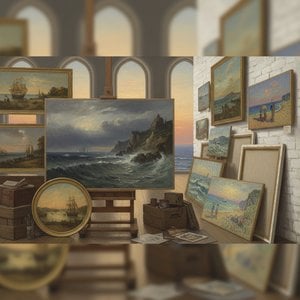
Evoking the Horizon: A Historical & Artistic Exploration of Coastal Scenes in Painting
Explore the rich history of coastal scenes in painting! Discover Impressionist masterpieces, American realism & contemporary visions. Learn about renowned artists and find your perfect seascape at ArtsDot.

Mastering Abstraction: The Top 25 Essential Artworks by Paul Klee
Explore 25 iconic Paul Klee masterpieces and his Bauhaus legacy. Discover the full collection online at ArtsDot.com.

Paul Signac: Pointillism, Politics & the Pursuit of Harmony in Modern Art
Explore the life & art of Paul Signac, a key figure in Neo-Impressionism. Discover his Pointillist technique, anarchist beliefs, and stunning coastal scenes. Learn about his influence on modern art history.