

 Preview
 Send
Send Share
Share
 Details
 Guide
Guide

 Download
 Similars
 X-Ray
X-Ray Diaporama
 Q&A
Q&A Stats
StatsLandscape of Bleached Objects

- 74.0 x 62.0 cm


 Read More
Giclée / Art Print
Museum-quality giclée or canvas print with fast production and flexible finish options. ( Buy Hand Made Painting Switch to Digital Image)




P118B $10

P118H $10

P118W $10

P438Z $10

P508JH $12

P508YH $12

P805H $10

P805Z $10

P919BZ $10

P919G $10

P919XJ $10

P959ZH $10

P968JZ $12

W106C $8

W218G $10

W218JH $8

W218Y $10

W307PJ $10

W316G $10

W316PJ $8

W316Y $10

W398PJ $8

W4111J $10

W500HY $15

W500JH $15

W692G $12

W849H $8

W940BG $15

W953PJ $8




Pick from our preset sizes that match the artwork's original proportions.

Type the width and the height you need, to fit your frame or your wall. A print can only be cut, never made bigger than the picture, so a size with a different shape loses a part of the image. We send you a digital mockup to approve before we print anything. The picture shown on this page does not show the real cut — only the mockup does.
Worldwide Delivery () in 2 weeks instead of standard 4/5 weeks. (10 November)

Free Worldwide Express Shipping

High-Quality Linen Canvas

Full Shipping Insurance

Customs Tax Refund Guarantee

True Color Matching Guarantee

100-Day Return Policy (Defects Only)

100% Money-Back Guarantee

Bulk Discount Offer
 Glass option is only available in size under 110 CM

Landscape of Bleached Objects
Giclée / Art Print
Reproduction Size
-


Total Price
$ 63
Identification of the Artwork and Artist
Landscape of Bleached Objects is an oil on canvas painted by Paul Nash. Created circa 1934, the work emerged during a period when Nash was a central figure in the development of British modernism and the instigator of the Unit One group.
Born in Kensington, United Kingdom, in 1889, Nash established a significant presence in the twentieth-century art scene. His practice often integrated the formal qualities of found objects into symbolic, often surreal, landscapes. He remained active in the arts until his death in 1946.
- Title: Landscape of Bleached Objects
- Artist: Paul Nash
- Date: circa 1934
- Medium: Oil on canvas
Composition and Visual Elements
The composition centers on two found objects situated within a barren, perhaps seaside, landscape. One form resembles a standing stone, while the other takes a phallic shape. These contrasting organic forms are positioned to cast a combined shadow across the ground. This shadow specifically embraces two egg-like shapes, creating a geometric relationship between the objects and their silhouettes.
The arrangement utilizes bleached, bone-like objects to populate an ambiguous setting. The visual weight is distributed through the interaction of these solid forms and the negative space created by their shadows. The subject matter relies on the following elements:
- A standing stone-like object
- A phallic form
- Two egg-like shapes within a shared shadow
- Bleached or bone-like textures
The landscape remains indistinct, providing a muted backdrop for the primary subjects. The interplay of light and shadow defines the spatial relationship between the organic forms and the terrain.
Artistic Style and Movement
The work exhibits distinct abstract and surrealist tendencies, aligning with the Surrealist movement's interest in the subconscious. As a British surrealist painter and war artist, Nash utilized symbolic landscapes to recontextualize everyday objects. This approach often involved placing found items into an ambiguous setting to grant them a new identity and symbolic weight.
This piece belongs to a specific series in which the artist contemplated the personal beauty of natural elements. By isolating and magnifying these forms, the work moves away from traditional representation toward a more formal, poetic exploration of shape. The artist's practice during this period focused on several key interests:
- The formal qualities of found objects such as stones, wood, bark, and shells.
- The intersection of abstraction and surrealism within the British art scene.
- The use of organic forms to create imaginary happenings.
As the instigator of the short-lived Unit One group, Nash helped bridge the gap between traditional landscape painting and modernist aesthetics. His style emphasizes the tension between the physical reality of natural objects and the dreamlike, illogical juxtapositions characteristic of Surrealism.
Questions & Answers
What are the date and style of "Landscape of Bleached Objects" by Paul Nash?
"Landscape of Bleached Objects" was made in 1934, within the Surrealism movement.
How do I preview a reproduction of "Landscape of Bleached Objects" by Paul Nash?
A preview of "Landscape of Bleached Objects" by Paul Nash is available on the artwork's Preview page.
How does "Landscape of Bleached Objects" by Paul Nash connect Surrealism to the artist's home country?
"Landscape of Bleached Objects" was created by Paul Nash, born in United Kingdom, within the Surrealism movement. The artist's origin links the work to Surrealism as practiced by artists from United Kingdom.
Related Artworks


Artist Biography
Early Life and Influences
- Born: Kensington, United Kingdom (1889)
- Died: 1946
- Paul Nash was born on May 11, 1889, in London. His father, William Harry Nash, was a barrister, and his mother, Caroline Maude, displayed signs of mental illness from an early age. The family moved to Iver Heath, Buckinghamshire, when Paul was young, a move intended to benefit his mother's health.
- Education: He attended the Parsons School of Art and later the Slade School of Fine Art. While proficient in landscape painting, he struggled with figure drawing.
- Early Influences: Nash was heavily influenced by William Blake and J.M.W. Turner, evident in his early works. He also drew inspiration from landscapes featuring ancient historical elements like burial mounds and Iron Age hill forts.
Artistic Style and Development
- Style: Paul Nash's style blended modernism with traditional techniques. He utilized bold colors, geometric shapes, and abstract forms, distinguishing him from contemporaries.
- Surrealist Leanings: While not strictly a Surrealist, Nash was influenced by the movement, particularly after seeing a Giorgio de Chirico exhibition in 1928. His work incorporated symbolic landscapes with everyday objects.
- War Art: During World War I and II, Nash served as an official war artist. His depictions of battlefields were notable for their haunting beauty and exploration of the impact of conflict on the landscape. Notable works include "The Menin Road."
- "Aerial Creatures": A series produced during WWII featuring anthropomorphic depictions of aircraft crashed in landscapes, demonstrating his evolving style and symbolism.
Major Achievements and Recognition
- Pioneer of British Modernism: Nash played a crucial role in shaping British modern art, bridging traditional landscape painting with modernist aesthetics.
- War Art Legacy: His wartime paintings are considered iconic representations of the conflict's impact on both soldiers and the environment.
- Unit One Group: He co-founded Unit One in 1933 alongside Ben Nicholson and Barbara Hepworth, a significant group within the British art scene.
- Writer and Designer: Beyond painting, Nash was also a respected writer on art and designed applied arts such as stage scenery, fabrics, and posters.
Influences and Legacy
- Influence on Subsequent Artists: Nash's unique style and use of color influenced generations of artists who followed.
- Connection to Romanticism: His work is often linked to the English Romantic tradition, particularly through his connection to William Blake and J.M.W. Turner.
- Exploration of Man vs. Nature: A recurring theme in Nash's later works was the relationship between humanity and nature, explored through symbolic imagery.
- Continued Relevance: His paintings continue to be celebrated for their beauty, symbolism, and historical significance, remaining relevant to contemporary audiences.
Exhibitions and Collections
- Ruskin Gallery: Nash's work has been exhibited at the Ruskin Gallery in the United Kingdom.
- Tate Britain: His pieces can be found within the Tate Britain’s collection.
- Imperial War Museum: Several of his war art pieces are housed in the Imperial War Museum.
- York Art Gallery: His work is also part of the York Art Gallery's collection.
- Government Art Collection: A selection of Nash’s artworks are displayed within the Government Art Collection.

Paul Nash
1889 - 1946 , United Kingdom
Quick Facts
- Full Name: Paul Nash
- Nationality: British
- Date Of Birth: 1889
- Date Of Death: 1946
- Place Of Birth: Kensington, United Kingdom
- Notable Artworks: ['The Menin Road']
- Artistic Movement Or Style: Surrealism, Modernism
- Artists Who Influenced This Artist:
- William Blake
- J.M.W. Turner
- Wolfgang Lettl
- Artists Or Movements Influenced By This Artist: ['Modern artists']
Related Articles

Mastering Abstraction: The Top 25 Essential Artworks by Paul Klee
Explore 25 iconic Paul Klee masterpieces and his Bauhaus legacy. Discover the full collection online at ArtsDot.com.

Mastering Abstraction: The 25 Most Iconic Works by Wassily Kandinsky
Explore 25 iconic Kandinsky masterpieces and the birth of abstraction. Discover the full collection online at ArtsDot.com.

Geometric Abstraction's 10 Defining Masterpieces | Art for Your Home - ArtsDot
Explore 10 defining masterpieces of Geometric Abstraction! Discover Kandinsky, Mondrian & Malevich’s iconic works. Find museum-quality art reproductions and curated decor ideas to elevate your home at ArtsDot.com.
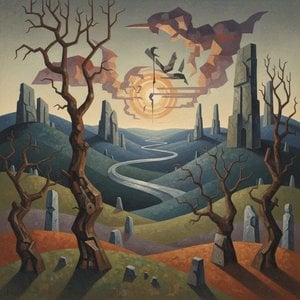
Paul Nash: Modernism, Myth & the British Landscape – A Visionary Artist
Explore the evocative landscapes & poignant war art of Paul Nash (1889-1946), a key figure in British Modernism. Discover his unique style and lasting impact on art history with ArtsDot.

Mastering Form: The 25 Greatest Paintings by Paul Cézanne
Explore 25 iconic Paul Cézanne masterpieces and his Post-Impressionist legacy. Discover the full collection online at ArtsDot.com.


