


 Preview
 Send
Send Share
Share
 Details

 Download
 Similars
 X-Ray
X-Ray Diaporama
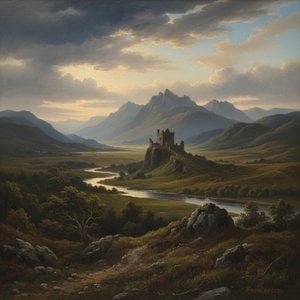
Landscape -

 Read More
Hand Made Oil Reproduction
Hand-painted oil on canvas in your size and frame, made to order by our artists. ( Buy Print Buy Image)




































Pick from our preset sizes that match the artwork's original proportions.

You may enter your own dimensions to fit a specific frame or space. If your selected size does not match the original image's proportions, we will either crop the artwork or extend the painting with additional hand-painted elements. A digital mockup will be sent for your approval before production begins.
Please note that the on-screen preview does not reflect the actual cropping or extension. Only the mockup will accurately show the final composition.
While custom sizes are available, we recommend selecting a dimension from the predefined list to preserve the original proportions.
After order, ArtsDot.com team will email client for instructions and provide a mockup preview
Worldwide Delivery () in 3/4 weeks instead of standard 5 weeks. (17 August). No compromise on quality.

Free Worldwide Express Shipping

High-Quality Linen Canvas

Full Shipping Insurance

Customs Tax Refund Guarantee

True Color Matching Guarantee

60-Day Return Policy (Defects Only)

100% Money-Back Guarantee

Bulk Discount Offer
 Glass option is only available in size under 110 CM

Landscape -
Reproduction Medium
Reproduction Size
-


Total Price
$ 263
Related Artworks


Artist Biography
Patrick Nasmyth: A Scottish Visionary of Light and Landscape
Born in Edinburgh in 1787, Patrick Nasmyth’s life was marked by both artistic promise and profound personal challenges. The eldest son of the renowned landscape painter Alexander Nasmyth, he inherited a legacy of artistic skill but also faced significant physical limitations – a lifelong deafness resulting from illness and the loss of use of his right hand following an accident. These obstacles, however, did not diminish his creative spirit; instead, they shaped his unique perspective and contributed to the distinctive qualities of his work. His early years were steeped in art, with all his siblings receiving instruction, fostering within them a shared appreciation for observation and representation.
Nasmyth’s artistic journey began under the tutelage of his father, absorbing the Dutch masters – particularly Meindert Hobbema and Jacob van Ruysdael – whose meticulous attention to light and atmosphere profoundly influenced his style. These painters, celebrated for their serene landscapes bathed in soft, diffused illumination, served as a cornerstone of Nasmyth’s artistic development. The influence is readily apparent in his own paintings: the subtle gradations of tone, the careful rendering of atmospheric perspective, and the emphasis on capturing the fleeting effects of light are all hallmarks of this shared inspiration. His father's encouragement to pursue independence fostered a spirit of self-reliance that would prove crucial throughout his career.
A pivotal moment in Nasmyth’s life occurred during his teenage years when he lost the use of his right hand and much of his hearing. Forced to adapt, he learned to paint with his left, developing an extraordinary dexterity and a heightened sensitivity to visual detail. This experience undoubtedly deepened his observational skills and instilled within him a profound appreciation for the challenges faced by artists throughout history. It’s believed that this adaptation led to a more nuanced approach to composition and brushwork, allowing him to convey subtle shifts in light and shadow with remarkable precision.
The Scottish Landscape as Subject
Following his move to London in 1810, Nasmyth established himself as a significant figure in the British art scene. While he continued to be deeply influenced by Dutch masters, his work increasingly focused on his native Scotland – a subject that would occupy him throughout his career. He meticulously documented the diverse landscapes of his homeland, from rolling hills and heather-clad moors to dramatic coastlines and serene lochs. Unlike many of his contemporaries who idealized Scotland through romanticized depictions, Nasmyth presented a more realistic portrayal, capturing the rugged beauty and inherent drama of the terrain.
His paintings are not merely topographical representations; they are imbued with a sense of atmosphere and mood. He skillfully employed light and shadow to evoke specific emotions – tranquility, solitude, and even a hint of melancholy. Many of his works remain undated, reflecting a deliberate choice to prioritize the subject matter over strict chronological documentation. This approach underscores his commitment to capturing the essence of each scene rather than adhering to rigid artistic conventions.
Technique and Style
Nasmyth’s technique was characterized by a meticulous attention to detail and a masterful command of light and color. He employed a loose, expressive brushstroke that allowed for subtle variations in tone and texture. His compositions are typically balanced and harmonious, with a clear sense of depth and perspective. He favored a palette of muted earth tones – browns, greens, and grays – which he skillfully layered to create atmospheric effects. The use of glazes—thin layers of translucent paint applied over dried underlayers—allowed him to build up complex tonal values and achieve remarkable luminosity.
Unlike the more dramatic brushwork of some Romantic painters, Nasmyth’s style is remarkably restrained and controlled. He sought to capture the subtle nuances of light and atmosphere rather than resorting to bold contrasts or exaggerated gestures. This understated approach belies a deep understanding of color theory and a keen eye for detail.
Legacy and Influence
Patrick Nasmyth died in 1831, leaving behind a substantial body of work that continues to be admired for its beauty and technical skill. While he may not have achieved the widespread fame of some of his contemporaries, his paintings are considered important examples of British landscape painting during the early 19th century. His influence can be seen in the works of later artists who followed in his footsteps, particularly those interested in capturing the atmospheric qualities of the Scottish landscape.
His dedication to observation and his willingness to embrace personal challenges serve as an inspiration to artists today. Nasmyth’s legacy extends beyond his individual paintings; he represents a testament to the power of artistic vision and the enduring appeal of the natural world. Further research into his work, particularly his undated pieces, continues to reveal new insights into this fascinating artist's life and career.

Patrick Nasmyth
1787 - 1831 , United Kingdom
Quick Facts
- Artistic Movement Or Style: Romantic Landscape
- Artists Or Movements Influenced By This Artist:
- Dutch Masters
- Romanticism
- Artists Who Influenced This Artist:
- Meindert Hobbema
- Jacob van Ruysdael
- Alexander Nasmyth
- Date Of Birth: January 7, 1787
- Date Of Death: August 17, 1831
- Full Name: Patrick Nasmyth
- Nationality: Scottish
- Notable Artworks:
- Wooded Landscape
- The River Leith
- Dawyck Park
- Place Of Birth: Edinburgh, UK
Related Articles

Patrick Nasmyth: A Scottish Romantic's Vision of History & the Grand Manner
Explore the captivating landscapes of Patrick Nasmyth, a key figure in Scottish Romanticism. Discover his Dutch influences, embrace of the Grand Manner, and lasting artistic legacy. Learn more at ArtsDot.
Alexander Nasmyth: Picturing Scotland's Romantic Landscape – Innovation & Identity
Explore the life & art of Alexander Nasmyth, a pivotal figure in Scottish Romantic landscape painting. Discover his iconic works, including portraits of Robert Burns, and learn about his lasting influence on national identity. Fine art reproductions available.

Romantic Landscapes: 10 Masterpieces for Your Home | ArtsDot
Journey through 10 Romantic landscape masterpieces by Friedrich, Turner & Cole. Explore emotional art, sublime nature scenes & iconic 19th-century paintings. Find museum-quality reproductions for your home at ArtsDot.com – discover the full collection online!

Beyond the Horizon: 10 Landscape Masterpieces for Your Home Decor
Journey through 10 breathtaking landscape paintings by Monet, Van Gogh & more! Explore iconic artworks, artistic techniques & find inspiration for your home decor. Museum-quality reproductions at ArtsDot.com. Discover all masterpieces on ArtsDot.com

Charles Leickert: Capturing the Dutch Golden Age Light – A Comprehensive Study of Technique, Context, and Legacy
Explore the captivating winter landscapes of Charles Leickert, a master of Dutch Golden Age light & atmosphere. Discover his techniques, symbolism, and lasting legacy – a comprehensive study for art enthusiasts and collectors.



