


 Preview
 Send
Send Share
Share
 Details
 Guide
Guide

 Download
 Similars
 X-Ray
X-Ray Diaporama
 Stats
StatsSt. Jerome in His Study


 Read More
Hand Made Oil Reproduction
Hand-painted oil on canvas in your size and frame, made to order by our artists. ( Switch to Print Switch to Digital Image)




P118B $10

P118H $10

P118W $10

P438Z $10

P508JH $12

P508YH $12

P805H $10

P805Z $10

P919BZ $10

P919G $10

P919XJ $10

P959ZH $10

P968JZ $12

W106C $8

W218G $10

W218JH $8

W218Y $10

W307PJ $10

W316G $10

W316PJ $8

W316Y $10

W398PJ $8

W4111J $10

W500HY $15

W500JH $15

W692G $12

W849H $8

W940BG $15

W953PJ $8




Pick from our preset sizes that match the artwork's original proportions.

You may enter your own dimensions to fit a specific frame or space. If your selected size does not match the original image's proportions, we will either crop the artwork or extend the painting with additional hand-painted elements. A digital mockup will be sent for your approval before production begins.
Please note that the on-screen preview does not reflect the actual cropping or extension. Only the mockup will accurately show the final composition.
While custom sizes are available, we recommend selecting a dimension from the predefined list to preserve the original proportions.
After order, ArtsDot.com team will email client for instructions and provide a mockup preview
Worldwide Delivery () in 3/4 weeks instead of standard 5 weeks. (24 September). No compromise on quality.

Free Worldwide Express Shipping

High-Quality Linen Canvas

Full Shipping Insurance

Customs Tax Refund Guarantee

True Color Matching Guarantee

100-Day Return Policy (Defects Only)

100% Money-Back Guarantee

Bulk Discount Offer
 Glass option is only available in size under 110 CM

St. Jerome in His Study
Reproduction Medium
Reproduction Size
-


Total Price
$ 263
Related Artworks


Artist Biography
The Enigmatic Vision of Jean-Baptiste Mongeau: A Painter of Shadows and Light
Jean-Baptiste Mongeau, a figure largely obscured by the mists of early 19th-century France, remains one of the most compellingly enigmatic artists of his era. Born in Lyon in 1788 – a city renowned for its silk weaving and burgeoning artistic community – Mongeau’s life unfolded with a quiet intensity, marked by both profound personal tragedy and an increasingly radical approach to painting. While he produced relatively few works during his lifetime, the surviving canvases bear witness to a unique sensibility, characterized by a haunting blend of Romanticism and nascent Realism, coupled with a masterful manipulation of light and shadow that continues to captivate viewers today. His career spanned just over two decades before his untimely death in 1810, leaving behind a legacy shrouded in speculation and a collection of paintings that demand careful observation and interpretation. Mongeau’s early life offered little indication of the artistic brilliance he would later demonstrate. He was the son of a silk merchant and a seamstress, receiving a rudimentary education before apprenticing as a printer – a profession common amongst young men of modest means in Lyon at the time. However, it was during his time working with woodcuts that Mongeau’s passion for visual representation began to ignite. The intricate details of the printed images, the interplay of light and dark on the carved blocks, profoundly influenced his future artistic endeavors. Around 1807, he began formally studying painting under the tutelage of Antoine-Jean Gros, a prominent Romantic painter known for his historical canvases. Gros recognized Mongeau’s exceptional talent – particularly his ability to capture fleeting moments of emotion and atmosphere – and encouraged him to explore the darker, more introspective themes that would come to define his work. Mongeau's artistic style evolved dramatically throughout his career. Initially influenced by the Neoclassical tradition, evident in his early portraits and landscapes, he gradually moved towards a Romantic aesthetic, embracing dramatic lighting, turbulent skies, and emotionally charged subjects. However, unlike many of his contemporaries who succumbed to the excesses of Romanticism, Mongeau retained a remarkable restraint, avoiding bombast and melodrama. His paintings are characterized by a subtle psychological depth, suggesting more than they explicitly state. He was particularly fascinated with the effects of light – its ability to reveal and conceal, to create atmosphere and evoke emotion. This fascination is most evident in his series of “Shadow Paintings,” created between 1809 and 1810. These works, predominantly depicting solitary figures set against vast, dark landscapes, explore themes of isolation, melancholy, and the ephemeral nature of human existence. The use of chiaroscuro – a dramatic contrast between light and shadow – is not merely a technical device but a fundamental element of his artistic language, used to heighten the emotional impact of each scene.- Key Influences: Antoine-Jean Gros (Romanticism), Eugène Delacroix (emotional intensity), Rembrandt van Rijn (chiaroscuro technique).
- Notable Techniques: Masterful use of chiaroscuro, atmospheric perspective, subtle color palettes, and a focus on capturing fleeting moments of emotion.
Legacy and Historical Significance
Mongeau’s impact on subsequent generations of artists is surprisingly significant, despite his relative obscurity during his lifetime. He anticipated many of the developments in Realism that would emerge in the mid-19th century, particularly in his meticulous attention to detail and his willingness to depict ordinary subjects with honesty and empathy. His use of light and shadow, while rooted in Romantic tradition, also foreshadowed the innovations of artists like Gustave Courbet and Jean-François Millet. Moreover, Mongeau’s exploration of psychological themes – isolation, melancholy, and the search for meaning – resonated deeply with later Symbolist painters who sought to express inner emotions through evocative imagery. His work has been studied by art historians as a bridge between Romanticism and Realism, offering valuable insights into the transition from one artistic movement to another. The rediscovery of his paintings in recent years has not only elevated his status as an artist but also prompted a reassessment of the broader cultural landscape of early 19th-century France – a period often overshadowed by the grand narratives of Napoleon and the Revolution. Jean-Baptiste Mongeau, once a forgotten figure, is now recognized as a significant voice in the history of French art, a painter who dared to explore the darkness within and illuminate the beauty of the human spirit.
niccolò antonio
1461 , Italy
Quick Facts
- Artistic Movement Or Style: World Goes Pop
- Date Of Death: 1461
- Notable Artworks:
- Evelyne Axell
- Joav BarEl
- Thomas Bayrle
Related Articles

Leonardo da Vinci's Masterpieces: Explore 25 Iconic Artworks for Your Home | ArtsDot
Journey through Leonardo da Vinci's genius with our curated selection of 25 iconic artworks. Explore the stories behind Mona Lisa, The Last Supper & more Renaissance masterpieces. Find museum-quality art reproductions for your home at ArtsDot.com.

El Greco's Masterpieces: Explore 25 Iconic Paintings & Spiritual Visions | ArtsDot
Journey through El Greco's 25 most iconic paintings! Explore the spiritual depth & dramatic beauty of this Spanish Renaissance master. Discover art history, techniques & find museum-quality reproductions for your home at ArtsDot.com.
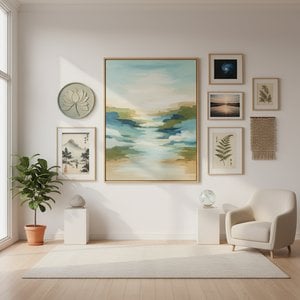
Tranquil Masterpieces: 10 Artworks for Serene Decor & Emotional Well-being |
Find serenity with our Top 10 tranquil artworks! Explore masterpieces by Monet, Van Gogh & more. Discover the stories behind calming Impressionist landscapes and peaceful Japanese art. Museum-quality reproductions at .

Monet's Masterpieces: 25 Iconic Artworks to Transform Your Home
Journey through 25 iconic Claude Monet masterpieces! Explore Impressionism’s beauty, from Water Lilies to Rouen Cathedral. Discover stunning art reproductions & curated decor ideas – explore the full collection online at ArtsDot.com.

Serene Masterpieces: 10 Artworks That Define Tranquility | ArtsDot
Find peace with 10 iconic artworks embodying tranquility! Explore Monet's water lilies, Van Gogh’s starry night & more. Discover the stories behind these serene masterpieces and bring calming art into your home with museum-quality reproductions from ArtsDot.com.

