

- 800.0 x 800.0 cm


The picture follows your choices: , .
Collectible Description
Intricate relief carvings of bottles and vases showcase the opulent Mughal Dynasty style from 1600, offering a glimpse into imperial elegance that you can bring to your collection.
 Read More
Artist Biography
Renowned for the exquisite Mughal style of miniature painting and intricate architecture, this dynasty produced masterpieces like the Pierced screen jali and Padshahnama plates, inviting you to discover a golden era of art.
Hand Made Oil Reproduction
Hand-painted oil on canvas in your size and frame, made to order by our artists. ( Switch to Print Switch to Digital Image)
More about this painting
 Send
Send Share
Share
 Details
 Guide
Guide

 Download
 Similars
 Diaporama
 Q&A
Q&A Stats
StatsOrder your painting in four simple steps
Take your time. You can change any answer; the price in your order card follows each choice.
1 Step one of four
Which size would you like?
These sizes keep the proportions of the original painting. The drawing shows your choice on a wall, above a two-metre sofa.
Or give your own measurements
Pick from our preset sizes that match the artwork's original proportions.

Type the width and the height you need, to fit your frame or your wall. This is hand-painted, so for a size with a different shape the artist can paint a bit more around the picture, or cut a bit — you choose. We send you a digital mockup to approve before the painting starts. The picture shown on this page does not show the real result — only the mockup does.
2 Step two of four
How should it be prepared: rolled, stretched or framed?
The prices below are for the size you chose in step one.
Choose the edges of the stretched canvas
Choose your frame

White $1

Blurside $1

Extended $1

P118B $10

P118H $10

P118W $10

P438Z $10

P508JH $12

P508YH $12

P805H $10

P805Z $10

P919BZ $10

P919G $10

P919XJ $10

P959ZH $10

P968JZ $12

W106C $8

W218G $10

W218JH $8

W218Y $10

W307PJ $10

W316G $10

W316PJ $8

W316Y $10

W398PJ $8

W4111J $10

W500HY $15

W500JH $15

W692G $12

W849H $8

W940BG $15

W953PJ $8

H24-GOLD $30

H24-SILVER $30

H36-GOLD $45

H36-SILVER $45
Framed
Moulding: . Overall size with the frame: .
3 Step three of four
Would you like anything changed in the painting?
Most people answer no. Because each painting is made by hand, our artist can also adapt it for you.
After order, ArtsDot.com team will email client for instructions and provide a mockup preview
4 Step four of four
A few finishing options
All of them are optional. The answers already selected cost nothing extra.
Who paints it?
Worldwide Delivery () in 3/4 weeks instead of standard 5 weeks. (5 November). No compromise on quality.
A nameplate, as in a museum?
Engraved Bronze Plaque Details
This elegant plaque features the artist's name and the title of the artwork, finely engraved for a timeless presentation.
It is made from bronze with a refined, elegant finish. The text is precisely laser-engraved for a sharp and permanent result. Measuring 9x2 cm, the plaque is compact yet easy to read. It's built to be durable and scratch-resistant, offering a professional, museum-quality look. Mounting is simple thanks to the included adhesive backing.
Transparent Acrylic Plaque Details
The plaque includes essential engraved details such as the artist's name, the title of the artwork, the date it was created, the type of media used-like oil on canvas or watercolor-a brief description of the piece, and a QR code that links to the complete artwork information.
It is crafted from clear acrylic, offering a sleek, modern appearance. The text is UV-engraved in black to ensure strong visual contrast. With a size of 10x15 cm, it ensures optimal readability. It comes equipped with two metal hooks for secure wall mounting. The plaque is designed to be weather-resistant, making it suitable for various environments, and it includes interactive features that work seamlessly with smartphone scanning.
Black Acrylic Plaque Details
This elegant plaque includes engraved information such as the artist's name, the title of the artwork, the date it was created, the type of media used (like oil on canvas or watercolor), a short description of the artwork, and a QR code for quick access to more information.
The plaque itself is made from refined black acrylic with a premium finish. The text is laser-engraved in white for high contrast and readability. Its size is 10x15 cm, designed to be easy to read. It comes with two metal hooks for professional mounting. The design is sleek and fits any interior style. It is also weather-resistant and durable, with built-in digital integration for mobile compatibility.
A protective varnish?
When do you need it?
✓ Check and order
Your painting, as you ordered it

Relief panel
Reproduction Medium
Reproduction Size
-

Elite Senior Artist
More detail, finesse, and extra production time
-

Reproduction Frame
-
-
For artworks or reproductions larger than 105 cm (approximately 41 inches) on any side, the frame will be shipped as a kit, disassembled. This method ensures safe delivery and prevents damage during transport.
Professional assembly required - this is not a DIY product.
The kit must be assembled and the canvas stretched by an experienced professional framer, using wood glue (not supplied), a canvas stretching plier and clamps to hold the bars square while the glue dries. Incorrect assembly or uneven canvas tension can permanently damage the artwork and is not covered by our warranty.
 For artworks or reproductions larger than 105 cm (approximately 41 inches) on any side, the frame will be shipped as a kit, disassembled. This method ensures safe delivery and prevents damage during transport.
All solid wood bars are included, precisely cut to size.
Assembled with the screws provided, plus wood glue for the corner joints, which is not supplied and must be sourced by your framer.
Professional tools are required and not included: a canvas stretching plier (tensioner) and clamps to hold the bars square while the glue dries.
Important:
The corner joints require wood glue, the bars must be held with clamps until the glue is fully dry, and tightening the canvas on the assembled frame requires a canvas stretching plier. None of these are included in the kit. Please arrange an experienced professional framer before ordering this size.

Nameplate
-
-

Protective Varnish
Glossy Varnish (enhances colors, protects against light/moisture)
-

Customize My Artwork
Examples of what can be changed: Replace face with customer photo; Add pet (e.g., replace cat with dog); Include hidden message in background; Change background landscape or elements.
-

Urgent
Worldwide Delivery () in 3/4 weeks instead of standard 5 weeks. (5 November). No compromise on quality.
-
Express Shipping
Worldwide Delivery () in 5 weeks. (12 November).
Included
Total Price
$ 263
Glass option is only available in size under 110 CM
Included with every order
- Free Worldwide Express Shipping
- High-Quality Linen Canvas
- Full Shipping Insurance
- Customs Tax Refund Guarantee
- True Color Matching Guarantee
- 100-Day Return Policy (Defects Only)
- 100% Money-Back Guarantee
- Bulk Discount Offer


A Symphony in Stone: The Intricacy of Mughal Relief
To gaze upon this exquisite relief panel is to step through a portal into the opulent courts of the Mughal Empire, specifically into the golden age of Emperor Jahangir’s reign. This masterwork of shallow carving transcends mere decoration, offering a tactile window into an era where architecture and artistry were inextricably linked. The piece captures the essence of Chini kana—the celebrated "china rooms" of imperial palaces—where walls were not merely boundaries but canvases for storytelling. Through a delicate interplay of light and shadow, the relief breathes life into a rhythmic arrangement of niches, each housing a meticulously rendered miniature world of vessels and flora.
The craftsmanship displayed in this panel is nothing short of breathtaking, showcasing a level of detail that demands close, contemplative study. The technique involves a sophisticated approach to low-relief carving, where the artist has coaxed depth from a flat surface to create an illusion of three-dimensional space. One can trace the graceful curves of long-necked bottles with bulbous bases and the elegant, tapering silhouettes of cypress trees. These motifs are not merely aesthetic choices; they are echoes of a highly refined artistic language used across Mughal textiles, metalwork, and architecture, demonstrating a unified vision of imperial splendor that sought to harmonize the natural world with man-made grandeur.
Symbolism and the Language of Abundance
Beyond its visual allure, the relief panel serves as a profound symbolic text. In the 17th century, the imagery of bottles, vases, and flowering plants carried deep, layered meanings. Originally, the depiction of these vessels within wall niches was intended to evoke the "waters of fertility," acting as a talisman for abundance, prosperity, and good fortune. The presence of such motifs suggested a life of plenty, where the bounty of nature was captured and celebrated within the safety of the palace walls. As time progressed, while these elements transitioned into more purely decorative roles, they retained their ability to convey a sense of refined elegance and eternal spring.
For the discerning collector or interior designer, this piece offers much more than historical interest; it provides an emotional anchor for any space. The repetitive, rhythmic pattern of the carvings creates a sense of meditative calm, while the intricate details provide endless points of visual discovery. Whether integrated into a contemporary minimalist setting to provide a touch of historical gravity or placed within a classical interior to enhance its grandeur, this reproduction brings with it the soul of the Mughal Dynasty. It is an invitation to surround oneself with the enduring beauty of an empire that mastered the art of turning stone into poetry.
Questions & Answers
Is there a slideshow for "Relief panel" by Mughal Dynasty?
The diaporama of "Relief panel" can be watched on the artwork's Diaporama page.
What orientation does "Relief panel" by Mughal Dynasty have?
"Relief panel" by Mughal Dynasty has a panoramic format. The format describes the proportions of the composition.
Where can I buy a hand-painted reproduction of "Relief panel" by Mughal Dynasty?
Hand-painted copies of "Relief panel" by Mughal Dynasty are sold on this website: a hand-painted oil reproduction on linen canvas, ordered from its Hand-Painted Reproduction page.
Related Artworks

![Pierced Screen [jali] — Mughal Dynasty, Mughal Decorative Arts](/media/artworks/images-thumb/9b/8d/9b8d5dcd213b4ce13074c46df78390a9.jpg)


![[carved Stone Figure, Nunnery Quadrangle, Uxmal] — Octavio Medellín, Archaeological Documentation](/media/artworks/images-thumb/cd/72/cd72ede773e8f67633d88d21707b2444.jpg)


Mughal Dynasty
1526 - 1857, India
Artist Biography
The Golden Legacy of the Mughal Dynasty
The Mughal dynasty was not a single painter with a brush, but a magnificent era of imperial patronage that transformed the Indian subcontinent into a global epicenter of artistic brilliance. Emerging from the Timurid lineage, this powerful house established a cultural zenith that blended Persian, Islamic, and indigenous Indian traditions into a singular, opulent aesthetic. From its inception in 1526, the dynasty acted as a conductor for a symphony of styles, where the courtly tastes of emperors like Akbar, Jahangir, and Shah Jahan breathed life into everything from delicate manuscripts to monumental stone structures. This was an age where art was inextricably linked to the very fabric of imperial power, serving as a visual language of legitimacy, divine right, and unparalleled wealth.
At the heart of this artistic flowering was the development of Mughal miniature painting, a sophisticated medium that functioned as both historical record and poetic expression. These works, often housed in exquisite albums known as muraqqa, were far more than mere illustrations; they were windows into the soul of an empire. Influenced heavily by Persian traditions but enriched by Chinese and European elements, Mughal painters achieved a level of technical virtuosity that captured the subtle textures of silk, the luminous glow of gold, and the intricate details of botanical life. The paintings often depicted royal ceremonies, hunting expeditions, and the intimate lives of the nobility, utilizing a hierarchical composition to guide the viewer’s eye toward the central figure of the Emperor, thereby reinforcing the stability and grandeur of the throne.
Architecture and the Symphony of Stone
Beyond the delicate pages of manuscripts, the Mughal legacy is etched permanently into the landscape through an architectural language of breathtaking scale and precision. The dynasty’s builders mastered the art of creating a dialogue between permanence and translucency, utilizing materials like rich red sandstone and white marble to create structures that seemed to breathe with the rhythm of light. One of the most captivating expressions of this skill is found in the pierced screen [jali]. These intricate latticework elements, such as those dating to approximately 1630, served a dual purpose: they orchestrated the flow of air and light through meticulously hollowed geometry while providing a sophisticated layer of privacy within the imperial palaces. To behold a jali is to witness the transformation of heavy stone into something as ethereal as lace, where floral motifs and scrolling vines bloom eternally from the mineral surface.
This architectural mastery extended to the creation of immersive environments where walls became canvases for storytelling. The concept of Chini kana, or celebrated "china rooms," exemplified an era where surfaces were treated with profound artistic intent. Through shallow relief carving, artisans created a tactile window into the opulent courts, using rhythmic arrangements of niches and botanical imagery to evoke a sense of abundance. These relief panels often featured motifs such as cypress trees and elegant vessels, which carried deep symbolic weight, acting as talismans for prosperity and fertility. This unified vision—where architecture, metalwork, and painting all shared a common decorative vocabulary—created an atmosphere of imperial splendor that sought to harmonize the natural world with man-made grandeur.
A Lasting Historical Significance
The influence of the Mughal dynasty endured long after its political power began to wane in the 18th century. The aesthetic principles established during the golden age of the Great Mughals left an indelible mark on the cultural identity of South Asia, influencing subsequent regional styles and even global perceptions of Indo-Islamic art. The empire’s ability to synthesize diverse influences—from the Turco-Mongol roots of its founders to the Hindu and Persian traditions of its subjects—created a cosmopolitan artistic language that was both uniquely Indian and universally magnificent.
The historical importance of this era lies in its role as a bridge between worlds. The Mughal court was a site of profound cultural, artistic, and linguistic exchange, where the Persian language served as the medium for high art, yet the visual output was deeply rooted in the local soil. Even as the empire transitioned through periods of political upheaval and eventual dissolution in 1857, the masterpieces it produced—from the legendary Taj Mahal to the luminous plates of the Padshahnama—remain as enduring testaments to a period when art was the ultimate expression of an empire's soul.

Related Articles
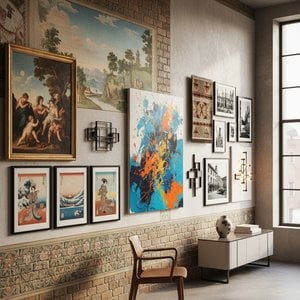
Transforming Spaces: A Comprehensive Exploration of Wall Decor Through Art History & Contemporary Practice
Explore the art of transforming spaces with our comprehensive guide to wall decor. From historical movements to contemporary trends, discover how to curate impactful interiors and commission bespoke artwork for a truly personalized aesthetic.
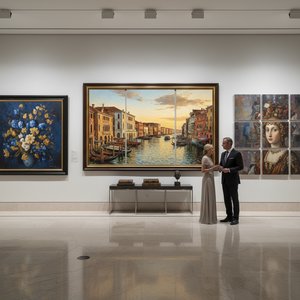
F.A.Q.: Multi-Panel Sizes – A Guide for Elite Collectors
Explore multi-panel art options with . Expert guidance for elite collectors on sizing, customization & premium oil reproductions. Elevate your space with unique, handcrafted artwork.

F.A.Q.: Multi-Panel Group Set Art – A Sophisticated Decor Solution for Elite Collectors
Discover ArtsDot.com's exquisite multi-panel art sets – a sophisticated decor solution for elite collectors. Custom designs, premium reproductions & expert guidance. Elevate your space with lasting beauty.