


 Preview
 Send
Send Share
Share
 Details
 Guide
Guide

 Download
 Similars
 X-Ray
X-Ray Diaporama
 Stats
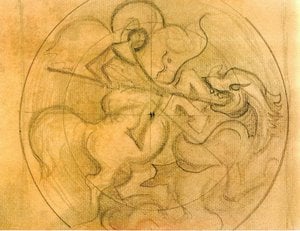
StatsUntitled (348)
 Read More
The artwork displayed on this page is protected by copyright law, which means we cannot legally create or sell an identical reproduction. This protection is enforced under international agreements such as the Berne Convention and by national laws, including those outlined by the U.S. Copyright Law - Title 17.
This method fully complies with copyright regulations because it does not involve copying or duplicating the protected artwork. Instead, it is a creative reinterpretation - a new painting that is influenced by the original but not identical to it.
Giclée / Art Print
Museum-quality giclée or canvas print with fast production and flexible finish options. ( Buy Hand Made Painting Switch to Digital Image)




































Pick from our preset sizes that match the artwork's original proportions.

Type the width and the height you need, to fit your frame or your wall. A print can only be cut, never made bigger than the picture, so a size with a different shape loses a part of the image. We send you a digital mockup to approve before we print anything. The picture shown on this page does not show the real cut — only the mockup does.
Worldwide Delivery () in 2 weeks instead of standard 4/5 weeks. (22 October)

Free Worldwide Express Shipping

High-Quality Linen Canvas

Full Shipping Insurance

Customs Tax Refund Guarantee

True Color Matching Guarantee

100-Day Return Policy (Defects Only)

100% Money-Back Guarantee

Bulk Discount Offer
 Glass option is only available in size under 110 CM

Untitled (348)
Giclée / Art Print
Reproduction Size
-


Total Price
$ 63
Related Artworks




Artist Biography
A Life Woven in Color and Feminism
Miriam Schapiro, born in Toronto, Canada, in 1923, was an artist whose journey mirrored the evolving landscape of twentieth and twenty-first century art. Her life, spanning nine decades until her passing in 2015, wasn’t simply a progression through artistic styles but a deliberate dismantling of boundaries – between high and low art, masculine and feminine expression, and ultimately, between personal experience and universal themes. Schapiro's early years were steeped in creativity; her father, Theodore Shapiro, an artist and industrial designer himself, nurtured her innate artistic inclinations from the tender age of six. This foundational encouragement, coupled with formative instruction at the Museum of Modern Art, set the stage for a lifelong dedication to visual expression. She pursued formal training at Hunter College before continuing her studies at the University of Iowa, where she earned a trifecta of degrees – BA, MA, and MFA – solidifying her commitment to painting, printmaking, and a burgeoning artistic vision. It was in Iowa that she met and married fellow artist Paul Brach, beginning a lifelong partnership both personally and creatively. The influence of Mauricio Lasansky at Iowa proved pivotal, instilling in Schapiro not only technical mastery in diverse printing techniques but also the importance of studying Old Masters to overcome artistic challenges – a practice that would resonate throughout her career.From Abstract Expressionism to the Birth of ‘Femmage’
Schapiro initially gained recognition within the realm of Abstract Expressionism during the 1950s and 60s, developing a distinctive gestural style characterized by delicate layering and subtle erasure – “painting thinly and wiping out,” as she described it. However, these abstract compositions were rarely devoid of underlying references; they often drew inspiration from black and white illustrations of Old Master paintings, revealing her continued dialogue with art history. The true turning point in Schapiro’s artistic trajectory arrived in the 1970s, coinciding with the burgeoning Feminist Art movement. Recognizing a critical void in the art world's representation of women’s experiences, she co-founded the groundbreaking Feminist Art Program at the California Institute of the Arts alongside Judy Chicago. This collaboration proved transformative, providing a platform for exploring female identity and challenging patriarchal structures within the artistic canon. It was during this period that Schapiro coined the term “femmage,” a neologism encapsulating her innovative collages constructed from fabrics, lace, ribbons, and other materials traditionally associated with domesticity and feminine craft. These works weren’t merely aesthetic experiments; they were deliberate acts of reclamation, elevating undervalued "women's work" to the status of fine art and challenging conventional notions of artistic value.Themes of Identity, History, and Decoration
Schapiro’s artistic exploration consistently revolved around themes of female identity, women’s history, and the reclaiming of marginalized artistic traditions. Her canvases became vibrant repositories of symbols associated with womanhood – hearts, floral motifs, geometric patterns, and a deliberate embrace of the color pink. She didn't shy away from incorporating imagery referencing other significant women artists, such as Mary Cassatt and Frida Kahlo, paying homage to their legacies while simultaneously asserting her own unique voice. A particularly striking example of her approach is her monumental depiction of hand fans; transforming what was typically a small, intimate object into large-scale paintings – some reaching six by twelve feet – she imbued the fan with heroic proportions, elevating it as a symbol of feminine power and grace. Beyond feminist concerns, Schapiro’s work also demonstrated a deep engagement with art history. She drew inspiration from the Russian avant-garde movement, recognizing its historical significance as a period where women artists were afforded greater opportunities for recognition and equality. This fascination informed her compositions and broadened her artistic vocabulary. Her embrace of decorative elements was not merely stylistic; it was a conscious rejection of minimalist austerity and a celebration of ornamentation – contributing significantly to the Pattern and Decoration movement, which challenged the prevailing emphasis on reductive forms in contemporary art.Legacy and Lasting Influence
Miriam Schapiro’s pioneering work irrevocably altered the landscape of contemporary art. She paved the way for future generations of feminist artists, redefining the boundaries between fine art and craft and challenging deeply ingrained societal biases. Her innovative techniques, particularly her development of “femmage,” expanded the possibilities of collage and assemblage, inspiring countless artists to explore new materials and approaches. Schapiro’s legacy extends beyond her artistic creations; she was a dedicated educator and advocate for women in the arts, fostering dialogue and creating opportunities for emerging artists. Today, her works are held in prestigious museum collections worldwide, including the Jewish Museum in New York and the National Gallery of Art, ensuring that her vision continues to resonate with audiences for years to come. The Eric Firestone Gallery exclusively represents her estate, safeguarding her artistic heritage and promoting ongoing scholarship on her life and work. Miriam Schapiro was more than an artist; she was a cultural catalyst, a fearless innovator, and a champion of feminine expression whose impact continues to be felt throughout the art world.
Miriam Schapiro
1923 - 2015 , Canada
Quick Facts
- Full Name: Miriam Schapiro
- Nationality: Canadian-American
- Date Of Birth: 1923
- Date Of Death: 2015
- Place Of Birth: Toronto, Canada
- Notable Artworks:
- Beast Land and Plenty
- Untitled (138)
- Untitled (543)
- Artistic Movement Or Style: Feminist Art, Pattern & Dec.
- Artists Who Influenced This Artist:
- Old Masters
- Lasansky
- Russian Avant-Garde
- Artists Or Movements Influenced By This Artist:
- Feminist Artists
- Pattern & Decoration


