

 Preview
 Send
Send Share
Share
 Details
 Guide
Guide

 Download
 Similars
 X-Ray
X-Ray Diaporama
 Q&A
Q&A Stats
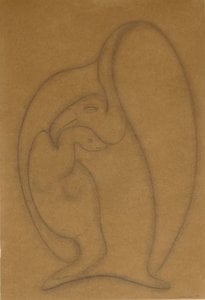
StatsUntitled (430)
 Read More
The artwork displayed on this page is protected by copyright law, which means we cannot legally create or sell an identical reproduction. This protection is enforced under international agreements such as the Berne Convention and by national laws, including those outlined by the U.S. Copyright Law - Title 17.
This method fully complies with copyright regulations because it does not involve copying or duplicating the protected artwork. Instead, it is a creative reinterpretation - a new painting that is influenced by the original but not identical to it.
Giclée / Art Print
Museum-quality giclée or canvas print with fast production and flexible finish options. ( Buy Hand Made Painting Switch to Digital Image)




































Pick from our preset sizes that match the artwork's original proportions.

Type the width and the height you need, to fit your frame or your wall. A print can only be cut, never made bigger than the picture, so a size with a different shape loses a part of the image. We send you a digital mockup to approve before we print anything. The picture shown on this page does not show the real cut — only the mockup does.
Worldwide Delivery () in 2 weeks instead of standard 4/5 weeks. (2 November)

Free Worldwide Express Shipping

High-Quality Linen Canvas

Full Shipping Insurance

Customs Tax Refund Guarantee

True Color Matching Guarantee

100-Day Return Policy (Defects Only)

100% Money-Back Guarantee

Bulk Discount Offer
 Glass option is only available in size under 110 CM

Untitled (430)
Giclée / Art Print
Reproduction Size
-


Total Price
$ 63
Related Artworks




Artist Biography
A Life Woven from Fragments
Domenico “Mimmo” Rotella, born in Catanzaro, Italy, on October 7th, 1918, wasn’t simply an artist; he was a chronicler of the urban pulse. His life unfolded as a deliberate dismantling – not just of posters plastered across Roman walls, but also of conventional artistic notions. From his early years immersed in the vibrant, politically charged art scene of post-war Rome, Rotella developed a singular approach: the ‘décollage,’ a technique that transformed fleeting advertisements into enduring works of art. This wasn’t mere collage; it was an interrogation of consumer culture, a visual archaeology of the city's ephemeral narratives.
His initial artistic explorations leaned towards figurative painting, influenced by movements like Cubism and Futurism. However, a pivotal moment arrived in 1953 – what he termed “Zen illumination.” Observing the relentless cycle of posters being torn down and replaced, Rotella recognized a potent metaphor: the transient nature of images and their constant recontextualization within the urban landscape. This insight led him to abandon traditional painting, embracing instead the act of tearing and pasting, transforming discarded advertisements into layered, complex compositions.
The Language of the Street
Rotella’s ‘décollages’ weren't random acts of destruction. Each tear, each overlapping image, carried a deliberate weight. He meticulously selected posters – film stills, fashion advertisements, political slogans – capturing moments of cultural significance and projecting them onto canvas with an almost obsessive precision. The resulting works are not simply reproductions; they are reinterpretations, imbued with the artist’s own sensibility and a profound understanding of the city's visual language.
Influenced by Dadaism and Surrealism, Rotella’s work moved beyond mere representation. He sought to capture the *feeling* of the street – its frenetic energy, its constant flux, its inherent contradictions. The fragmented images, often juxtaposed with unexpected elements, created a sense of disorientation and intrigue, inviting viewers to actively engage with the artwork and decipher its hidden meanings.
From Rome to Paris: A New Realism
In 1961, Rotella’s work gained international recognition when he was invited by critic Pierre Restany to join the Nouveau Réalisme movement in Paris. This marked a significant shift in his artistic trajectory, pushing him towards greater experimentation and collaboration. The ‘Mec-Art’ process, developed during this period, involved projecting negative images onto emulsion-coated canvases – a technique that further emphasized the materiality of the artwork and its relationship to the urban environment.
Rotella's engagement with Nouveau Réalisme extended beyond purely aesthetic considerations. He was deeply interested in exploring the intersection between art, media, and society. His work often addressed themes of consumerism, mass culture, and political propaganda, reflecting the turbulent social and cultural landscape of post-war Europe.
Legacy and Influence
Mimmo Rotella’s contribution to 20th-century art is undeniable. He redefined the boundaries of collage and assemblage, transforming discarded materials into powerful works of art that continue to resonate today. His ‘décollages’ offer a unique perspective on urban life, revealing the hidden narratives embedded within the visual culture of the city.
Beyond his technical innovations, Rotella's legacy lies in his willingness to challenge conventional artistic practices and embrace the unexpected. He demonstrated that beauty could be found in decay, that meaning could emerge from chaos, and that even the most mundane objects – a torn poster – could hold profound significance.

Mimmo Rotella
1918 - 2006
Quick Facts
- Full Name: Domenico "Mimmo" Rotella
- Nationality: Italian
- Date Of Birth: 1918
- Date Of Death: 2006
- Place Of Birth: Catanzaro, Italy
- Notable Artworks:
- Cinecittà series
- Artypos series
- Plastiforme
- Artistic Movement Or Style:
- Décollage
- Nouveau Réalisme
- Artists Who Influenced This Artist:
- Cubism
- Futurism
- Kandinsky
- Mondrian
- Artists Or Movements Influenced By This Artist:
- Yves Klein
- Pierre Restany


