

 Preview
 Send
Send Share
Share
 Details
 Guide
Guide

 Download
 Similars
 X-Ray
X-Ray Diaporama
 Q&A
Q&A Stats
StatsVirgin and Child

- 33.0 x 23.0 cm


 Read More
The artwork displayed on this page is protected by copyright law, which means we cannot legally create or sell an identical reproduction. This protection is enforced under international agreements such as the Berne Convention and by national laws, including those outlined by the U.S. Copyright Law - Title 17.
This method fully complies with copyright regulations because it does not involve copying or duplicating the protected artwork. Instead, it is a creative reinterpretation - a new painting that is influenced by the original but not identical to it.
Giclée / Art Print
Museum-quality giclée or canvas print with fast production and flexible finish options. ( Buy Hand Made Painting Switch to Digital Image)




P118B $10

P118H $10

P118W $10

P438Z $10

P508JH $12

P508YH $12

P805H $10

P805Z $10

P919BZ $10

P919G $10

P919XJ $10

P959ZH $10

P968JZ $12

W106C $8

W218G $10

W218JH $8

W218Y $10

W307PJ $10

W316G $10

W316PJ $8

W316Y $10

W398PJ $8

W4111J $10

W500HY $15

W500JH $15

W692G $12

W849H $8

W940BG $15

W953PJ $8




Pick from our preset sizes that match the artwork's original proportions.

Type the width and the height you need, to fit your frame or your wall. A print can only be cut, never made bigger than the picture, so a size with a different shape loses a part of the image. We send you a digital mockup to approve before we print anything. The picture shown on this page does not show the real cut — only the mockup does.
Worldwide Delivery () in 2 weeks instead of standard 4/5 weeks. (10 November)

Free Worldwide Express Shipping

High-Quality Linen Canvas

Full Shipping Insurance

Customs Tax Refund Guarantee

True Color Matching Guarantee

100-Day Return Policy (Defects Only)

100% Money-Back Guarantee

Bulk Discount Offer
 Glass option is only available in size under 110 CM

Virgin and Child
Giclée / Art Print
Reproduction Size
-


Total Price
$ 63
A Divine Encounter in Crimson and Gold
In the quiet intimacy of Hans Memling’s Virgin and Child, viewers are invited into a sacred moment that transcends the boundaries of time. Painted around 1478, this exquisite masterpiece captures the profound tenderness between the Virgin Mary and the Christ Child with a level of emotional depth that remains breathtaking centuries later. The composition is anchored by the striking presence of Mary’s red robe, a hue that serves as both a visual anchor and a deep theological symbol of passion and sacrifice. As she cradles the infant close to her chest, their eyes meet in a silent, soulful exchange that radiates a sense of eternal peace, drawing the observer into a state of contemplative calm.
Memling’s distinctive style is characterized by meticulous detail and an unparalleled sensitivity to light, hallmarks of the prestigious Bruges workshop he established. By skillfully employing oil paint—a relatively new medium at the time—he achieved subtle gradations of color and a remarkable luminosity that would have been unattainable with traditional tempera. This technical virtuosity is evident in every aspect of the composition, from the delicate rendering of the baby’s soft skin to the heavy, sculptural folds of Mary’s veil. His painstaking observation of natural forms allows the textures of fabric and flesh to feel almost tangible, bridging the gap between the earthly and the divine.
The Spirit of the Flemish Renaissance
To understand this work is to understand Bruges during the fifteenth century, a vibrant commercial hub and a center of artistic patronage that attracted the finest talents from across Europe. Memling’s Virgin and Child reflects the humanist ideals prevalent in the Renaissance, yet it remains deeply rooted in medieval Christian piety. The painting speaks to the broader cultural preoccupation with portraying idealized beauty and conveying moral virtue—themes central to the spiritual landscape of fifteenth-century Flanders. As a master of the Early Netherlandish movement, Memling utilized his training under the legendary Rogative van der Weyden to infuse religious iconography with a new, humanized realism.
Beyond the central figures, the painting unfolds into a complex narrative space where subtle figures emerge from the periphery, creating a sense of depth and atmospheric mystery. This layered composition invites the discerning eye to linger, discovering new details—a distant face or a soft shadow—with every passing glance. For the art lover or collector, this piece offers more than mere aesthetic beauty; it provides a focal point of profound emotional resonance. Whether serving as a centerpiece in a sunlit gallery or adding a touch of classical elegance to a sophisticated interior, this reproduction brings the luminous spirit of the Flemish Primitives into the modern home.
Questions & Answers
Which room is "Virgin and Child" by Memling, Hans recommended for, given its colors?
The earthy colors of "Virgin and Child" by Memling, Hans match its recommended space: a living room.
What feeling does "Virgin and Child" by Memling, Hans convey?
In "Virgin and Child", a serene mood accompanies a calm emotion.
How big is the original "Virgin and Child"?
"Virgin and Child" measures 33 x 23 cm in its original form. Original dimensions are a useful reference when choosing a reproduction size.
Related Artworks


Artist Biography
Early Life, Family and Training
The story of Memling, Hans begins in the Middle Main region, where he was born around 1430. His earliest years were spent in Seligenstadt, near Frankfurt, a place that would eventually be far from the Flemish lands he would come to call home. Before he could make his mark in the great cities of the north, he had to learn the secrets of his craft. He sought his initial training in the workshops of Mainz or Cologne, where the foundations of his technical skill were first laid through years of patient labor and observation.
As his ambition grew, so did the scope of his education. Between about 1455 and 1460, he moved into the bustling atmosphere of the Brussels workshop. There, he worked under the guidance of Rogier van der Weyden, a man whose mastery of oil paint and sculptural modeling would leave a lasting imprint on the way Memling, Hans approached the human form. This period of apprenticeship was crucial, providing him with the tools to eventually establish his own name in the commercial heart of Bruges.
His personal life was as settled as his professional one became. Sometime between 1470 and 1480, he took Anna de Valkenaere as his wife. Together, they built a life in the city, and their union brought three children into the world. This domestic stability provided a quiet backdrop to a career that would eventually see him listed among the wealthiest citizens of his community.
Life and Activity in Bruges
Upon arriving in the bustling commercial hub of Bruges, Memling found a city that offered both opportunity and a stage for his growing talent. By 1465, he had secured his place within the community as a recognized citizen. He did not merely exist within the city; he became a central figure in its artistic life, establishing a presence that drew the attention of the local elite. His success was not limited to the studio, for his prosperity was reflected in the city's own records. By 1480, he was listed among the wealthiest citizens of Bruges, a testament to the success of his professional endeavors and the high regard in which he was held.
His life in Bruges was marked by a steady rise in social and economic standing. He married Anna de Valkenaere sometime between 1470 and 1480, and together they raised three children within the city's walls. This period of stability allowed him to build a large workshop, which became a significant part of the local economy. He lived and worked in this Flemish center until his death on August 11, 1494. Even in his final years, his influence remained deeply rooted in the streets and institutions of the city he had helped to define through his labor.
Patrons, Workshop and Commissions
In the bustling streets of Bruges, Memling established himself as a man of significant means and influence. By 1480, the city's tax records already listed him among its wealthiest citizens, a status earned through the success of his large workshop. This studio was a hive of activity, where he directed many assistants to meet the growing demands of a prosperous society. He did not work in isolation; instead, he managed a prolific enterprise that ensured his specific manner of painting could be spread far beyond the walls of his own home.
The wealth of Bruges provided him with a steady stream of patrons who sought to secure their spiritual standing through art. He found favor among the powerful, including clergymen, aristocrats, and the rising class of burghers. These patrons—bankers, merchants, and politicians—often appeared within the very scenes he painted. He had a particular talent for incorporating donor portraits into his religious compositions, allowing these men and women to be seen in perpetual devotion alongside the saints. Such commissions were not merely acts of piety but also reflections of the social standing of those who paid for them.
His obligations to the city's religious institutions were frequent and substantial. In 1477, for instance, he was under contract to create an altarpiece for the gild-chapel of the booksellers of Bruges. Such works required a careful balance of sacred narrative and the personal presence of the community's most influential members. Through these contracts, Memling wove the faces of the living into the fabric of the divine, securing both his livelihood and his place in the history of the city.
Technique and Artistic Style
The hand of Memling moved with a devotion to the tangible world that defined the Early Netherlandish tradition. He did not merely paint figures; he sought to capture the very essence of nature through a meticulous observation of its smallest details. By employing oil paint with a profound understanding of light, he achieved a sculptural modeling that gave his subjects a physical presence, as if they might step from their wooden panels into the room. This technical mastery allowed him to render the heavy folds of drapery and the subtle textures of skin with a clarity that felt almost startling to those who viewed them.
In his portraiture, he developed a particular way of arranging the world to achieve a sense of quiet balance. He often placed his subjects against a landscape, creating a careful counterpoint between the foreground and the background. This method ensured that the head of the sitter was offset by the neutral expanse of the sky, while the shoulders were enlivened by the intricate details of the scenery beyond. Such compositions provided a sense of depth and stability, grounding the individual within a wider, natural setting.
- The Last Judgment (Triptych)
- The Adoration of the Magi
- Portrait of a Man with an Arrow
Legacy and Rediscovery
The influence of Memling’s hand traveled far beyond the walls of his Bruges workshop. Through his many assistants, his particular way of seeing the world was carried across Europe, spreading a style that many would come to recognize as the very essence of the Early Netherlandish painting movement. He did not merely paint; he established a standard of visual language that echoed through the decades, shaping how later artists approached the canvas.
For a long time, the true depth of his achievement remained obscured by the passing of centuries. It was not until the 19th century that scholars turned their eyes back toward his works, pulling his name from the shadows of history. This rediscovery brought his paintings into the light of modern appreciation, and he quickly gained a wide popularity among those who sought the quiet, detailed truths of the Northern Renaissance. His ability to capture the subtle textures of life ensured that his name would not be forgotten by those who study the evolution of art.
- The Last Judgment (Triptych)
- The Adoration of the Magi
- The Donne Triptych

Memling, Hans
Germany
Quick Facts
- Artistic Movement Or Style: Early Netherlandish painting
- Artists Or Movements Influenced By This Artist:
- Quentin Massys
- Antwerp School
- Artists Who Influenced This Artist: ['Rogier van der Weyden']
- Date Of Birth: c. 1430
- Date Of Death: August 11, 1494
- Full Name: Hans Memling
- Nationality: German-Flemish
- Notable Artworks:
- The Last Judgment
- The Adoration of the Magi
- The Donne Triptych
- Place Of Birth: Seligenstadt, Germany
Related Articles

Late Medieval Masterpieces: 10 Artworks That Defined an Era | ArtsDot
Journey through 10 defining Late Medieval masterpieces – from Giotto's frescoes to Jan van Eyck’s realism. Explore the stories, techniques & vibrant colors of Gothic art. Find museum-quality reproductions and elevate your home decor with ArtsDot.com! Discover all masterpieces on ArtsDot.com

Illuminating Realism: A Comprehensive Exploration of the Early Netherlandish Renaissance Movement
Explore the captivating world of Early Netherlandish painting! Discover Jan van Eyck & other Flemish masters, their revolutionary techniques, hidden symbolism, and lasting legacy. A comprehensive guide for art enthusiasts.

High Medieval Art: 10 Masterpieces That Shaped an Era | ArtsDot
Journey through High Medieval Art! Explore 10 iconic masterpieces – from Giotto's frescoes to stunning Gothic cathedrals. Discover the stories behind these timeless paintings, sculptures & illuminated manuscripts. Find museum-quality art reproductions at ArtsDot.com.
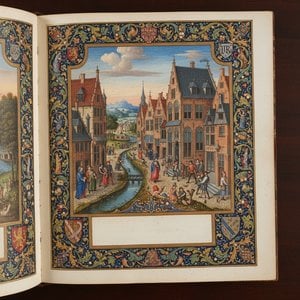
Illuminating Realism: Early Netherlandish Painting (15th-16th Centuries)
Explore the captivating world of Early Netherlandish painting! Discover Jan van Eyck, Hans Memling & more. Uncover symbolism, techniques & the legacy of these Flemish masters. A comprehensive guide for art enthusiasts.

Early Netherlandish Masters: 10 Paintings That Revolutionized Art & Decor
Journey into the world of Early Netherlandish painting! Explore 10 masterpieces by Jan van Eyck, Rogier van der Weyden & more. Discover stunning detail, symbolism & Renaissance art for your home decor. Find museum-quality reproductions on ArtsDot.com


