


 Preview
 Send
Send Share
Share
 Details
 Guide
Guide

 Download
 Similars
 X-Ray
X-Ray Diaporama
 Stats
StatsCadel Evans
 Acrylic On Canvas
- WallArt
- Contemporary Realism
 2008
2008- Modern
 136.0 x 137.0 cm
 National Portrait Gallery
 Read More
The artwork displayed on this page is protected by copyright law, which means we cannot legally create or sell an identical reproduction. This protection is enforced under international agreements such as the Berne Convention and by national laws, including those outlined by the U.S. Copyright Law - Title 17.
This method fully complies with copyright regulations because it does not involve copying or duplicating the protected artwork. Instead, it is a creative reinterpretation - a new painting that is influenced by the original but not identical to it.
Giclée / Art Print
Museum-quality giclée or canvas print with fast production and flexible finish options. ( Buy Hand Made Painting Switch to Digital Image)




P118B $10

P118H $10

P118W $10

P438Z $10

P508JH $12

P508YH $12

P805H $10

P805Z $10

P919BZ $10

P919G $10

P919XJ $10

P959ZH $10

P968JZ $12

W106C $8

W218G $10

W218JH $8

W218Y $10

W307PJ $10

W316G $10

W316PJ $8

W316Y $10

W398PJ $8

W4111J $10

W500HY $15

W500JH $15

W692G $12

W849H $8

W940BG $15

W953PJ $8




Pick from our preset sizes that match the artwork's original proportions.

Type the width and the height you need, to fit your frame or your wall. A print can only be cut, never made bigger than the picture, so a size with a different shape loses a part of the image. We send you a digital mockup to approve before we print anything. The picture shown on this page does not show the real cut — only the mockup does.
Worldwide Delivery () in 2 weeks instead of standard 4/5 weeks. (20 October)

Free Worldwide Express Shipping

High-Quality Linen Canvas

Full Shipping Insurance

Customs Tax Refund Guarantee

True Color Matching Guarantee

100-Day Return Policy (Defects Only)

100% Money-Back Guarantee

Bulk Discount Offer
 Glass option is only available in size under 110 CM

Cadel Evans
Giclée / Art Print
Reproduction Size
-


Total Price
$ 63
Cadel Evans: A Portrait of Grit and Triumph
- Subject: This compelling artwork captures Cadel Evans, the celebrated Australian professional road cyclist, in a moment of focused intensity. The painting isn’t merely a portrait; it's an embodiment of his dedication, resilience, and ultimately, his monumental victory – becoming the first Australian to win the Tour de France.
- Artist: Matthys Gerber, a Dutch-born artist residing in Australia since 1972, masterfully employs techniques rooted in European painting traditions while injecting a distinctly contemporary sensibility. Gerber’s background as a senior lecturer at the Sydney College of the Arts informs his approach to representation and abstraction, resulting in a work that is both technically accomplished and conceptually rich.
Style and Technique – A Dialogue with History
- Representation: Gerber’s style leans heavily on representational landscape traditions, drawing inspiration from the historical modes of European painting. This is evident in the careful rendering of Evans' form, particularly the prominent helmet—a crucial element signifying safety and performance within the demanding world of professional cycling.
- Composition & Detail: The composition is thoughtfully constructed, utilizing elements like the two bicycles in the background and the clock on the wall to create depth and narrative context. These additions aren’t mere decorative flourishes; they subtly reinforce the themes of competition, time, and meticulous preparation that define Evans' career. The downward gaze of the subject adds a layer of introspection, suggesting the mental fortitude required for such an arduous sport.
- Brushwork: Gerber’s brushwork is characterized by controlled precision and subtle gradations of tone, indicative of his training within established artistic traditions. This meticulous approach elevates the painting beyond a simple likeness, imbuing it with a sense of dignity and respect for the subject's achievements.
Symbolism – Beyond the Rider
- The Helmet: The helmet itself is a potent symbol—representing not just protection but also discipline, strategy, and the willingness to push one’s limits. It's a visual shorthand for the risks inherent in Evans’ profession and his unwavering commitment to overcoming them.
- The Bicycles: The presence of two bicycles speaks to the cyclical nature of competition, the constant striving for improvement, and the legacy of cycling itself. They are reminders of the sport's rich history and its enduring appeal.
- The Clock: The clock hanging above Evans’ head adds a layer of temporal significance, emphasizing the relentless passage of time and the pressure to perform under scrutiny. It subtly underscores the immense dedication required to achieve such sustained success.
Historical Context & Emotional Impact – A Moment Frozen in Time
- 2008 Significance: Created in 2008, this artwork captures a pivotal moment in cycling history—Evans’ historic second-place finish in the Tour de France. It's a testament to his tenacity and determination, marking a significant milestone for Australian sport.
- Emotional Resonance: The painting evokes feelings of admiration, respect, and perhaps even awe. It invites viewers to contemplate the dedication, sacrifice, and mental strength required to excel at the highest levels of competition. The image resonates with themes of perseverance, ambition, and ultimately, triumph.
Date: 2008
Questions & Answers
Can I examine "Cadel Evans" in more detail?
The X-Ray view of "Cadel Evans" by Matthÿs Gerber is on the artwork's X-Ray page: an interactive examination of the image through eleven optical layers.
What is the dominant hue of "Cadel Evans" by Matthÿs Gerber?
The dominant hue of "Cadel Evans" by Matthÿs Gerber is ochre to sepia. The hue is the underlying tone of the palette.
Does the copyright of "Cadel Evans" by Matthÿs Gerber allow reproductions?
The original "Cadel Evans" is at the National Portrait Gallery, and the work is still protected by copyright.
Related Artworks


Artist Biography
A Bridge Between Traditions
Matthys Gerber, a Dutch-born artist who has resided in Australia since 1972, possesses a creative vision that masterfully bridges the gap between abstraction and portraiture. His artistic identity is deeply rooted in European painting traditions, yet he infuses his work with a distinctly contemporary sensibility. This unique duality allows him to engage with historical modes of representation while simultaneously exploring modern conceptual depths. Gerber’s approach is further enriched by his academic background as a senior lecturer at the Sydney College of the Arts, an experience that informs his sophisticated understanding of both representation and abstraction.
Technique and Narrative Depth
The artistry of Gerber is characterized by a meticulous dialogue with history, particularly through his use of controlled precision and subtle gradations of tone. His brushwork reflects rigorous training within established artistic traditions, elevating his subjects beyond mere likenesses into realms of dignity and profound respect. In his portraiture, such as his compelling depiction of the cyclist Cadel Evans, Gerber utilizes a thoughtful composition to weave narrative context into the frame. By incorporating elements like background details and carefully rendered forms, he creates a sense of depth that reinforces themes of competition, time, and meticulous preparation.
His stylistic repertoire often leans toward representational landscape traditions, where he employs careful rendering to signify importance and character. Whether capturing the focused intensity of an athlete or exploring more abstract territories, Gerber’s work remains technically accomplished and conceptually rich. Through his ability to blend the precision of classical techniques with a modern perspective, he creates works that are both visually captivating and emotionally resonant, inviting viewers to contemplate the layers of grit, triumph, and introspection embedded within his subjects.

Matthÿs Gerber
1956 - , Netherlands
Quick Facts
- Artistic Movement Or Style: Contemporary, European traditions
- Full Name: Matthys Gerber
- Nationality: Dutch
- Notable Artworks: ['Cadel Evans']
- Place Of Birth: Delft, Netherlands
- Date Of Birth: 1956
Related Articles

Evan Walters: A Study in Contemporary Landscape Painting & Emotional Resonance
Explore the captivating world of Evan Walters, a Welsh artist renowned for his evocative landscapes & social commentary. Discover his Impressionistic style, unique journey, and lasting impact on 20th-century art – a valuable insight for collectors.

Francis Cadell: A Study in Scottish Colourism & Intimate Portraiture
Explore the captivating world of Francis Campbell Cadell, a leading Scottish Colourist. Discover his elegant Edinburgh interiors, vibrant portraits & unique style. Learn about his influences and enduring legacy with ArtsDot.
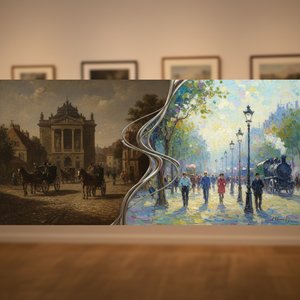
Echoes of 1873: Transition & Innovation in European Painting
Explore the pivotal year of 1873 in European painting! Discover Realism's final flourish & Impressionism’s rise with expert insights from ArtsDot.com. High-quality reproductions & art consultation.

Harmonizing Heritage: A Cross-Cultural Approach to Interior Design with Asian, European, and African Art Reproductions
Discover the art of cross-cultural interior design with ArtsDot.com. Explore museum-quality reproductions & expert guidance to create a globally inspired, sophisticated home. Shop now!

Portrayals of Power: Aristocratic Status & Visual Representation in European Art (16th-19th Centuries)
Explore the fascinating history of aristocratic status depicted through European art (16th-19th centuries). Discover how artists reflected—and shaped—societal hierarchies. Expert insights for discerning collectors.
