


The picture follows your choices: , .
Collectible Description
The Wall clock by Margarete Heymann-Loebenstein is a ceramic masterpiece produced in Haël Werkstätten, embodying modernist aesthetics and showcasing the artist's resilience during exile. Its geometric design features black numerals and hands against a vibrant orange glaze.
 Read More
Artist Biography
Margarete Heymann (Grete Marks): Bauhaus-trained ceramicist who blended modernist design with personal resilience during exile. Founder of Haël & 'Greta Pottery'.
Hand Made Oil Reproduction
Hand-painted oil on canvas in your size and frame, made to order by our artists. ( Switch to Print Switch to Digital Image)
This Artwork Is Under Copyright Protection
The artwork displayed on this page is protected by copyright law, which means we cannot legally create or sell an identical reproduction. This protection is enforced under international agreements such as the Berne Convention and by national laws, including those outlined by the U.S. Copyright Law - Title 17.
As a respectful and legal alternative, we offer custom, hand-painted artworks inspired by the original. Our skilled and professional artists carefully study the original's style, mood, and artistic essence to create a new, unique piece that evokes the same feeling - while remaining an original creation in its own right.
This method fully complies with copyright regulations because it does not involve copying or duplicating the protected artwork. Instead, it is a creative reinterpretation - a new painting that is influenced by the original but not identical to it.
More about this painting
 Preview
 Send
Send Share
Share
 Details
 Guide
Guide

 Download
 Similars
 X-Ray
X-Ray Diaporama
 Q&A
Q&A Stats
StatsOrder your painting in four simple steps
Take your time. You can change any answer; the price in your order card follows each choice.
1 Step one of four
Which size would you like?
These sizes keep the proportions of the original painting. The drawing shows your choice on a wall, above a two-metre sofa.
Or give your own measurements
Pick from our preset sizes that match the artwork's original proportions.

Type the width and the height you need, to fit your frame or your wall. This is hand-painted, so for a size with a different shape the artist can paint a bit more around the picture, or cut a bit — you choose. We send you a digital mockup to approve before the painting starts. The picture shown on this page does not show the real result — only the mockup does.
2 Step two of four
How should it be prepared: rolled, stretched or framed?
The prices below are for the size you chose in step one.
Choose the edges of the stretched canvas
Choose your frame

White $1

Blurside $1

Extended $1

P118B $10

P118H $10

P118W $10

P438Z $10

P508JH $12

P508YH $12

P805H $10

P805Z $10

P919BZ $10

P919G $10

P919XJ $10

P959ZH $10

P968JZ $12

W106C $8

W218G $10

W218JH $8

W218Y $10

W307PJ $10

W316G $10

W316PJ $8

W316Y $10

W398PJ $8

W4111J $10

W500HY $15

W500JH $15

W692G $12

W849H $8

W940BG $15

W953PJ $8

H24-GOLD $30

H24-SILVER $30

H36-GOLD $45

H36-SILVER $45
Framed
Moulding: . Overall size with the frame: .
3 Step three of four
Would you like anything changed in the painting?
Most people answer no. Because each painting is made by hand, our artist can also adapt it for you.
After order, ArtsDot.com team will email client for instructions and provide a mockup preview
4 Step four of four
A few finishing options
All of them are optional. The answers already selected cost nothing extra.
Who paints it?
Worldwide Delivery () in 3/4 weeks instead of standard 5 weeks. (3 November). No compromise on quality.
A nameplate, as in a museum?
Engraved Bronze Plaque Details
This elegant plaque features the artist's name and the title of the artwork, finely engraved for a timeless presentation.
It is made from bronze with a refined, elegant finish. The text is precisely laser-engraved for a sharp and permanent result. Measuring 9x2 cm, the plaque is compact yet easy to read. It's built to be durable and scratch-resistant, offering a professional, museum-quality look. Mounting is simple thanks to the included adhesive backing.
Transparent Acrylic Plaque Details
The plaque includes essential engraved details such as the artist's name, the title of the artwork, the date it was created, the type of media used-like oil on canvas or watercolor-a brief description of the piece, and a QR code that links to the complete artwork information.
It is crafted from clear acrylic, offering a sleek, modern appearance. The text is UV-engraved in black to ensure strong visual contrast. With a size of 10x15 cm, it ensures optimal readability. It comes equipped with two metal hooks for secure wall mounting. The plaque is designed to be weather-resistant, making it suitable for various environments, and it includes interactive features that work seamlessly with smartphone scanning.
Black Acrylic Plaque Details
This elegant plaque includes engraved information such as the artist's name, the title of the artwork, the date it was created, the type of media used (like oil on canvas or watercolor), a short description of the artwork, and a QR code for quick access to more information.
The plaque itself is made from refined black acrylic with a premium finish. The text is laser-engraved in white for high contrast and readability. Its size is 10x15 cm, designed to be easy to read. It comes with two metal hooks for professional mounting. The design is sleek and fits any interior style. It is also weather-resistant and durable, with built-in digital integration for mobile compatibility.
A protective varnish?
When do you need it?
✓ Check and order
Your painting, as you ordered it

Wall clock
Reproduction Medium
Reproduction Size
-

Elite Senior Artist
More detail, finesse, and extra production time
-

Reproduction Frame
-
-
For artworks or reproductions larger than 105 cm (approximately 41 inches) on any side, the frame will be shipped as a kit, disassembled. This method ensures safe delivery and prevents damage during transport.
Professional assembly required - this is not a DIY product.
The kit must be assembled and the canvas stretched by an experienced professional framer, using wood glue (not supplied), a canvas stretching plier and clamps to hold the bars square while the glue dries. Incorrect assembly or uneven canvas tension can permanently damage the artwork and is not covered by our warranty.
 For artworks or reproductions larger than 105 cm (approximately 41 inches) on any side, the frame will be shipped as a kit, disassembled. This method ensures safe delivery and prevents damage during transport.
All solid wood bars are included, precisely cut to size.
Assembled with the screws provided, plus wood glue for the corner joints, which is not supplied and must be sourced by your framer.
Professional tools are required and not included: a canvas stretching plier (tensioner) and clamps to hold the bars square while the glue dries.
Important:
The corner joints require wood glue, the bars must be held with clamps until the glue is fully dry, and tightening the canvas on the assembled frame requires a canvas stretching plier. None of these are included in the kit. Please arrange an experienced professional framer before ordering this size.

Nameplate
-
-

Protective Varnish
Glossy Varnish (enhances colors, protects against light/moisture)
-

Customize My Artwork
Examples of what can be changed: Replace face with customer photo; Add pet (e.g., replace cat with dog); Include hidden message in background; Change background landscape or elements.
-

Urgent
Worldwide Delivery () in 3/4 weeks instead of standard 5 weeks. (3 November). No compromise on quality.
-
Express Shipping
Worldwide Delivery () in 5 weeks. (10 November).
Included
Total Price
$ 263
Glass option is only available in size under 110 CM
Included with every order
- Free Worldwide Express Shipping
- High-Quality Linen Canvas
- Full Shipping Insurance
- Customs Tax Refund Guarantee
- True Color Matching Guarantee
- 100-Day Return Policy (Defects Only)
- 100% Money-Back Guarantee
- Bulk Discount Offer


A Testament to Resilience: Exploring Margarete Heymann’s Wall Clock
The square wall clock crafted by Margarete Heymann-Loebenstein (later Marks) stands as more than just a functional timepiece; it embodies the spirit of modernist design intertwined with profound personal experience. Produced in the Haël Werkstätten for Artistic Ceramics during her exile from Nazi Germany, this piece exemplifies the Bauhaus aesthetic—characterized by geometric simplicity and honest material expression—while simultaneously reflecting Heymann’s unwavering dedication to artistic creation amidst turbulent times. Its unassuming appearance belies a complex narrative of innovation, displacement, and enduring beauty.- Style & Form: The clock's design adheres strictly to Bauhaus principles, prioritizing orthogonal lines and balanced proportions. Rounded corners subtly soften the rigid geometry, introducing an element of humanist consideration into the otherwise austere aesthetic.
- Material & Technique: Constructed from ceramic material and encased in a metal frame, the clock utilizes slip casting—a technique perfected by Heymann—to achieve exceptional dimensional accuracy and surface smoothness. The uranium-based orange glaze imparts a luminous hue that captures ambient light, creating an ethereal glow.
- Numerals & Hands: The black numerals on the clock face are meticulously positioned in a circular arrangement, mirroring the Bauhaus fascination with mathematical precision. Similarly, the black hour and minute hands—crafted from metal—are deliberately designed to convey clarity and functionality.
- Symbolism: The orange glaze, chosen by Heymann herself, carries connotations of warmth, optimism, and vitality—counterbalancing the anxieties associated with exile. Its subtle luminosity speaks to the enduring power of art to illuminate even the darkest periods.
- Historical Context: Produced in the wake of the Bauhaus’s closure in 1932, the clock embodies the Bauhaus movement's legacy of experimentation and its unwavering belief in the transformative potential of design. It stands as a testament to the Bauhaus ethos—a commitment to functional beauty rooted in rational principles.
Further Exploration
For a deeper understanding of Margarete Heymann’s artistic journey, consider visiting the Jewish Museum Berlin's archive (Jewish Object: Applied Arts Collection) where you can access documents detailing her life and work. Alternatively, explore her contributions to the Bauhaus movement (Wall clock - Margarete Heymann-Loebenstein (later Marks)), showcasing her pioneering spirit and unwavering dedication to modernist design principles. Finally, delve into the broader context of Jewish art during the Weimar Republic (Purchase a copy of Wall clock - Margarete Heymann) to appreciate the significance of this extraordinary artwork within its historical milieu.Questions & Answers
What technique and style characterize "Wall clock" by Margarete Heymann?
"Wall clock" is made in acrylic on canvas, in the Bauhaus Modernism style.
What kind of colors does "Wall clock" use?
The palette of "Wall clock" by Margarete Heymann is described as neutrals. It is a compact description of the work's colors.
What is "Wall clock" about, and what atmosphere does it have?
"Wall clock" shows ceramics, geometric design, bauhaus style, functional art, ornamentation, exile, margarete heymann, and its recorded mood is serene.
Related Artworks


Margarete Heymann
1899 - 1990, Germany
Artist Biography
A Life Forged in Clay: The Story of Margarete Heymann
Margarete Heymann, a name that resonates with the spirit of modernist design and the resilience of the human spirit, was born in Cologne, Germany, in 1899. Her journey as an artist wasn’t simply one of creative exploration; it was a testament to perseverance against the backdrop of immense political and personal upheaval. Though she worked under several names throughout her life – Margarete Heymann-Löbenstein, Grete Marks, and Margarete Heymann-Marks – the core of her artistic vision remained remarkably consistent: a dedication to functional beauty, geometric clarity, and an honest expression of her evolving experiences. From her formative years at the Bauhaus to establishing thriving workshops and ultimately finding refuge in Britain, Heymann’s life was a continuous act of creation amidst adversity. Her early exposure to art came through studies at the Cologne School of Arts and the Düsseldorf Academy, but it was her enrollment at the Bauhaus in Weimar in 1920 that truly ignited her artistic path. Though her time there was relatively brief, leaving in 1921, the school’s ethos – its emphasis on uniting art with craftsmanship and social purpose – profoundly shaped her aesthetic sensibilities. She absorbed the principles of functional design and geometric abstraction championed by figures like Johannes Itten and Gerhard Marcks, laying the foundation for a style that would become uniquely her own.The Flourishing Haël Workshops and the Shadow of Nazism
In 1923, Margarete Heymann embarked on a pivotal chapter in her career alongside her husband, Gustav Löbenstein, and his brother Daniel. Together, they founded the Haël Workshops for Artistic Ceramics in Marwitz, Germany. This wasn’t merely an artistic endeavor; it was a bold entrepreneurial venture that quickly gained recognition for its innovative modernist ceramic designs. The workshops flourished, exporting their creations to London and America, employing over 100 people at their peak. These were years of significant commercial success, fueled by Heymann's distinctive aesthetic – clean lines, simplified forms, and a vibrant palette that hinted at the emotional depth beneath the surface. Tragedy struck in 1928 with the untimely death of Gustav Löbenstein, leaving Margarete to manage the workshops alone. This demonstrated not only her artistic dedication but also an impressive business acumen. However, this period of prosperity was brutally interrupted by the rise of Nazism. As a Jewish artist, Heymann faced increasing persecution and was ultimately forced to sell the Haël Workshops in 1933 at a drastically undervalued price – a heartbreaking loss that marked a turning point in her life. The closure wasn’t simply a financial blow; it represented the silencing of a creative voice and the dismantling of a thriving artistic community.Exile, Adaptation, and “Greta Pottery”
Following the forced sale of her workshops, Heymann embarked on a journey through Europe, briefly settling in Jerusalem before ultimately finding refuge in Britain in 1936. This relocation wasn’t merely a geographical shift; it was an act of reinvention. In Britain, she established “Greta Pottery,” continuing her ceramic practice under this new moniker and gradually gaining international recognition. Initially, she worked for Minton Pottery, but soon sought to establish her own studio, adapting her modernist style to appeal to a British audience while remaining true to its core principles. This adaptation wasn’t about compromising her artistic vision; it was about finding a way to express it within a new cultural context. The work produced under the “Greta Pottery” name reflects this delicate balance – retaining the geometric clarity and functional elegance of her earlier designs, but incorporating a subtle sensitivity to British tastes. Beyond ceramics, Margarete Marks expanded her artistic horizons after the war, exploring painting, drawing, and lithography, demonstrating a remarkable versatility and an unwavering commitment to creative expression.A Lasting Legacy: Resilience and Artistic Innovation
Margarete Heymann (Grete Marks) left behind a legacy that extends far beyond the beautiful objects she created. She stands as a pioneering ceramic artist who navigated personal tragedy and political upheaval with remarkable resilience, embodying the spirit of artistic perseverance in the face of adversity. Her contributions to Bauhaus ceramics are significant, demonstrating a commitment to functional design and geometric abstraction that continues to inspire contemporary artists. But her work is more than just an aesthetic statement; it’s a testament to the power of art to transcend boundaries and express the complexities of human experience. The blending of modernist aesthetics with the emotional weight of her experiences as an exile gives her creations a unique depth and resonance. She broke barriers for Jewish artists during a time of intense persecution, demonstrating that creativity could flourish even in the darkest of times. Her story serves as a powerful reminder of the importance of artistic freedom and the enduring human need to create. Her work continues to captivate audiences today, not only for its beauty but also for the poignant narrative it embodies – a life forged in clay, tempered by adversity, and ultimately defined by an unwavering commitment to art. Margarete Heymann’s legacy is one of innovation, resilience, and the enduring power of the human spirit.Key Characteristics of Her Work
- Bauhaus Influence: Clean lines, geometric forms, functional design principles.
- Vibrant Color Palettes: Bold and expressive use of color, often contrasting hues.
- Textural Experimentation: Exploration of different ceramic textures and surface treatments.
- Modernist Aesthetic: A commitment to simplicity, elegance, and a rejection of ornamentation.
- Emotional Depth: Subtle expressions of personal experience and the challenges of exile within her designs.


Related Articles
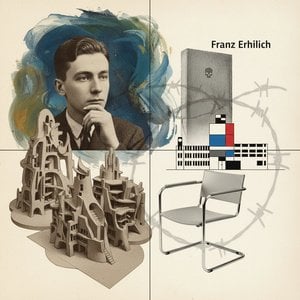
Franz Ehrlich: Bridging Expressionism, Bauhaus & the Shadows of History
Explore the life of Franz Ehrlich, a pivotal Bauhaus architect whose career spanned Expressionism, resistance during Nazi Germany, and GDR reconstruction. Discover his complex legacy & view museum-quality reproductions at ArtsDot.
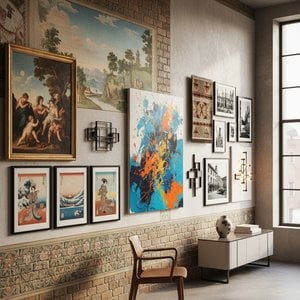
Transforming Spaces: A Comprehensive Exploration of Wall Decor Through Art History & Contemporary Practice
Explore the art of transforming spaces with our comprehensive guide to wall decor. From historical movements to contemporary trends, discover how to curate impactful interiors and commission bespoke artwork for a truly personalized aesthetic.

The Return of the Fresco: Why Wall Murals Are the New Luxury Statement
Elevate your space with bespoke wall murals & frescoes. Explore the resurgence of this luxury art form. Expert design guidance & seamless installation – .