


 Preview
 Send
Send Share
Share
 Details
 Guide
Guide

 Download
 Similars
 X-Ray
X-Ray Diaporama
 Stats
StatsA la manera de Delvaux


 Read More
The artwork displayed on this page is protected by copyright law, which means we cannot legally create or sell an identical reproduction. This protection is enforced under international agreements such as the Berne Convention and by national laws, including those outlined by the U.S. Copyright Law - Title 17.
This method fully complies with copyright regulations because it does not involve copying or duplicating the protected artwork. Instead, it is a creative reinterpretation - a new painting that is influenced by the original but not identical to it.
Giclée / Art Print
Museum-quality giclée or canvas print with fast production and flexible finish options. ( Buy Hand Made Painting Switch to Digital Image)




P118B $10

P118H $10

P118W $10

P438Z $10

P508JH $12

P508YH $12

P805H $10

P805Z $10

P919BZ $10

P919G $10

P919XJ $10

P959ZH $10

P968JZ $12

W106C $8

W218G $10

W218JH $8

W218Y $10

W307PJ $10

W316G $10

W316PJ $8

W316Y $10

W398PJ $8

W4111J $10

W500HY $15

W500JH $15

W692G $12

W849H $8

W940BG $15

W953PJ $8




Pick from our preset sizes that match the artwork's original proportions.

Type the width and the height you need, to fit your frame or your wall. A print can only be cut, never made bigger than the picture, so a size with a different shape loses a part of the image. We send you a digital mockup to approve before we print anything. The picture shown on this page does not show the real cut — only the mockup does.
Worldwide Delivery () in 2 weeks instead of standard 4/5 weeks. (25 October)

Free Worldwide Express Shipping

High-Quality Linen Canvas

Full Shipping Insurance

Customs Tax Refund Guarantee

True Color Matching Guarantee

100-Day Return Policy (Defects Only)

100% Money-Back Guarantee

Bulk Discount Offer
 Glass option is only available in size under 110 CM

A la manera de Delvaux
Giclée / Art Print
Reproduction Size
-


Total Price
$ 63
A Whisper of Delvaux: Duchamp’s Enigmatic Reverie
Marcel Duchamp's *A la manera de Delvaux* (In the Manner of Delvaux) is not a painting in the traditional sense, but rather a meticulously constructed collage that operates as a fascinating echo of Surrealist painter Paul Delvaux. Created in 1942, this work exists as a subtle yet potent exploration of desire, memory, and the unsettling beauty found within the subconscious. It’s a piece born from exile and artistic questioning, reflecting Duchamp's evolving stance towards representation and the very definition of art itself.
The image centers around a poignant scene: a baby, seemingly nursing from a bottle held by a maternal figure. This intimate act is framed within a larger composition populated by shadowy figures, hinting at a narrative that remains tantalizingly out of reach. The sepia tone imbues the work with a nostalgic quality, evoking faded photographs and half-remembered dreams. Duchamp doesn’t attempt to replicate Delvaux's style directly; instead, he *interprets* it, distilling its essence into a fragmented visual poem. He achieves this through the skillful juxtaposition of found imagery – likely cut from magazines or other printed sources – creating a dreamlike atmosphere that is both alluring and disquieting.
The Shadow of Surrealism and Duchamp’s Conceptual Shift
To understand *A la manera de Delvaux*, one must consider the artistic climate of the time. Duchamp had already shaken the foundations of the art world with his “readymades” – ordinary manufactured objects elevated to the status of art through sheer force of conceptual intent, most famously exemplified by *Fountain* (1917). By 1942, he was living in New York, having fled Europe during World War II. He found himself amidst a burgeoning Surrealist movement, and while not fully embracing its tenets, he engaged with its ideas about the unconscious mind and the power of irrationality. Delvaux’s paintings, with their eerie depictions of classical architecture populated by nude figures and trains, provided a particularly resonant visual language for Duchamp to explore.
However, *A la manera de Delvaux* isn't merely an homage; it’s a subtle critique. Duchamp wasn’t interested in simply mimicking another artist’s style. He was probing the nature of representation itself. By creating a work “in the manner of” Delvaux, he highlights the act of imitation and questions originality. The collage format further emphasizes this deconstruction, breaking down images into their constituent parts and reassembling them to create something new – or rather, something that *comments* on what already exists. It’s a precursor to his later, more ambitious conceptual works, like *Étant donnés*, where the viewer is confronted with a hidden world revealed through a peephole.
Emotional Resonance and Interior Spaces
The emotional impact of *A la manera de Delvaux* is subtle but profound. The image evokes feelings of longing, vulnerability, and perhaps even a touch of melancholy. The nursing baby, a universal symbol of innocence and dependence, is rendered with a delicate ambiguity. Is it a scene of comfort or one of quiet desperation? The shadowy figures surrounding the central subject add to this sense of unease, suggesting hidden anxieties and unspoken desires.
For collectors and interior designers, a reproduction of *A la manera de Delvaux* offers a unique opportunity to introduce a touch of intellectual sophistication into any space. Its muted tones and enigmatic imagery lend themselves well to a variety of settings, from modern lofts to classic libraries. The work’s conceptual depth invites contemplation, making it a conversation starter and a testament to the power of art to challenge our perceptions. It is not simply a decorative piece; it's an invitation to delve into the complexities of the human psyche and the ever-evolving nature of artistic expression.
Questions & Answers
Is there a slideshow for "A la manera de Delvaux" by Marcel Duchamp?
"A la manera de Delvaux" by Marcel Duchamp can be viewed as a slideshow on the artwork's Diaporama page.
What technique and style characterize "A la manera de Delvaux" by Marcel Duchamp?
"A la manera de Delvaux" by Marcel Duchamp combines the acrylic on canvas technique with the Surrealist Collage style. Technique and movement describe the making and the style of the work.
Who created "A la manera de Delvaux" and what style is it in?
"A la manera de Delvaux" was created by Marcel Duchamp in the Surrealist Collage style. Artist and movement identify the work's tradition.
Related Artworks


![Genre Allegory [george Washington] — Marcel Duchamp, Surrealism](/media/artworks/images-thumb/90/d9/90d9ce324280fe5002abd42626b6c52f.jpg)


Artist Biography
A Revolutionary Spirit: The Life and Art of Marcel Duchamp
Marcel Duchamp, born Henri-Robert-Marcel Duchamp in 1887 in Blainville-Crevon, Normandy, was more than an artist; he was a philosophical provocateur who fundamentally altered the course of modern art. His early life, though seemingly conventional – nurtured within a family that appreciated artistic expression with both brothers pursuing successful careers as artists – hinted at the iconoclasm to come. Duchamp initially pursued formal training, mastering traditional techniques and experimenting with post-impressionist styles. However, this academic foundation served not as an end in itself, but as a springboard for questioning the very nature of art, its purpose, and its definition. He wasn’t content merely to depict the world; he sought to challenge how we perceive it, and what constitutes artistic value. This restless intellectual curiosity would become the defining characteristic of his prolific career.From Cubism to Dada: A Rejection of Convention
Duchamp's artistic journey was marked by a constant evolution, a deliberate shedding of established norms. His initial engagement with Cubism, evident in works like *Portrait of Chess Players* (1911), demonstrated an interest in fragmented forms and multiple perspectives – a departure from traditional representation. Yet, he quickly moved beyond purely aesthetic concerns, recognizing that simply rearranging visual elements wasn’t enough to address the deeper questions swirling within him. The horrors of World War I fueled this discontent, leading Duchamp to embrace Dadaism, a movement born out of disillusionment and a rejection of logic, reason, and traditional artistic values. It was within the Dadaist framework that Duchamp truly began to dismantle conventional notions of art. He wasn’t interested in creating beautiful objects; he wanted to provoke thought, challenge assumptions, and expose the arbitrariness of aesthetic judgment. This period saw the birth of his most radical innovation: the ‘readymade’.The Readymades and the Subversion of Art
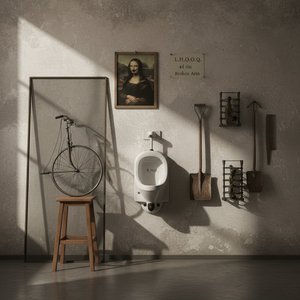
The introduction of readymades – ordinary manufactured objects selected and presented as art – was Duchamp’s most significant contribution to the 20th century. These weren't simply found objects; they were deliberate acts of artistic subversion. By taking an everyday item, like a urinal (*Fountain*, 1917), signing it “R. Mutt,” and submitting it to an art exhibition, Duchamp challenged the very definition of artistic skill and authorship. Was it the artist’s hand that created the work, or was it the artist's *idea*? This question became central to his practice and laid the groundwork for Conceptual Art. Other notable readymades like *L.H.O.O.Q.* (1919), a postcard reproduction of the Mona Lisa defaced with a mustache and goatee, were playful yet pointed critiques of art history and established cultural icons. These works weren’t meant to be admired for their aesthetic qualities; they were intended to provoke debate and force viewers to reconsider their preconceived notions about what constitutes art. Duchamp believed that art should reside in the mind, not merely in the eye.Legacy and Enduring Influence
Marcel Duchamp's impact on subsequent generations of artists is immeasurable. He fundamentally altered our understanding of art, paving the way for movements like Conceptual Art, Minimalism, Pop Art, and countless others. His emphasis on the artist’s idea – the concept behind the work – over its aesthetic qualities continues to inspire artists today.- Cubism: Early exploration of fractured forms and spatial representation.
- Dadaism: Rejection of logic, reason, and traditional artistic values in response to World War I.
- Conceptual Art: Emphasis on the idea behind the artwork rather than its aesthetic qualities.

Marcel Duchamp
1887 - 1968 , France
Quick Facts
- Artistic Movement Or Style:
- Cubism
- Dadaism
- Conceptual Art
- Artists Or Movements Influenced By This Artist:
- Conceptual Art
- Minimalism
- Pop Art
- Artists Who Influenced This Artist:
- Cézanne
- Picasso
- Braque
- Full Name: Henri-Robert-Marcel Duchamp
- Nationality: French American
- Notable Artworks:
- Fountain
- Bicycle Wheel
- The Large Glass
- Place Of Birth: Blainville-sur-Mer, France
- Date Of Birth: 1887
- Date Of Death: 1968
Related Articles

Dada: A Revolution of Anti-Art & the Rejection of Reason in Early 20th Century Aesthetics
Explore the revolutionary Dada art movement! Discover its origins, key artists like Duchamp & Arp, and lasting impact on modern art. A deep dive into anti-art & challenging conventions.

Dadaism: A Rebellion Against Reason – Exploring the Origins, Characteristics, and Enduring Legacy of an Anti-Art Movement
Explore the revolutionary Dada art movement! Discover its origins in WWI, key artists like Duchamp & Höch, core principles, and lasting impact on modern and contemporary art. A comprehensive guide for enthusiasts.

Echoes of Time: Nostalgia, Technique & Cultural Significance in Vintage Paintings
Explore the captivating world of vintage paintings! Discover key styles, cultural significance & collecting tips from art experts at ArtsDot. Find authentic reproductions and elevate your home décor.

The Enigmatic Realm of Paul Delvaux: Surrealism, Memory & the Poetics of Disquiet
Explore the haunting dreamscapes of Paul Delvaux, a master of Surrealism. Discover his iconic motifs, classical influences & enduring legacy with ArtsDot.com.
Marcel Duchamp: Challenging Conventions & Redefining Art in the 20th Century
Explore the revolutionary art of Marcel Duchamp! Discover how his Dadaist readymades challenged artistic conventions & redefined modern art. A deep dive into 'Fountain', conceptual shifts, and his lasting impact.


