


 Preview
 Send
Send Share
Share
 Details
 Guide
Guide

 Download
 Similars
 X-Ray
X-Ray Diaporama
 Stats
StatsBride with a Fan


 Read More
The artwork displayed on this page is protected by copyright law, which means we cannot legally create or sell an identical reproduction. This protection is enforced under international agreements such as the Berne Convention and by national laws, including those outlined by the U.S. Copyright Law - Title 17.
This method fully complies with copyright regulations because it does not involve copying or duplicating the protected artwork. Instead, it is a creative reinterpretation - a new painting that is influenced by the original but not identical to it.
Giclée / Art Print
Museum-quality giclée or canvas print with fast production and flexible finish options. ( Buy Hand Made Painting Switch to Digital Image)




P118B $10

P118H $10

P118W $10

P438Z $10

P508JH $12

P508YH $12

P805H $10

P805Z $10

P919BZ $10

P919G $10

P919XJ $10

P959ZH $10

P968JZ $12

W106C $8

W218G $10

W218JH $8

W218Y $10

W307PJ $10

W316G $10

W316PJ $8

W316Y $10

W398PJ $8

W4111J $10

W500HY $15

W500JH $15

W692G $12

W849H $8

W940BG $15

W953PJ $8




Pick from our preset sizes that match the artwork's original proportions.

Type the width and the height you need, to fit your frame or your wall. A print can only be cut, never made bigger than the picture, so a size with a different shape loses a part of the image. We send you a digital mockup to approve before we print anything. The picture shown on this page does not show the real cut — only the mockup does.
Worldwide Delivery () in 2 weeks instead of standard 4/5 weeks. (26 October)

Free Worldwide Express Shipping

High-Quality Linen Canvas

Full Shipping Insurance

Customs Tax Refund Guarantee

True Color Matching Guarantee

100-Day Return Policy (Defects Only)

100% Money-Back Guarantee

Bulk Discount Offer
 Glass option is only available in size under 110 CM

Bride with a Fan
Giclée / Art Print
Reproduction Size
-


Total Price
$ 63
A Whisper of Sorrow and Remembrance
In the quiet, luminous depths of Marc Chagall’s 1911 masterpiece, “Bride with a Fan,” we encounter more than just a portrait; we step into a sanctuary of memory and emotion. This evocative oil painting serves as a profound window into the artist's early psychological landscape, capturing a moment that feels suspended between the waking world and the ethereal realm of dreams. At its heart, the composition centers on a woman whose presence is both intimate and hauntingly distant. Partially veiled by flowing drapery that evokes the modest traditions of Chagall’s Jewish heritage, her closed eyes suggest a deep state of introspection or perhaps a quiet, lingering sorrow. It is a work that does not merely ask to be seen, but to be felt, inviting the viewer into a contemplative space where the boundaries of reality begin to soften.
The visual language of the piece is defined by a breathtakingly loose and expressive technique. Chagall employs a layering approach, where multiple applications of oil paint build a rich, tactile surface that breathes with life. The brushstrokes are not mere marks but rhythmic gestures that convey movement and a sense of fleeting beauty. This impressionistic fluidity is paired with an almost Naïve Art sensibility, grounding the dreamlike subject in a palpable, earthy texture. The palette is masterfully restrained, leaning heavily into cool, melancholic tones—shades of deep blue, ghostly white, and somber gray—which wrap the figure in an atmosphere of quietude and spiritual devotion. For the discerning collector or interior designer, this color story offers a sophisticated elegance, capable of anchoring a room with its serene yet emotionally charged presence.
Symbolism and the Soul of Vitebsk
Beyond its aesthetic allure, “Bride with a Fan” is steeped in the symbolic richness of Chagall’s formative years in Vitebsk. The wreath of flowers encircling the woman's head acts as a poignant emblem, potentially representing the cycles of life, mourning, or the enduring nature of remembrance. These floral elements, rendered with organic and fluid shapes, contrast beautifully against the more structured drapery, creating a tension between the ephemeral and the eternal. Every element of the composition—from the way the light diffuses across her features to the symbolic weight of her attire—speaks to Chagall’s unique ability to weave personal folklore into the fabric of modern art. He transforms a singular moment of human vulnerability into a universal meditation on loss and rebirth.
For those seeking to bring a piece of art history into a contemporary living space, this reproduction offers an unparalleled opportunity to engage with the roots of Expressionism. The artwork’s shallow perspective and focus on emotional impact rather than spatial accuracy make it a versatile choice for high-end decor, providing a focal point that stimulates conversation and invites deep reflection. To possess such a work is to hold a fragment of a dream, a piece of the legendary Chagall universe where color speaks the language of the soul and every shadow tells a story of a world once loved and forever remembered.
Questions & Answers
How well known is "Bride with a Fan" by Marc Chagall?
"Bride with a Fan" is classified as iconic.
What atmosphere does "Bride with a Fan" have?
"Bride with a Fan" by Marc Chagall is described as ethereal in mood. This classification can help match the work to a setting.
Where can I download "Bride with a Fan" by Marc Chagall?
"Bride with a Fan" by Marc Chagall can be downloaded from the artwork's Download page, as a high-resolution digital image download.
Related Artworks


Artist Biography
A Life Painted in Dreams: The World of Marc Chagall
Marc Chagall, born Moishe Shagal in 1887 in the small Belarussian town of Liozna near Vitebsk, wasn’t merely a painter; he was a poet of color, a weaver of dreams, and a chronicler of memory. His life, spanning nearly a century, mirrored the tumultuous currents of the 20th century, yet his art remained steadfastly rooted in a deeply personal vision—one infused with the folklore of his Hasidic Jewish upbringing and an unwavering belief in the power of imagination. Vitebsk itself was more than just a birthplace; it became the emotional core of his artistic universe, a recurring motif populated by flying figures, whimsical animals, and the vibrant hues of remembered landscapes. The town’s unique blend of cultures—Russian Orthodox churches alongside bustling Jewish marketplaces—forged an aesthetic sensibility that would defy easy categorization throughout his long career. Though he sought formal training first with a local sign painter and later in St. Petersburg under Léon Bakst, and then in Paris at the Académie de la Grande Chaumière, Chagall never fully embraced any single artistic movement. He absorbed elements of Cubism, Symbolism, and Fauvism, but always filtered them through his own intensely personal lens, creating a style that was uniquely, unmistakably Chagall.Forging a Unique Visual Language
Chagall’s early works already hinted at the distinctive language he would develop. Paintings like I and the Village (1911) are not simply depictions of place; they are explorations of identity, memory, and the relationship between the individual and community. The village isn't rendered realistically but as a fragmented collection of recollections, imbued with symbolic meaning. This ability to transmute personal experience into universal themes became a hallmark of his art. His palette was bold and expressive, often employing vibrant, non-naturalistic colors to convey emotion rather than literal representation. Figures float and dance across the canvas, defying gravity and logic, creating a dreamlike atmosphere that invites viewers into his inner world. This stylistic approach wasn’t accidental; it stemmed from a desire to move beyond mere imitation of reality and capture the essence of feeling, the weight of memory, and the power of folklore. The Russian Revolution brought Chagall back to Vitebsk, where he became involved in cultural initiatives, establishing an art school that briefly flourished before succumbing to the restrictions imposed by the new regime. This period was marked by both creative energy and political disillusionment, a tension that would continue to shape his artistic trajectory.A Life Between Worlds: Paris, New York, and Beyond
Eventually, Chagall left Russia for good, settling in France in 1923. This marked the beginning of a period of international recognition and prolific creativity. Works like Over Vitebsk (1920-1922) demonstrate his continued engagement with his childhood memories, while paintings inspired by biblical stories—such as Jacob’s Dream—reveal a growing interest in religious themes. The outbreak of World War II forced him to flee occupied France for the United States, where he spent seven years in New York City. This period was marked by profound emotional upheaval and artistic experimentation. He found solace in his art, creating powerful works that reflected the anxieties and uncertainties of the time. White Crucifixion (1938), a haunting depiction of suffering and persecution, stands as a testament to this era. After the war, Chagall returned to France, where he continued to paint and create until his death in 1985 at the age of 97.Legacy and Enduring Influence
In his later years, Marc Chagall received numerous prestigious commissions, including the ceiling of the Paris Opera (1964), a breathtaking explosion of color and form that celebrated musical masterpieces, and stunning stained glass windows for the Hadassah Hebrew University Medical Center synagogue in Jerusalem. These large-scale projects allowed him to translate his artistic vision into architectural spaces, creating immersive environments that continue to inspire awe and wonder. Chagall’s influence on subsequent generations of artists is undeniable. His lyrical quality, emotional depth, and imaginative power resonated with Surrealists and other movements that embraced fantasy and symbolism. He bridged the gap between European modernism and Jewish cultural identity, becoming known as “the quintessential Jewish artist of the twentieth century.” His ability to synthesize personal experience, folklore, and universal themes continues to resonate with audiences worldwide. His work reminds us of the power of art to transcend boundaries, to connect us to our shared humanity, and to illuminate the beauty and mystery of life.A Lasting Impression
Marc Chagall’s legacy extends beyond his paintings and stained glass; it resides in the enduring power of his vision—a vision that celebrates love, memory, and the boundless possibilities of the human imagination. He left behind a body of work that is both deeply personal and universally accessible, inviting viewers to lose themselves in a world painted with dreams and illuminated by hope. The Musée Marc Chagall in Nice stands as a testament to his enduring influence, housing an extensive collection of his works and offering visitors a glimpse into the heart and soul of this extraordinary artist. His art continues to inspire, challenge, and move us, ensuring that his vibrant and imaginative spirit will live on for generations to come.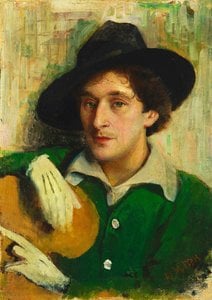
Marc Chagall
1887 - 1985 , Belarus
Quick Facts
- Artistic Movement Or Style:
- Cubism
- Symbolism
- Fauvism
- Artists Or Movements Influenced By This Artist: ['Surrealists']
- Artists Who Influenced This Artist: ['Léon Bakst']
- Full Name: Marc Chagall
- Nationality: Russian-French
- Notable Artworks:
- I and the Village
- Over Vitebsk
- White Crucifixion
- Jacob's Dream
- Place Of Birth: Liovana, Belarus
- Date Of Birth: 1887
- Date Of Death: 1985
Related Articles

The Enduring Legacy of Oil on Canvas: Technique, History & Contemporary Practice
Explore the rich history & enduring techniques of oil painting on canvas. Discover the science behind its longevity, conservation practices, and contemporary relevance. Expert insights for art enthusiasts.

The Enduring Legacy of Oil on Canvas: Technique, History & Aesthetic Impact
Explore the rich history & techniques of oil painting – from Renaissance masters to Impressionism. Discover pigments, layering methods, and why this timeless medium endures. Expert insights for artists & art enthusiasts.

From Digital Dreams to Tangible Treasures: The Rise of Modern Fan Art
Explore the vibrant world of modern fan art! Discover its evolution, cultural impact, and growing market. From digital creations to commissioned pieces, we delve into the artistry & passion driving fandoms today.

Oil on Canvas: A Historical & Technical Exploration of a Timeless Artistic Medium
Explore the rich history & enduring techniques of oil painting on canvas. Discover the science behind its longevity, conservation practices, and contemporary relevance. Expert insights for art enthusiasts.

The Enduring Power of Painting: A Historical & Contemporary Exploration of Form and Emotion
Explore the rich history & enduring techniques of oil painting with ArtsDot. Discover masterpieces, learn about art collecting, and find authentic handmade reproductions crafted by skilled artists.


