


 Preview
 Send
Send Share
Share
 Details
 Guide
Guide

 Download
 Similars
 X-Ray
X-Ray Diaporama
 Stats
StatsReflections


 Read More
The artwork displayed on this page is protected by copyright law, which means we cannot legally create or sell an identical reproduction. This protection is enforced under international agreements such as the Berne Convention and by national laws, including those outlined by the U.S. Copyright Law - Title 17.
As a respectful and legal alternative, we offer custom, hand-painted artworks inspired by the original. Our skilled and professional artists carefully study the original's style, mood, and artistic essence to create a new, unique piece that evokes the same feeling - while remaining an original creation in its own right.
This method fully complies with copyright regulations because it does not involve copying or duplicating the protected artwork. Instead, it is a creative reinterpretation - a new painting that is influenced by the original but not identical to it.
Hand Made Oil Reproduction
Hand-painted oil on canvas in your size and frame, made to order by our artists. ( Switch to Print Switch to Digital Image)




P118B $10

P118H $10

P118W $10

P438Z $10

P508JH $12

P508YH $12

P805H $10

P805Z $10

P919BZ $10

P919G $10

P919XJ $10

P959ZH $10

P968JZ $12

W106C $8

W218G $10

W218JH $8

W218Y $10

W307PJ $10

W316G $10

W316PJ $8

W316Y $10

W398PJ $8

W4111J $10

W500HY $15

W500JH $15

W692G $12

W849H $8

W940BG $15

W953PJ $8




Pick from our preset sizes that match the artwork's original proportions.

Type the width and the height you need, to fit your frame or your wall. This is hand-painted, so for a size with a different shape the artist can paint a bit more around the picture, or cut a bit — you choose. We send you a digital mockup to approve before the painting starts. The picture shown on this page does not show the real result — only the mockup does.
After order, ArtsDot.com team will email client for instructions and provide a mockup preview
Worldwide Delivery () in 3/4 weeks instead of standard 5 weeks. (17 October). No compromise on quality.

Free Worldwide Express Shipping

High-Quality Linen Canvas

Full Shipping Insurance

Customs Tax Refund Guarantee

True Color Matching Guarantee

100-Day Return Policy (Defects Only)

100% Money-Back Guarantee

Bulk Discount Offer
 Glass option is only available in size under 110 CM

Reflections
Reproduction Medium
Reproduction Size
-


Total Price
$ 263
Man Ray's Reflections: A Surrealist Dialogue Between Light and Form
Man Ray’s “Reflections,” painted in 1931, stands as a testament to the burgeoning surrealist movement’s fascination with exploring subconscious landscapes and challenging conventional perceptions of reality. Created during a period marked by profound artistic experimentation—fueled by Dadaism's rejection of logic and reason—the painting embodies Ray’s signature approach: meticulous observation combined with deliberate distortion.
The artwork depicts a solitary figure positioned before a wall adorned with intricate geometric patterns. These patterns aren’t merely decorative; they serve as conduits for visual metaphors, mirroring the complexities of human experience. The artist skillfully employs chiaroscuro—the dramatic interplay between light and shadow—to sculpt the form of the subject, emphasizing its stillness and vulnerability against the assertive backdrop.
- Style: Surrealism – Ray’s work aligns with the movement's core tenets of dreamlike imagery and irrational juxtapositions.
- Technique: Oil on Canvas – Ray favored oil paints for their ability to capture subtle tonal variations and create a rich textural surface, reflecting his dedication to realism within an unreal context.
- Historical Context: The painting emerged from the aftermath of World War I, mirroring the anxieties and disillusionment prevalent in European intellectual circles. Dadaism’s rebellious spirit directly influenced Ray's artistic vision.
Beyond its formal qualities, “Reflections” resonates with deeper symbolic meanings. The wall represents societal constraints—the barriers that impede individual freedom—while the figure embodies introspection and contemplation. Ray invites viewers to consider how perception shapes reality, prompting a dialogue between conscious awareness and unconscious desire.
The painting’s muted palette contributes to its contemplative mood, fostering a sense of quiet solitude. Its understated elegance speaks volumes about Ray's mastery of artistic expression—a celebration of beauty found within the realm of dreams and shadows. “Reflections” remains an enduring emblem of surrealist artistry and continues to inspire admiration for its profound psychological depth.
Exploring Man Ray’s Dadaist Roots
Man Ray’s artistic journey began amidst the turbulent backdrop of Dadaism, a movement born from the horrors of World War I. Marcel Duchamp's provocative proposition—the “ready-made”—challenged established notions of art and authorship, urging artists to question traditional hierarchies.
This influence is palpable in Ray’s early sculptures, notably “The Gift,” where he repurposed a flatiron with tacks – an everyday object elevated into an artistic statement. This act embodies Dadaism's core ethos: embracing chance, absurdity, and rejecting bourgeois values. It signaled a decisive break from academic conventions.
Ray’s exploration of photography mirrored this rebellious spirit. He meticulously documented the world around him, but not with a desire for objective representation; rather, he sought to capture fleeting moments of emotion and sensation—transforming images into conduits for subconscious thought.
Man Ray's Cinematic Vision
Ray’s artistic pursuits extended beyond painting and sculpture. He ventured into filmmaking, collaborating with directors like Jean Renoir and Luis Buñuel on groundbreaking projects that pushed the boundaries of cinematic storytelling. His films often incorporated surrealist techniques—dreamlike sequences, illogical narratives—reflecting his unwavering commitment to artistic experimentation.
His work as a portraitist and fashion photographer solidified his reputation as an innovator of visual language. Ray skillfully manipulated light and composition to create images that captivated audiences and conveyed profound emotional resonance. He remains celebrated for his ability to transform ordinary subjects into extraordinary expressions of art.
Questions & Answers
What is "Reflections" made with, and in which style?
"Reflections" by Man Ray combines the acrylic on canvas technique with the Surrealism style. Technique and movement describe the making and the style of the work.
How can I get a digital file of "Reflections" by Man Ray?
A digital image of "Reflections" by Man Ray can be purchased on its Digital Image page: a high-resolution digital image download.
What does "Reflections" share with the rest of Man Ray's output?
"Reflections" belongs to Man Ray's Surrealism work, whose recorded themes include european avant-garde, dadaist experimentation, photography innovation, surrealist exploration, artistic identity.
Related Artworks


Artist Biography
A Life Illuminated by Shadows
Emmanuel Radnitzky, known to the world as Man Ray, was a restless spirit who defied easy categorization. Born in 1890 in Philadelphia to Russian Jewish immigrant parents, his journey from aspiring painter to pioneering photographer and filmmaker embodies the radical artistic ferment of the early 20th century. The shift from “Manny” Radnitzky to the enigmatic “Man Ray” itself speaks volumes about an artist determined to forge a new identity, one unbound by convention. His family’s move to New York City proved pivotal, exposing him to the burgeoning modernist scene and instilling in him a lifelong fascination with experimentation. Early influences included the European avant-garde showcased at Alfred Stieglitz's 291 gallery, and the gritty realism of the Ashcan School – a blend that would subtly inform his later work. Though initially dedicated to painting, it was photography that ultimately became Ray’s most potent medium for exploring the boundaries of perception and reality. He wasn't merely capturing images; he was inventing new ways of *seeing*. His early artistic endeavors were marked by a desire to break from traditional styles, influenced by his exposure to both European modernism and the raw energy of New York City life. The Ferrer Centre, with its anarchist leanings and emphasis on free expression, proved particularly formative during this period, fostering an environment where experimentation was not just encouraged but expected.Dada, Surrealism, and the Pursuit of the Impossible
Man Ray's artistic trajectory took a dramatic turn with his encounter with Marcel Duchamp in New York around 1915. This meeting sparked a shared fascination with challenging traditional notions of art, leading to explorations of “ready-mades” – ordinary manufactured objects elevated to the status of artwork. This rebellious spirit propelled Ray into the heart of the Dada movement, an anti-art protest born from the disillusionment of World War I. In 1921, he made the momentous decision to relocate to Paris, becoming a central figure in both the Dada and Surrealist circles that flourished there. While never fully aligning himself with any rigid artistic dogma, Ray embraced the Surrealists’ exploration of the unconscious mind, dreams, and the irrational. His work during this period is characterized by a dreamlike quality, often unsettling yet undeniably captivating. He wasn't interested in depicting reality as it *is*, but rather as it *feels* – fragmented, distorted, and imbued with hidden meanings. This embrace of the subconscious allowed him to move beyond mere representation towards an exploration of psychological states and emotional resonance within his art. His collaborations with other Surrealist artists, like Salvador Dalí, further solidified his position within the movement, though he always maintained a degree of independence in his artistic vision.Rayographs and the Alchemy of Light
Perhaps Man Ray is most celebrated for his invention of the “rayograph,” a cameraless photographic technique he stumbled upon almost by accident. These images—created by placing objects directly onto light-sensitive paper and exposing them to light—resulted in ethereal, ghostly compositions that defied conventional photographic representation. The rayograph wasn't simply an alternative method; it was a philosophical statement about the nature of photography itself. By eliminating the camera lens, Ray stripped away the illusion of objectivity, revealing the inherent subjectivity of the medium. These weren't representations *of* things, but rather direct imprints *from* them, imbued with a sense of mystery and otherworldliness. Beyond rayographs, his photographic portraits – particularly those of artists like Lee Miller (who would become both his muse and collaborator) – are renowned for their striking compositions and psychological depth. He experimented relentlessly with solarization, multiple exposures, and darkroom manipulation, pushing the boundaries of what photography could achieve. Solarization, in particular, became a signature technique, creating dramatic reversals of tone that added an element of the uncanny to his portraits.Beyond Stillness: Film and a Lasting Legacy
Man Ray’s artistic curiosity extended beyond still images into the realm of filmmaking. His experimental films, such as *Le Retour à la Raison* (1923) and *L'Étoile de Mer* (1928), were characterized by their surreal imagery, unconventional editing techniques, and rejection of narrative conventions. These weren’t stories told in a traditional sense; they were visual poems, explorations of form, rhythm, and the subconscious. He often employed innovative techniques like stop-motion animation and superimposition to create disorienting and dreamlike effects. Though his film work remained relatively small in volume, it was profoundly influential on subsequent generations of avant-garde filmmakers. Throughout his long career, Man Ray continued to challenge artistic norms, refusing to be confined by labels or expectations. He died in Paris in 1976, leaving behind a body of work that continues to inspire and provoke. His legacy lies not only in his technical innovations but also in his unwavering commitment to artistic freedom and his relentless pursuit of the impossible—a true pioneer who forever altered our perception of art and reality. His influence can be seen across various disciplines, from contemporary photography and film to fashion and design, demonstrating the enduring power of his vision.A Continuing Influence
- Photography: Man Ray’s techniques, particularly rayography and solarization, continue to be explored by contemporary photographers.
- Surrealism: His contributions solidified the movement's visual language and inspired countless artists across disciplines.
- Experimental Film: His pioneering work in film laid the groundwork for future generations of avant-garde filmmakers.
- Fashion Photography: Ray’s innovative approach to portraiture and composition influenced the development of modern fashion photography.

Man Ray
1890 - 1976 , United States of America
Quick Facts
- Full Name: Emmanuel Radnitzky
- Nationality: American
- Date Of Birth: 1890
- Date Of Death: 1976
- Place Of Birth: Philadelphia, United States of America
- Notable Artworks:
- Rayographs
- Le Retour à la Raison
- L'Étoile de Mer
- Artistic Movement Or Style: Dada, Surrealism
- Artists Who Influenced This Artist: ['Marcel Duchamp']
- Artists Or Movements Influenced By This Artist:
- Surrealism
- Experimental Film
Related Articles

Beyond the Lens: Photography's Enduring Influence on Modern & Contemporary Art
Explore photography's pivotal role in shaping modern & contemporary art. Discover key movements, influential artists like Stieglitz, and expert collecting advice from ArtsDot.
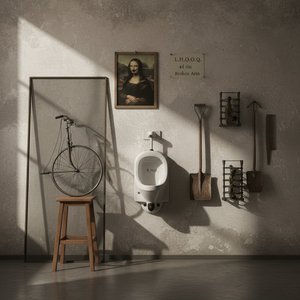
Marcel Duchamp: Challenging Conventions & Redefining Art in the 20th Century
Explore the revolutionary art of Marcel Duchamp! Discover how his Dadaist readymades challenged artistic conventions & redefined modern art. A deep dive into 'Fountain', conceptual shifts, and his lasting impact.

Pictorialism: A Search for Artistic Photography's Soul – Aesthetics, Techniques & Legacy
Explore the captivating world of Pictorialism – a pivotal movement that transformed photography into fine art. Discover key artists like Stieglitz & Käsebier, techniques, and collecting tips from experts.
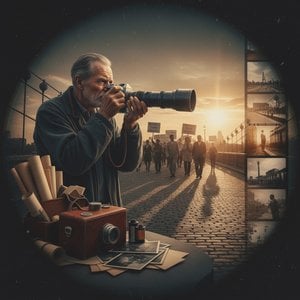
Witnessing History Through Lens & Light: Documentary Photography's Enduring Legacy
Explore the powerful history of documentary photography – from its origins to contemporary masters like Gordon Parks & W. Eugene Smith. Discover how this art form shapes our understanding of society and witness pivotal moments in time.

Monochrome Visions: Exploring the Aesthetic & Historical Significance of Black & White Photography
Explore the rich history & artistic power of black and white photography. From early techniques to iconic masters like Ansel Adams, discover why monochrome continues to captivate art lovers today. Expert insights for collectors.


