


 Preview
 Send
Send Share
Share
 Details

 Download
 Similars
 X-Ray
X-Ray Diaporama
 Stats
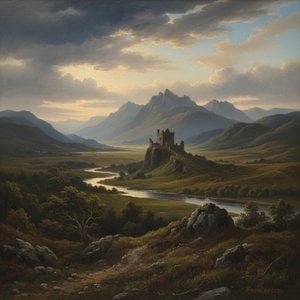
StatsStirling Castle
 Romanticism
 1876
1876 64.0 x 76.0 cm
 The Stirling Smith Art Gallery - Museum
 Read More
Giclée / Art Print
Museum-quality giclée or canvas print with fast production and flexible finish options. ( Buy Hand Made Painting Switch to Digital Image)




P118B $10

P118H $10

P118W $10

P438Z $10

P508JH $12

P508YH $12

P805H $10

P805Z $10

P919BZ $10

P919G $10

P919XJ $10

P959ZH $10

P968JZ $12

W106C $8

W218G $10

W218JH $8

W218Y $10

W307PJ $10

W316G $10

W316PJ $8

W316Y $10

W398PJ $8

W4111J $10

W500HY $15

W500JH $15

W692G $12

W849H $8

W940BG $15

W953PJ $8




Pick from our preset sizes that match the artwork's original proportions.

You may enter your own dimensions to fit a specific frame or space. If your selected size does not match the original image's proportions, we will either crop the artwork or extend the image with a mirrored or solid-fill edge. A digital mockup will be sent for your approval before production begins.
Please note that the on-screen preview does not reflect the actual cropping or extension. Only the mockup will accurately show the final composition.
While custom sizes are available, we recommend selecting a dimension from the predefined list to preserve the original proportions.
Worldwide Delivery () in 2 weeks instead of standard 4/5 weeks. (9 September)

Free Worldwide Express Shipping

High-Quality Linen Canvas

Full Shipping Insurance

Customs Tax Refund Guarantee

True Color Matching Guarantee

100-Day Return Policy (Defects Only)

100% Money-Back Guarantee

Bulk Discount Offer
 Glass option is only available in size under 110 CM

Stirling Castle
Giclée / Art Print
Reproduction Size
-


Total Price
$ 63
Related Artworks


Artist Biography
MacNeil Macleay: Painter of Highland Majesty
MacNeil Macleay (1806 – 1883) stands as a singular figure in Scottish landscape painting, celebrated for his masterful depictions of the Highlands and British landmarks. Born into a wealthy Perthshire family steeped in tradition, Macleay’s artistic journey began modestly but swiftly ascended to prominence thanks to an unwavering dedication to capturing the sublime beauty of Scotland's dramatic scenery. His canvases resonate with a palpable sense of place—the brooding lochs, windswept mountainsides, and ancient castles—transforming them into enduring symbols of British heritage.Early Life and Influences
James MacNeil Macleay was born in Perthshire, Scotland, to Robert Macleay, a prominent landowner and diplomat, and Elizabeth Sutherland. His upbringing instilled in him a deep appreciation for the natural world and fostered an early interest in sketching and watercolor painting. Although formal artistic training was scarce during his time, Macleay honed his skills through self-study and observation—a practice that would prove crucial to his distinctive style. Notably influenced by Romantic painters like Turner and Constable, Macleay embraced the tenets of Luminism, prioritizing atmospheric perspective and tonal gradation to convey mood and emotion rather than precise detail. This stylistic choice reflected a broader artistic movement concerned with conveying subjective experience alongside objective representation.The Highland Vision
Macleay’s artistic focus centered almost exclusively on landscapes—primarily those found in Perthshire and Argyllshire. He possessed an uncanny ability to distill the essence of these regions onto paper, capturing not merely their visual appearance but also their spirit. His paintings are characterized by a remarkable sensitivity to light and color, skillfully employed to evoke feelings of grandeur, tranquility, and melancholy. Recurring motifs included lochs—particularly Loch Awe—which Macleay rendered with breathtaking realism and luminous hues—and castles like Stirling Castle, depicted as imposing structures against turbulent skies. These subjects weren’t simply recorded; they were imbued with symbolic significance, representing Scotland's history, resilience, and connection to the wilderness.Technique and Style
Macleay’s technique was meticulously crafted, prioritizing tonal harmony and subtle gradations of color. He favored watercolor as his medium, painstakingly layering washes to achieve depth and luminosity. Unlike many contemporary artists who sought to create hyperrealistic depictions, Macleay deliberately softened outlines and blurred edges—a stylistic decision that contributed to the ethereal quality of his paintings. His brushstrokes were deliberate yet understated, conveying a sense of quiet contemplation rather than forceful expression. He meticulously studied geological formations and atmospheric conditions, incorporating scientific observation into his artistic process—demonstrating an intellectual curiosity alongside aesthetic sensibility.Major Achievements and Legacy
Macleay’s prolific output produced over 300 paintings, many of which are housed in prominent Scottish institutions including Perth Museum & Art Gallery and the National Galleries Scotland. His works garnered considerable acclaim during his lifetime and continue to inspire admiration for their beauty and artistic integrity. Macleay's contribution to landscape painting is recognized as pivotal in establishing Luminism as a dominant aesthetic within British art. He elevated watercolor painting to new heights of expressive power, influencing subsequent generations of artists who sought to emulate his masterful handling of light and color. Today, MacNeil Macleay’s paintings stand as enduring monuments to the Romantic spirit—testaments to the transformative potential of art to capture both the grandeur of nature and the complexities of human emotion.
macneil macleay
1806 - 1883
Quick Facts
- Artistic Movement Or Style: Romantic Landscape Painting
- Artists Or Movements Influenced By This Artist: ['Hudson Lowe']
- Artists Who Influenced This Artist:
- Turner
- Ruskin
- Date Of Birth: 1806
- Date Of Death: 1883
- Full Name: MacNeil Macleay
- Nationality: Scottish
- Notable Artworks:
- Loch Awe
- Stirling Castle
- Place Of Birth: Glasgow, Scotland
Related Articles
Alexander Nasmyth: Picturing Scotland's Romantic Landscape – Innovation & Identity
Explore the life & art of Alexander Nasmyth, a pivotal figure in Scottish Romantic landscape painting. Discover his iconic works, including portraits of Robert Burns, and learn about his lasting influence on national identity. Fine art reproductions available.
The Sublime and the Picturesque: Exploring Emotion & Nature in Romantic Landscape Painting
Explore the emotional power of Romantic landscape painting! Discover the sublime & picturesque aesthetics, key artists like Friedrich & Cole, and lasting influence on art history. Find your perfect piece at ArtsDot.

The Sublime and the Picturesque: Exploring Emotion & Nature in Romantic Landscape Painting
Explore the emotional power of Romantic landscape painting! Discover the sublime & picturesque traditions, key artists like Friedrich & Cole, and find your perfect artwork at ArtsDot.

Evocations of Place: A Historical Journey Through Landscape Art
Explore the rich history of landscape art with ArtsDot. Discover renowned artists, movements like Impressionism & Romanticism, and expert guidance for collecting timeless pieces. Find your perfect serene escape today!

Romantic Landscapes: 10 Masterpieces for Your Home | ArtsDot
Journey through 10 Romantic landscape masterpieces by Friedrich, Turner & Cole. Explore emotional art, sublime nature scenes & iconic 19th-century paintings. Find museum-quality reproductions for your home at ArtsDot.com – discover the full collection online!


