Preview
 Send
Send Share
Share
 Details
 Guide
Guide

 Download
 Similars
 X-Ray
X-Ray Diaporama
 Q&A
Q&A Stats
StatsBridge

 Read More
Giclée / Art Print
Museum-quality giclée or canvas print with fast production and flexible finish options. ( Buy Hand Made Painting Switch to Digital Image)




































Pick from our preset sizes that match the artwork's original proportions.

Type the width and the height you need, to fit your frame or your wall. A print can only be cut, never made bigger than the picture, so a size with a different shape loses a part of the image. We send you a digital mockup to approve before we print anything. The picture shown on this page does not show the real cut — only the mockup does.
Worldwide Delivery () in 2 weeks instead of standard 4/5 weeks. (15 November)

Free Worldwide Express Shipping

High-Quality Linen Canvas

Full Shipping Insurance

Customs Tax Refund Guarantee

True Color Matching Guarantee

100-Day Return Policy (Defects Only)

100% Money-Back Guarantee

Bulk Discount Offer
 Glass option is only available in size under 110 CM

Bridge
Giclée / Art Print
Reproduction Size
-


Total Price
$ 63
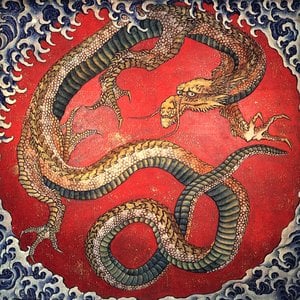
A Vision of Tranquil Power: Unveiling ‘Bridge’ by Hokusai
Katsushika Hokusai's “Bridge,” a captivating depiction of a graceful stone structure spanning a serene waterway, transcends the simple representation of a physical form. It is an embodiment of Japanese aesthetics – a harmonious blend of strength and fragility, dynamism and stillness. This artwork, likely created during the height of Hokusai’s prolific career in the early 19th century, offers a profound meditation on nature's power and human interaction with it, inviting viewers to contemplate the delicate balance between these forces.

The Spirit of Ukiyo-e: Technique and Style
“Bridge” exemplifies the core principles of *Ukiyo-e*, the “pictures of the floating world,” a dominant artistic movement in Edo period Japan. Hokusai masterfully employs woodblock printing techniques, utilizing meticulously carved blocks to achieve astonishing detail and tonal variation. The layering of colors – primarily blues, greens, and browns – creates a rich depth that is characteristic of Ukiyo-e prints. Notice the subtle gradations in the water’s reflection, achieved through multiple impressions of the block, demonstrating Hokusai's technical prowess and his ability to capture the ephemeral qualities of light and movement. The composition itself—a strong horizontal line representing the bridge contrasted with the verticality of the surrounding landscape—is a classic Ukiyo-e device designed to create visual impact and evoke a sense of grandeur.
Symbolism in Nature: Reflection and Resilience
The bridge itself is laden with symbolic meaning. In Japanese culture, bridges often represent transition – passage from one state to another, or from life to death. Here, it symbolizes the connection between land and water, representing a pathway for travel and contemplation. The surrounding landscape—the distant mountains shrouded in mist—adds to the artwork’s evocative power. These towering peaks, rendered with a masterful understanding of atmospheric perspective, suggest both immense strength and vulnerability. The reflection of the bridge in the water mirrors not just its physical form but also an idea of resilience – the ability to adapt and endure, much like the enduring spirit of Japan itself.
A Legacy of Influence: Hokusai’s Enduring Impact
Katsushika Hokusai's work has had a profound and lasting impact on art history. His innovative use of perspective, his bold color palettes, and his ability to capture the beauty of the natural world influenced generations of artists, including Vincent van Gogh who famously studied Hokusai’s “The Great Wave.” "Bridge" stands as a testament to Hokusai's genius – a timeless masterpiece that continues to inspire awe and admiration. Today, reproductions like this offer an accessible way to experience the beauty and philosophical depth of one of Japan’s most celebrated artistic figures, bringing a touch of serene power into any space.
Questions & Answers
Can I use augmented reality to see "Bridge" by Katsushika Hokusai in my room?
The AR Preview page of "Bridge" by Katsushika Hokusai uses augmented reality to show the artwork in your own space, on a compatible device.
Which room is "Bridge" by Katsushika Hokusai recommended for?
The recommended space for "Bridge" by Katsushika Hokusai is a living room. The suggestion can of course be adapted to your interior.
What is the emotional tone of "Bridge" by Katsushika Hokusai?
"Bridge" is associated with a tranquil feeling. The emotional tone describes the impression the work gives.
Related Artworks


Artist Biography
The Restless Pursuit of the Floating World
In the bustling streets of Edo, the son of a mirror maker begins to draw. By the age of six, the boy is already sketching, driven by a hunger that his father, Nakajima Ise, recognizes but cannot fully direct. This is not a life of comfort. It is a steady, gritty climb through the social strata of the Tokugawa shogunate. By twelve, he enters the studio of Katsukawa Shunshō, learning the demanding precision of ukiyo-e woodblock printing. He is not there to mimic his master. Instead, he absorbs the techniques of the "floating world"—the depictions of actors and courtesans—and begins to pull at the threads of the genre, seeking something more expansive.
His career is a series of reinventions. He changes his name over thirty times, a practice that marks his shifting affiliations and his refusal to remain static. He moves from illustrating books to the creation of single-sheet prints, a transition that allows his vision to expand. He is a man of constant movement, a restless spirit who views art as a lifelong evolution rather than a destination.
The Geometry of Nature
The focus shifts. The urban scenes of Edo give way to the immense scale of the natural landscape. Around 1831, the series Thirty-six Views of Mount Fuji emerges, fundamentally altering the scope of Japanese printmaking. In The Great Wave off Kanagawa, the ocean is a towering, claw-like force, a study in tension and perspective that captures the terrifying power of the sea against the fragility of human vessels. This is not merely a landscape; it is a confrontation with the sublime. He uses Prussian blue, a pigment imported from Europe, to lend a new depth to the water and the sky, creating a visual language that feels both ancient and startlingly modern.
His observations extend beyond the grand to the minute. The Hokusai Manga collections reveal a mind obsessed with the mechanics of life. He sketches everything: the curve of an animal's spine, the frantic movement of a crowd, the strange anatomy of mythical creatures. His line is bold and decisive. He captures the ephemeral—the spray of a wave, the sudden movement of a traveler—with a precision that bridges the gap between the seen and the felt.
A Global Resonance
As Japan opens its borders in the late 19th century, his influence travels across the oceans. The phenomenon of Japonisme takes hold in Europe. His compositions, characterized by unconventional perspectives and flattened planes, reach the eyes of Claude Monet and Vincent van Gogh. They see in his work a way to break from traditional Western realism. The impact is profound. His ability to find meaning in the everyday and the monumental alike leaves a permanent mark on the trajectory of modern art.
He remains a student until the end. Even in his eighties, he refers to himself as Gakyō Rōjin, the "Old Man Crazy to Paint." He dies in 1849, leaving behind a vast body of work that spans nearly nine decades of constant experimentation. He did not just document the world; he reconfigured how the world is seen.

Katsushika Hokusai
1760 - 1849 , Japan
Quick Facts
- Artistic Movement Or Style: Ukiyo-e
- Artists Or Movements Influenced By This Artist:
- Claude Monet
- Edgar Degas
- Vincent van Gogh
- Japonisme
- Full Name: Katsushika Hokusai
- Nationality: Japanese
- Notable Artworks:
- The Great Wave off Kanagawa
- Thirty-six Views of Mount Fuji
- Place Of Birth: Tokyo, Japan
- Date Of Birth: 1760
- Date Of Death: 1849
Related Articles

Masterpieces of the Floating World: Top 25 Katsushika Hokusai Artworks
Explore 25 iconic Hokusai masterpieces, from The Great Wave to Fuji views. Discover the soul of ukiyo-e on ArtsDot.com.
Ephemeral Visions: Exploring the Artistic Legacy & Nuances of Watercolor Painting
Explore the captivating world of watercolor painting! Discover its rich history, essential techniques, influential artists & collecting tips from art experts. A comprehensive guide for enthusiasts.

Watercolor Wonders: 10 Masterpieces That Redefined Art History | ArtsDot
Journey through 10 legendary watercolor masterpieces by Sargent, Turner & Homer! Explore iconic landscapes, portraits & floral art that redefined history. Find museum-quality reproductions and curated decor ideas at ArtsDot.com.

Ephemeral Visions: Exploring the Artistic Legacy & Contemporary Practice of Watercolor Painting
Explore the captivating world of watercolor painting! Discover its rich history, essential techniques, influential artists & collecting tips. A comprehensive guide for art enthusiasts from ArtsDot.

Ephemeral Visions: Exploring the History & Emotional Resonance of Watercolor Painting
Explore the captivating history of watercolor painting, from ancient techniques to modern masters like Kandinsky & Blake. Discover essential artists, collecting tips & the emotional power of this luminous medium. Expert insights for art enthusiasts.