

 Preview
 Send
Send Share
Share
 Details
 Guide
Guide

 Download
 Similars
 X-Ray
X-Ray Diaporama
 Q&A
Q&A Stats
StatsEnvy


 Read More
Giclée / Art Print
Museum-quality giclée or canvas print with fast production and flexible finish options. ( Buy Hand Made Painting Switch to Digital Image)




































Pick from our preset sizes that match the artwork's original proportions.

Type the width and the height you need, to fit your frame or your wall. A print can only be cut, never made bigger than the picture, so a size with a different shape loses a part of the image. We send you a digital mockup to approve before we print anything. The picture shown on this page does not show the real cut — only the mockup does.
Worldwide Delivery () in 2 weeks instead of standard 4/5 weeks. (2 November)

Free Worldwide Express Shipping

High-Quality Linen Canvas

Full Shipping Insurance

Customs Tax Refund Guarantee

True Color Matching Guarantee

100-Day Return Policy (Defects Only)

100% Money-Back Guarantee

Bulk Discount Offer
 Glass option is only available in size under 110 CM

Envy
Giclée / Art Print
Reproduction Size
-


Total Price
$ 63
Related Artworks


Artist Biography
Josse de Corte: A Master of Baroque Drama
Josse de Corte (1627-1679) stands as a pivotal figure in the vibrant artistic landscape of 17th-century Flanders, a period defined by dramatic religious fervor and burgeoning classical influences. Born in Ypres, a strategically important city at the heart of the Spanish Netherlands, his early life remains somewhat shrouded in mystery, though it’s believed he received foundational training in Rome under the tutelage of François Duquesnoy, a renowned sculptor known for his elegant and refined style. This Roman education proved crucial, laying the groundwork for de Corte's own distinctive approach – one that skillfully blended the dynamism of Baroque aesthetics with a growing appreciation for classical forms.
De Corte’s career truly blossomed in Venice, a city then at the epicenter of European art and commerce. He arrived around 1657 and quickly established himself as a sought-after sculptor, commanding commissions from wealthy patrons and religious institutions throughout the Venetian Republic. This move marked a significant shift; Venice offered a radically different artistic environment than his native Flanders – one characterized by intense competition, a diverse range of influences (including Italian Mannerism and Caravaggismo), and a thriving market for sculpture intended to adorn lavish churches and palazzi.
The Sculptor’s Palette: Technique and Style
De Corte's sculptures are immediately recognizable for their dramatic intensity and meticulous detail. He possessed an extraordinary ability to convey emotion through gesture, expression, and the manipulation of light and shadow. Unlike some of his contemporaries who favored a more restrained approach, de Corte embraced theatricality, often depicting scenes of religious ecstasy or profound suffering with startling realism. His works are characterized by a powerful sense of movement – figures seem poised on the brink of action, caught in moments of intense spiritual experience.
His mastery of marble carving was particularly noteworthy. He worked primarily with white marble, skillfully exploiting its inherent luminosity and translucence to create surfaces that shimmered with an almost ethereal quality. He employed a technique known as *schiacciato*, or “flattening,” which involved subtly manipulating the surface of the stone to create the illusion of depth and volume. This technique, combined with his precise modeling skills, allowed him to achieve remarkable anatomical accuracy while maintaining a sense of dynamism and movement.
Key Works: A Testament to His Vision
Among de Corte’s most celebrated achievements is undoubtedly the ‘Altar of the Crucifixion’ (1672), currently housed in ArtsDot's collection. This monumental work exemplifies his signature style – a dramatic depiction of Christ’s sacrifice rendered with breathtaking realism and emotional intensity. The intricate marble carvings, showcasing the agony and compassion of the figures involved, are a testament to his technical skill and artistic vision.
Another significant piece is “Envy” (1660), a neoclassical marble bust of Medusa, demonstrating his growing interest in classical forms. The sculpture captures the terrifying beauty of the Gorgon’s visage with remarkable detail, reflecting a shift towards greater restraint and elegance in his style as he matured.
Furthermore, de Corte's contribution to the High Altar for Santa Maria della Salute in Venice remains a cornerstone of Baroque art. This colossal sculptural complex, depicting the Virgin Mary expelling the plague, is considered one of his masterpieces, showcasing his ability to create monumental works that powerfully conveyed religious themes and emotions.
Legacy and Influence
Josse de Corte’s impact on 17th-century sculpture extends beyond his individual creations. He played a crucial role in shaping the artistic landscape of Venice, fostering a vibrant community of sculptors and influencing the work of subsequent generations. His dynamic style, combined with his technical mastery, helped to establish Baroque sculpture as a dominant force in Europe.
His association with the Somascan Fathers at Santa Maria della Salute further cemented his legacy, contributing significantly to the elaborate sculptural decoration of one of Venice’s most iconic churches. De Corte's work continues to be studied and admired for its dramatic intensity, technical skill, and profound emotional resonance – a testament to the enduring power of his artistic vision.

Josse De Corte
1627 - 1679 , Belgium
Quick Facts
- Full Name: Josse de Corte
- Nationality: Flemish
- Date Of Birth: 1627
- Date Of Death: 1679
- Place Of Birth: Ypres, Belgium
- Notable Artworks:
- Altar of the Crucifixion
- Envoy
- High Altar
- Artistic Movement Or Style: Baroque
- Artists Who Influenced This Artist: ['François Duquesnoy']
- Artists Or Movements Influenced By This Artist: ['Baroque Flanders']
Related Articles
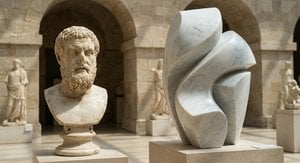
The Enduring Allure of Marble in Art History: From Classical Sculpture to Modern Abstraction
Explore the captivating history of marble sculpture from ancient Greece to modern art. Discover renowned artists like Canova & Michelangelo, carving techniques, and investment insights at ArtsDot.

Bronze Sculptures That Defined Art History | ArtsDot
Journey through art history with our Top 10 bronze sculptures! Explore masterpieces by Rodin, Michelangelo & more. Discover stories behind iconic statues and find museum-quality reproductions for your home decor at ArtsDot.com.

Mastering Shadows: The 25 Most Powerful Artworks by Francisco Goya
Explore Goya's haunting masterpieces from courtly portraits to Black Paintings. Discover the full collection on ArtsDot.com.

The Enduring Form: Sculpture Across History, Technique & Emotional Resonance
Explore the rich history of sculpture with ArtsDot. Discover key techniques, influential artists & investment potential for discerning collectors. Expert insights into valuing and collecting timeless masterpieces.

The Enduring Form: Exploring Themes & Techniques in Sculpture Across Historical Periods
Explore the rich history of sculpture from ancient masterpieces to contemporary innovations. Discover key techniques, influential artists & investment potential for discerning art collectors.


