


 Preview
 Send
Send Share
Share
 Details
 Guide
Guide

 Download
 Similars
 X-Ray
X-Ray Diaporama
 Stats
StatsStream
 Oil
Oil- WallArt
- Naturalism
 19th Century
 41.0 x 44.0 cm
 Soares dos Reis National Museum
 Read More
Giclée / Art Print
Museum-quality giclée or canvas print with fast production and flexible finish options. ( Buy Hand Made Painting Switch to Digital Image)




P118B $10

P118H $10

P118W $10

P438Z $10

P508JH $12

P508YH $12

P805H $10

P805Z $10

P919BZ $10

P919G $10

P919XJ $10

P959ZH $10

P968JZ $12

W106C $8

W218G $10

W218JH $8

W218Y $10

W307PJ $10

W316G $10

W316PJ $8

W316Y $10

W398PJ $8

W4111J $10

W500HY $15

W500JH $15

W692G $12

W849H $8

W940BG $15

W953PJ $8




Pick from our preset sizes that match the artwork's original proportions.

Type the width and the height you need, to fit your frame or your wall. A print can only be cut, never made bigger than the picture, so a size with a different shape loses a part of the image. We send you a digital mockup to approve before we print anything. The picture shown on this page does not show the real cut — only the mockup does.
Worldwide Delivery () in 2 weeks instead of standard 4/5 weeks. (21 October)

Free Worldwide Express Shipping

High-Quality Linen Canvas

Full Shipping Insurance

Customs Tax Refund Guarantee

True Color Matching Guarantee

100-Day Return Policy (Defects Only)

100% Money-Back Guarantee

Bulk Discount Offer
 Glass option is only available in size under 110 CM

Stream
Giclée / Art Print
Reproduction Size
-


Total Price
$ 63
A Quiet Moment in the Portuguese Countryside
In the gentle strokes of José Malhoa’s masterpiece, Stream, we are transported to a serene corner of the Portuguese landscape, where time seems to slow to the rhythm of nature itself. The painting captures a poignant, unvarnished moment of rural life, centered around a man and his steadfast brown horse. As the figure stands beside his companion, holding the reins with a sense of quiet responsibility, there is an undeniable intimacy in their connection. This is not a scene of grand drama, but rather one of profound simplicity. The presence of a small cart, a solitary chair, and even a humble bottle tucked into the periphery suggests a life lived in harmony with the earth—a narrative of labor, rest, and the quiet dignity found in the everyday tasks of a caretaker or farmer.
The composition is enriched by subtle details that breathe life into the scene. Two birds, positioned with delicate precision, act as silent witnesses to this pastoral tableau, adding a layer of movement and vitality to the stillness. Malhoa’s ability to weave these small elements together creates a sense of a living, breathing ecosystem. For the collector or interior designer, this piece offers more than just a visual subject; it provides an atmosphere of tranquility and nostalgia, making it an ideal centerpiece for spaces designed to evoke peace, warmth, and a connection to heritage.
The Mastery of Naturalism and Light
As a leading figure in the Portuguese Naturalist movement, Malhoa utilized his technical prowess to capture the authentic soul of his homeland. In Stream, his technique shines through the masterful application of light and texture. The artist avoids the rigid boundaries of academic classicism, opting instead for a more fluid, impressionistic touch that allows the atmosphere to permeate the canvas. One can almost feel the warmth of the sun filtering through the countryside air and hear the soft rustle of the landscape. His brushwork is purposeful yet soft, creating a sense of depth that draws the viewer into the very heart of the scene.
The color palette is deeply rooted in the earth tones of Portugal—rich browns, muted greens, and soft, natural light—which reinforces the painting's connection to the soil. This organic approach to color ensures that the artwork feels timeless. For those seeking a high-quality reproduction, the essence of Malhoa’s technique lies in this balance between realism and emotion. The painting does not merely replicate a scene; it recreates a feeling of belonging to the land. It is an evocative piece that invites contemplation, making it a sophisticated choice for any curated collection or a refined addition to a thoughtfully decorated interior.
Questions & Answers
What level of contrast does "Stream" by José Malhoa show?
The light-dark contrast of "Stream" is recorded as bold. Contrast describes how strongly light and dark areas differ.
What aliases or alternate names does José Malhoa have?
Other names recorded for José Malhoa, creator of "Stream", include Jose Malhoa, José Vital Branco Malhoa.
Which room is "Stream" by José Malhoa recommended for, given its colors?
The earthy colors of "Stream" by José Malhoa match its recommended space: a living room.
Related Artworks


Artist Biography
A Life Rooted in Portuguese Soil
José Vital Branco Malhoa, known simply as José Malhoa, emerged from the heart of Portugal in 1855, born in the thermal town of Caldas da Rainha. From a tender age, it was evident that young José possessed an innate artistic sensibility. At just twelve years old, he embarked on his formal training at Lisbon’s Royal Academy of Fine Arts, laying a solid foundation in technique that would serve as the bedrock for his future explorations. This early immersion into academic rigor didn't stifle his spirit; rather, it equipped him with the tools to later challenge conventions and forge his own path within the evolving landscape of Portuguese art. His upbringing amidst the everyday lives of ordinary people profoundly shaped his artistic vision, instilling in him a desire to depict the world as he observed it—unvarnished, authentic, and deeply connected to the soul of Portugal.The Rise of Naturalism and a Distinctly Portuguese Voice
Malhoa’s name became synonymous with Portuguese Naturalism during the latter half of the 19th century. Alongside Columbano Bordalo Pinheiro, he spearheaded a movement that sought to portray life with unflinching realism, rejecting idealized representations in favor of honest depictions of society and its inhabitants. His early works focused intently on scenes from daily existence – farmers toiling in the fields, families gathered in humble homes, moments of leisure and labor captured with meticulous detail. This commitment wasn’t merely a stylistic choice; it was a deliberate attempt to move away from academic constraints and embrace a uniquely Portuguese artistic identity. He sought to capture not just *what* he saw, but *how* life felt within the cultural context of his nation. However, Malhoa wasn't immune to the currents of change sweeping through the art world. As his career progressed, subtle influences of Impressionism began to surface in his work, particularly evident in his increasingly nuanced use of light and color—a testament to his willingness to experiment and evolve.Iconic Canvases: Stories Painted with Light and Shadow
Malhoa’s artistic legacy is anchored by a series of iconic paintings that continue to resonate with audiences today. Perhaps his most recognizable work, "The Drunks" (1907), offers a candid and unsentimental glimpse into the social life of the time. It's not a moralizing depiction; rather, it’s an observation—a snapshot of revelry captured with striking realism and psychological depth. Equally compelling is "Fado" (1910), a poignant portrayal of Portugal’s soul-stirring musical tradition. The painting encapsulates the melancholic beauty and emotional intensity inherent in *fado*, depicting a singer and her captivated audience in a scene brimming with atmosphere. Later works, like "Autumn" (1918), demonstrate his growing mastery of Impressionistic techniques, showcasing a landscape bathed in golden light and loose brushstrokes. Even his portraits, such as "Anastácio Gonçalves" (1932), reveal his exceptional skill with classical realism and the expressive potential of impasto—a technique where paint is applied thickly to create texture and depth. Recurring themes throughout his oeuvre include scenes of rural life, intimate portraits of ordinary people, and celebrations of Portuguese customs and traditions.A Lasting Legacy: Bridging Eras and Inspiring Generations
José Malhoa achieved widespread recognition during his lifetime, becoming one of Portugal’s most celebrated artists. His contributions extended beyond the canvas; he played a pivotal role in establishing a distinctly Portuguese artistic identity, breaking free from foreign influences and championing national themes. The inauguration of the José Malhoa Museum in Caldas da Rainha late in his life served as a powerful testament to his enduring impact. Furthermore, his former home in Lisbon, now known as the Dr. Anastácio-Gonçalves House-Museum, stands as a living tribute to his artistic contributions and provides invaluable insight into his creative process. Malhoa’s work represents a crucial transition in Portuguese art—a bridge between traditional academic styles and more modern approaches. He didn't simply document his time; he *interpreted* it, offering valuable insights into the social fabric of Portugal during a period of significant change. His influence extended to subsequent generations of Portuguese artists, inspiring them to embrace realism, explore national identity, and push the boundaries of artistic expression. Today, José Malhoa’s legacy continues to flourish, solidifying his position as a pivotal figure in the history of Portuguese art—a master who captured the essence of his nation with both technical brilliance and profound emotional depth.
José Malhoa
1855 - 1933 , Portugal
Quick Facts
- Full Name: José Vital Branco Malhoa
- Nationality: Portuguese
- Date Of Birth: 1855
- Date Of Death: 1933
- Place Of Birth: Caldas da Rainha, Portugal
- Notable Artworks:
- The Drunks
- Fado
- Autumn
- Anastácio Gonçalves
- Artistic Movement Or Style: Naturalism, Realism
- Artists Who Influenced This Artist: ['Columbano Bordalo Pinheiro']
- Artists Or Movements Influenced By This Artist: ['Portuguese artists']
Related Articles
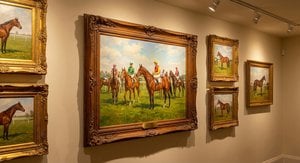
Sir Alfred Munnings' Masterpieces: 25 Paintings That Define Equine Art | ArtsDot
Explore 25 iconic Sir Alfred Munnings paintings! Discover the beauty of British Impressionism, equine art & rural England. Find museum-quality reproductions and elevate your home decor with ArtsDot. Explore the full collection online.

John Constable's Masterpieces: Explore 25 Iconic Landscapes for Your Home
Journey through John Constable's 25 most celebrated landscapes. Explore Romanticism, Dedham Vale & his masterful use of light in iconic paintings like 'Hay Wain'. Find museum-quality art reproductions and elevate your home decor on ArtsDot.com.

The Noble Steed on Canvas: A Historical & Artistic Exploration of Horse Painting Across Cultures
Explore the rich history of horse painting! Discover masterpieces from Stubbs to Munnings & learn about symbolism, techniques & artists. Find museum-quality reproductions at ArtsDot.

The Equine Muse: A Historical & Artistic Exploration of Horses in Painting
Explore the captivating history of horses in painting! Discover Renaissance masterpieces, Baroque grandeur & expert insights for collecting equestrian art. Learn about symbolism, techniques & lasting value with ArtsDot.

Echoes of Rural Life: Art's Enduring Representations of the Countryside
Explore the rich history of rural life in art! Discover masterpieces from Millet to Mauve & beyond. Learn about Realism, Barbizon School & find inspiration for your home with ArtsDot.


