
- Home

- Oil Painting Reproduction
- Jonathan Eastman Johnson
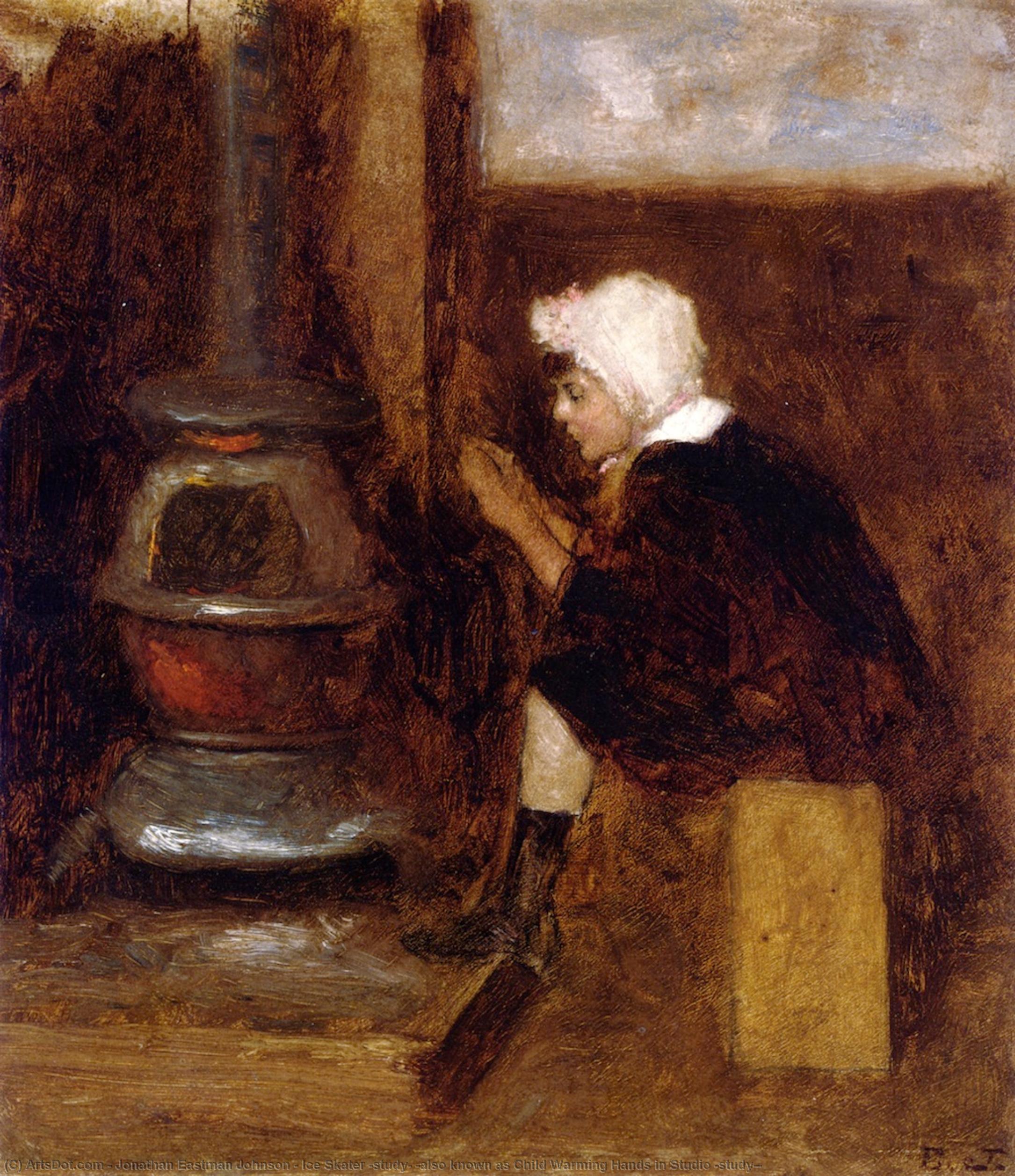
- Ice Skater (study) (also known as Child Warming Hands in Studio (study))
 Buy print
 Send
Send Share
Share
 Details

 Download
 Similars
 X-Ray
X-Ray Diaporama
Ice Skater (study) (also known as Child Warming Hands in Studio (study))


Hand Made Oil Reproduction
Hand-painted oil on canvas in your size and frame, made to order by our artists.




































 Read more
Pick from our preset sizes that match the artwork's original proportions.

You may enter your own dimensions to fit a specific frame or space. If your selected size does not match the original image's proportions, we will either crop the artwork or extend the painting with additional hand-painted elements. A digital mockup will be sent for your approval before production begins.
Please note that the on-screen preview does not reflect the actual cropping or extension. Only the mockup will accurately show the final composition.
While custom sizes are available, we recommend selecting a dimension from the predefined list to preserve the original proportions.
After order, ArtsDot.com team will email client for instructions and provide a mockup preview
Worldwide Delivery () in 3/4 weeks instead of standard 5 weeks. (1 July). No compromise on quality.

Free Worldwide Express Shipping

High-Quality Linen Canvas

Full Shipping Insurance

Customs Tax Refund Guarantee

True Color Matching Guarantee

60-Day Return Policy (Defects Only)

100% Money-Back Guarantee

Bulk Discount Offer
 Glass option is only available in size under 110 CM

Ice Skater (study) (also known as Child Warming Hands in Studio (study))
Reproduction Medium
Reproduction Size
-


Total Price
-
Artwork Description
Ice Skater (study): A Glimpse of Winter Warmth
“Ice Skater (study)”, also known as “Child Warming Hands in Studio (study),” is a captivating oil on panel painting created by Jonathan Eastman Johnson in 1879. This work offers a poignant snapshot of domestic life during a cold winter evening, showcasing the artist's remarkable ability to evoke feelings of coziness and intimacy through his skillful use of light and composition.
Artistic Style and Technique
Johnson’s style leans towards American Realism, characterized by its focus on depicting everyday scenes with accuracy and detail. However, "Ice Skater (study)" also reveals an impressionistic influence in the loose, gestural brushwork that defines forms rather than meticulously rendering every element. The artist masterfully employs oil paint applied in thick impasto layers, creating a rich surface texture that adds depth and visual interest to the scene. The color palette is predominantly dark and muted – browns, grays, and ochre dominate—with subtle contrasts between the warm glow of the stove and the cooler tones surrounding the central figure. This careful manipulation of light and shadow contributes significantly to the painting's somber yet comforting mood.
Historical Context and Influences
Created during a period when American artists were increasingly looking towards European masters for inspiration, Johnson’s work reflects this influence while maintaining a distinctly American sensibility. His travels in Europe, particularly his time spent studying 17th-century Dutch masters in The Hague, are evident in the genre painting style and attention to detail seen in "Ice Skater (study)." The painting resonates with the broader artistic trends of its time, which emphasized realism and depictions of everyday life, moving away from more overtly historical or mythological subjects. Johnson's work also reflects a growing interest in portraying ordinary people and their experiences, contributing to the development of American genre painting.
Symbolism and Emotional Impact
Beyond its aesthetic appeal, "Ice Skater (study)" carries symbolic weight. The solitary woman warming her hands by the stove can be interpreted as representing resilience, perseverance, or a connection to traditional values in the face of hardship. The stove itself symbolizes warmth, comfort, and domesticity—a refuge from the harsh winter outside. The painting evokes a sense of quiet introspection and perhaps a hint of melancholy, inviting viewers to contemplate themes of solitude, family, and the simple pleasures of life. The overall emotional impact is one of gentle contemplation and understated beauty.
Owning a Reproduction
Appreciate the artistry of Jonathan Eastman Johnson with a handmade oil painting reproduction of "Ice Skater (study)." These reproductions capture the original's essence, allowing art enthusiasts to bring this beautiful piece into their homes or offices. Experience the warmth and intimacy of this classic American artwork firsthand.
Related Artworks


Artist Biography
A Life Etched in American Realism
Jonathan Eastman Johnson, a name resonating with the quiet dignity of 19th-century American life, was more than just a painter; he was a visual chronicler of his era. Born in Lovell, Maine, in 1824, Johnson’s path to artistic prominence wasn't one of immediate acclaim but rather a gradual unfolding shaped by familial connections, rigorous training, and an unwavering dedication to portraying the world as he saw it – with honesty, nuance, and a touch of melancholic beauty. His father, Philip Carrigan Johnson, held positions in business and fraternal organizations, instilling in young Eastman a sense of community engagement that would later permeate his artistic subjects. Early exposure to life in Fryeburg and Augusta, Maine, provided the foundational experiences that informed his understanding of everyday existence, an understanding he’d translate onto canvas with remarkable sensitivity. His formal training began as an apprenticeship with a Boston lithographer in 1840, marking the initial step in a career defined by meticulous observation and technical skill. A move to Washington D.C. alongside his family, due to his father's naval appointment, broadened his horizons, exposing him to diverse subjects and experiences that would subtly influence his artistic vision.From Dutch Masters to American Scenes
Johnson’s artistic development was a fascinating interplay of influences. Initially drawn to portraiture, he quickly expanded his repertoire to encompass genre painting – scenes depicting everyday life. This wasn't merely about representation; it was about capturing the essence of American society, offering glimpses into the lives of ordinary people often overlooked by more grandiose historical narratives. A pivotal moment arrived during the 1850s when Johnson journeyed to The Hague and immersed himself in the works of 17th-century Dutch masters. This encounter proved transformative. He absorbed their mastery of composition, lighting, and realism, earning him the affectionate moniker "The American Rembrandt." This influence is palpable in his paintings – a subdued palette, dramatic chiaroscuro, and an almost photographic attention to detail characterize his mature style. However, Johnson didn’t simply imitate; he synthesized these European techniques with his uniquely American sensibility, creating works that were both technically brilliant and deeply rooted in the social fabric of his time. He aligned himself with the burgeoning Realist movement, rejecting idealized representations in favor of accurate depictions of everyday life, a commitment that would define his artistic legacy.Bearing Witness to an Era
Johnson’s oeuvre is remarkably diverse, encompassing portraits of prominent figures like Abraham Lincoln, Nathaniel Hawthorne, Ralph Waldo Emerson, and Henry Wadsworth Longfellow alongside intimate scenes of domesticity and rural life. However, some works stand out as particularly significant for their social commentary and artistic innovation. Negro Life at the South (1859) remains one of his most celebrated – and controversial – paintings. Depicting African Americans enjoying leisure time, it sparked intense debate regarding race relations and the realities of slavery in the antebellum South. The ambiguity inherent in the scene—was it a romanticized portrayal or a subtle critique?—fueled discussions that resonated far beyond the art world. His response to the Civil War was equally poignant. Rather than focusing on battlefield heroics, Johnson turned his attention to the impact of conflict on civilian life, creating haunting images of anxious families and scenes away from the front lines. Ride For Liberty (1862), depicting an enslaved family escaping to freedom, is a powerful testament to his commitment to social justice. His depictions of New England rural life – maple sugar harvesting, cranberry picking – celebrated traditional American values and craftsmanship with a quiet reverence.A Legacy Beyond the Canvas
Beyond his artistic achievements, Johnson played a crucial role in shaping the American art landscape. His dedication to genre painting elevated it as a respected form of artistic expression, challenging prevailing notions of what constituted “high art.” He wasn’t merely an artist; he was a cultural advocate. His commitment extended beyond his own practice, culminating in his co-founding of the Metropolitan Museum of Art in New York City – a testament to his belief in the power of art to educate and inspire. His name is inscribed at its entrance, a permanent recognition of his significant contribution to the nation’s artistic heritage. Johnson's influence on American Realism is undeniable; his dedication to depicting everyday life with honesty and detail paved the way for future generations of artists who sought to capture the complexities of the human experience. Today, Jonathan Eastman Johnson is remembered not only as a technically gifted painter but also as a thoughtful observer of American society, whose works continue to resonate with their enduring relevance and emotional depth.Enduring Significance
Johnson’s legacy extends beyond specific paintings or institutional contributions. He was a pioneer in bridging the gap between European artistic traditions and uniquely American subject matter. His ability to imbue ordinary scenes with profound meaning, his willingness to engage with complex social issues, and his unwavering commitment to realism cemented his place as a pivotal figure in 19th-century American art. He wasn’t simply recording life; he was interpreting it, prompting viewers to reflect on their own values and beliefs. His work serves as a powerful reminder that true artistry lies not just in technical skill but also in the ability to connect with the human spirit and illuminate the world around us. He died in New York City in 1906, leaving behind a body of work that continues to captivate and inspire, ensuring his enduring recognition as a significant figure in American art history.
Jonathan Eastman Johnson
1824 - 1906 , United Kingdom
Quick Facts
- Artistic Movement Or Style: Realism, Genre painting
- Artists Or Movements Influenced By This Artist: ['American Realism']
- Artists Who Influenced This Artist:
- Dutch Masters
- Jean-François Millet
- Date Of Birth: July 29, 1824
- Date Of Death: April 5, 1906
- Full Name: Jonathan Eastman Johnson
- Nationality: American
- Notable Artworks:
- Negro Life at the South
- Ride For Liberty
- Woman Reading
- Place Of Birth: Lovell, United Kingdom
Related Articles

American Realism: Social Commentary & Artistic Representation in Early 20th-Century Painting
Explore the powerful social commentary & artistic representation of American Realism. Discover key artists like Bellows & Sloan, and understand the movement's lasting impact on 20th-century art history.


Snowy Masterpieces: 10 Famous Paintings & Art for a Winter Aesthetic
Explore 10 famous snow paintings by Monet, Degas & more! Discover the stories behind these serene winter landscapes and iconic artworks. Find museum-quality art reproductions for your home at ArtsDot.com.

From Imagination to Canvas: Commissioning Bespoke Fantasy Art with Traditional Oil Painting Techniques
Commission breathtaking bespoke fantasy art with skilled oil painters. Explore techniques, artist selection & preservation tips. Invest in a unique masterpiece today!

American Realism's Defining Works: 10 Masterpieces for Your Home
Explore 10 defining American Realism masterpieces – Hopper, Homer & more. Discover the stories behind these iconic paintings and bring timeless art to your home with ArtsDot's museum-quality reproductions. Explore the full collection online.

John Frederick Lewis: Orientalism, Detail & Genre Painting in 19th-Century British Art
Explore the captivating Orientalist paintings of John Frederick Lewis! Discover his mastery of detail, genre scenes & influence on 19th-century British art. Learn about his life, techniques & legacy at ArtsDot.



