


 Preview
 Send
Send Share
Share
 Details
 Guide
Guide

 Download
 Similars
 X-Ray
X-Ray Diaporama
 Stats
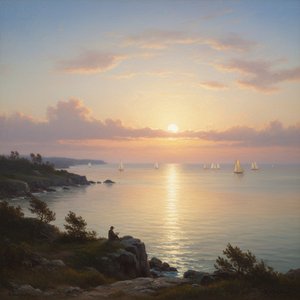
StatsSunset
 Oil On Canvas
- WallArt
- Hudson River School
 1872
1872- 19th Century
 46.0 x 76.0 cm
 Metropolitan Museum of Art
 Read More
Hand Made Oil Reproduction
Hand-painted oil on canvas in your size and frame, made to order by our artists. ( Switch to Print Switch to Digital Image)




P118B $10

P118H $10

P118W $10

P438Z $10

P508JH $12

P508YH $12

P805H $10

P805Z $10

P919BZ $10

P919G $10

P919XJ $10

P959ZH $10

P968JZ $12

W106C $8

W218G $10

W218JH $8

W218Y $10

W307PJ $10

W316G $10

W316PJ $8

W316Y $10

W398PJ $8

W4111J $10

W500HY $15

W500JH $15

W692G $12

W849H $8

W940BG $15

W953PJ $8




Pick from our preset sizes that match the artwork's original proportions.

Type the width and the height you need, to fit your frame or your wall. This is hand-painted, so for a size with a different shape the artist can paint a bit more around the picture, or cut a bit — you choose. We send you a digital mockup to approve before the painting starts. The picture shown on this page does not show the real result — only the mockup does.
After order, ArtsDot.com team will email client for instructions and provide a mockup preview
Worldwide Delivery () in 3/4 weeks instead of standard 5 weeks. (14 October). No compromise on quality.

Free Worldwide Express Shipping

High-Quality Linen Canvas

Full Shipping Insurance

Customs Tax Refund Guarantee

True Color Matching Guarantee

100-Day Return Policy (Defects Only)

100% Money-Back Guarantee

Bulk Discount Offer
 Glass option is only available in size under 110 CM

Sunset
Reproduction Medium
Reproduction Size
-


Total Price
$ 263
John Frederick Kensett’s Sunset on the Sea: A Luminist Meditation
The painting “Sunset on the Sea,” created by John Frederick Kensett in 1872, stands as a quintessential example of Luminism—a movement that championed atmospheric light and serene landscapes—and embodies Kensett's profound connection to the American wilderness. More than just a depiction of a coastal vista, it’s an exploration of mood, color, and the sublime beauty inherent in nature’s fleeting moments. ### Subject Matter and Composition Kensett meticulously captured the essence of Long Island Sound at dusk. The scene unfolds with remarkable clarity: a distant island punctuates the horizon line against a backdrop of expansive sky ablaze with hues of orange, crimson, and violet—colors painstakingly blended to convey the warmth and vibrancy of the setting sun. Foreground trees frame the composition, subtly guiding the viewer’s gaze towards the central vista. These trees aren't merely decorative; they serve as anchors for the eye, grounding the ethereal expanse above in a tangible reality. Scattered boats add a touch of human presence, emphasizing the scale of the landscape and hinting at the quiet contemplation of those observing it. ### Artistic Style and Technique – Luminist Philosophy Kensett’s approach aligns perfectly with the tenets of Luminism—a reaction against Romantic idealism that prioritized observation and accurate representation over dramatic emotion. Unlike his predecessors who sought to convey grandeur and awe, Kensett aimed for a more restrained aesthetic, focusing on capturing the subtle nuances of light and color as they interacted with the natural world. He achieved this remarkable feat through meticulous layering of thin glazes—a technique characteristic of Luminist painters—allowing him to build up luminous surfaces that shimmer with reflected light. This painstaking process resulted in an image that feels remarkably immediate and truthful, mirroring the experience of witnessing a sunset firsthand. ### Historical Context and Influences Kensett’s “Sunset on the Sea” emerged during a period of significant artistic innovation in America. The Hudson River School, which Kensett helped establish, championed idealized depictions of American landscapes—often infused with spiritual resonance—responding to the burgeoning Transcendentalist movement's emphasis on intuition and connection to nature. Turner’s atmospheric paintings profoundly impacted Luminist artists like Kensett, who sought to emulate Turner’s ability to convey emotion through color and light without resorting to overt narrative elements. The painting reflects a broader cultural preoccupation with capturing beauty and tranquility amidst the rapid industrialization of the era—a desire for respite from urban life and an appreciation for the enduring power of unspoiled wilderness. ### Symbolism and Emotional Impact Beyond its technical brilliance, “Sunset on the Sea” resonates deeply with viewers due to its symbolic significance. The sunset itself represents closure, transition, and the inevitable passage of time—themes explored extensively by Romantic poets and artists. However, Kensett’s Luminist style mitigates any sense of melancholy, presenting instead a vision of serene beauty and contemplative stillness. The radiant sun symbolizes hope and renewal, suggesting that even as day fades into night, light persists—a comforting reminder of the enduring presence of divine grace in the natural world. Viewing this painting evokes feelings of peace, wonder, and an appreciation for the sublime grandeur of nature—qualities that continue to captivate audiences today.Questions & Answers
What palette and what feeling does "Sunset" combine?
The earthy palette of "Sunset" by John Frederick Kensett goes together with its tranquil emotional tone. Color is one of the ways a work conveys feeling.
What is the dominant color of "Sunset" by John Frederick Kensett?
The dominant color of "Sunset" by John Frederick Kensett is rosy brown (#9e8f83).
Which reproduction size is suggested for "Sunset" by John Frederick Kensett?
The recommended print size for "Sunset" by John Frederick Kensett is medium.
Related Artworks


Artist Biography
a life devoted to capturing serene landscapes
john frederick kensett, an american artist and engraver, was born on march 22, 1816, in cheshire, connecticut. as a member of the second generation of the hudson river school of artists, kensett's signature works are characterized by their serene and luminous qualities, celebrating the transcendental aspects of nature.early life and training
kensett attended school at cheshire academy and studied engraving with his father, thomas kensett. he later worked as an engraver in new haven until 1838, then moved to new york city to work on banknote engravings. in 1840, kensett traveled to europe to study painting, refining his talents alongside benjamin champney.established studio and luminist style
after establishing his studio in new york, kensett extensively traveled throughout the northeast and colorado rockies, capturing the essence of these landscapes. his style evolved from traditional hudson river school to a more refined luminist approach, characterized by unselfconscious brushstrokes conveying qualities of atmospheric light.- mount washington from the valley of conway (1851), an iconic painting, was purchased by the american art union and distributed to 13,000 subscribers.
- eaton's neck, long island (1872), a prime example of kensett's luminist style, is now in the collection of the metropolitan museum of art in new york.
legacy and contributions
kensett was a founder of the metropolitan museum of art and a full member of the national academy of design. his work, widely acclaimed during his lifetime, continues to influence landscape painting. key works:- sunset sky (ca. 1870), the metropolitan museum of art, new york
- three mile harbor (ca. 1860), museum of fine arts, tallahassee

John Frederick Kensett
1816 - 1872 , United States of America
Quick Facts
- Full Name: John Frederick Kensett
- Nationality: American
- Date Of Birth: 1816
- Date Of Death: 1872
- Place Of Birth: Cheshire, United States of America
- Notable Artworks:
- Mount Washington from the Valley of Conway
- Eaton's Neck, Long Island
- Artistic Movement Or Style: Hudson River School & Luminism
- Artists Who Influenced This Artist:
- Thomas Cole
- Benjamin Champney
- Artists Or Movements Influenced By This Artist: ['Luminism']
Related Articles

Sanford Robinson Gifford: Luminism & the American Landscape Tradition
Explore the serene landscapes of Sanford Robinson Gifford, a leading Luminist painter of the Hudson River School. Discover his mastery of light, atmospheric effects & lasting influence on American art. Hand-painted reproductions available.

Hokusai's Masterpieces: 25 Iconic Prints & Paintings for Art Lovers | ArtsDot
Journey through Katsushika Hokusai’s 25 most iconic artworks, including *The Great Wave*. Explore the ukiyo-e master's history, style & timeless Japanese woodblock prints. Find museum-quality reproductions for your home at ArtsDot.com.
William Trost Richards: Luminism, Spirituality & the American Landscape Tradition
Explore the captivating landscapes of William Trost Richards, a master of Luminism associated with both the Hudson River School & American Pre-Raphaelite movements. Discover his spiritual connection to nature and lasting influence on American art.

John Frederick Kensett: Luminosity, Landscape & the American Identity
Explore the luminous landscapes of John Frederick Kensett, a master of Luminism and key figure in the Hudson River School. Discover his serene paintings & enduring legacy with ArtsDot.

Robert Spencer: Luminism, Narrative & the American Landscape Tradition
Explore the captivating world of Luminism & the Hudson River School with our expert analysis. Discover the history, artists, and enduring beauty of 19th-century American landscape painting. Find museum-quality reproductions at ArtsDot.


