

- 74.0 x 195.0 cm


The picture follows your choices: , .
Collectible Description
Admire Jean Goujon's 'Naiad,' a stunning Renaissance sculpture depicting a graceful water nymph from 1547. A masterpiece of detail and classical beauty, showcasing intricate drapery and serene form.
 Read More
Artist Biography
Jean Goujon (1510-1567) was a leading French Renaissance sculptor & architect known for his Mannerist style, elegant figures, and work at the Louvre. Explore his sculptures of nymphs, allegories, and engravings influencing French Classicism.
Hand Made Oil Reproduction
Hand-painted oil on canvas in your size and frame, made to order by our artists. ( Switch to Print Switch to Digital Image)
More about this painting
 Send
Send Share
Share
 Details
 Guide
Guide

 Download
 Similars
 Diaporama
 Q&A
Q&A Stats
StatsOrder your painting in four simple steps
Take your time. You can change any answer; the price in your order card follows each choice.
1 Step one of four
Which size would you like?
These sizes keep the proportions of the original painting. The drawing shows your choice on a wall, above a two-metre sofa.
Or give your own measurements
Pick from our preset sizes that match the artwork's original proportions.

Type the width and the height you need, to fit your frame or your wall. This is hand-painted, so for a size with a different shape the artist can paint a bit more around the picture, or cut a bit — you choose. We send you a digital mockup to approve before the painting starts. The picture shown on this page does not show the real result — only the mockup does.
2 Step two of four
How should it be prepared: rolled, stretched or framed?
The prices below are for the size you chose in step one.
Choose the edges of the stretched canvas
Choose your frame

White $1

Blurside $1

Extended $1

P118B $10

P118H $10

P118W $10

P438Z $10

P508JH $12

P508YH $12

P805H $10

P805Z $10

P919BZ $10

P919G $10

P919XJ $10

P959ZH $10

P968JZ $12

W106C $8

W218G $10

W218JH $8

W218Y $10

W307PJ $10

W316G $10

W316PJ $8

W316Y $10

W398PJ $8

W4111J $10

W500HY $15

W500JH $15

W692G $12

W849H $8

W940BG $15

W953PJ $8

H24-GOLD $30

H24-SILVER $30

H36-GOLD $45

H36-SILVER $45
Framed
Moulding: . Overall size with the frame: .
3 Step three of four
Would you like anything changed in the painting?
Most people answer no. Because each painting is made by hand, our artist can also adapt it for you.
After order, ArtsDot.com team will email client for instructions and provide a mockup preview
4 Step four of four
A few finishing options
All of them are optional. The answers already selected cost nothing extra.
Who paints it?
Worldwide Delivery () in 3/4 weeks instead of standard 5 weeks. (6 November). No compromise on quality.
A nameplate, as in a museum?
Engraved Bronze Plaque Details
This elegant plaque features the artist's name and the title of the artwork, finely engraved for a timeless presentation.
It is made from bronze with a refined, elegant finish. The text is precisely laser-engraved for a sharp and permanent result. Measuring 9x2 cm, the plaque is compact yet easy to read. It's built to be durable and scratch-resistant, offering a professional, museum-quality look. Mounting is simple thanks to the included adhesive backing.
Transparent Acrylic Plaque Details
The plaque includes essential engraved details such as the artist's name, the title of the artwork, the date it was created, the type of media used-like oil on canvas or watercolor-a brief description of the piece, and a QR code that links to the complete artwork information.
It is crafted from clear acrylic, offering a sleek, modern appearance. The text is UV-engraved in black to ensure strong visual contrast. With a size of 10x15 cm, it ensures optimal readability. It comes equipped with two metal hooks for secure wall mounting. The plaque is designed to be weather-resistant, making it suitable for various environments, and it includes interactive features that work seamlessly with smartphone scanning.
Black Acrylic Plaque Details
This elegant plaque includes engraved information such as the artist's name, the title of the artwork, the date it was created, the type of media used (like oil on canvas or watercolor), a short description of the artwork, and a QR code for quick access to more information.
The plaque itself is made from refined black acrylic with a premium finish. The text is laser-engraved in white for high contrast and readability. Its size is 10x15 cm, designed to be easy to read. It comes with two metal hooks for professional mounting. The design is sleek and fits any interior style. It is also weather-resistant and durable, with built-in digital integration for mobile compatibility.
A protective varnish?
When do you need it?
✓ Check and order
Your painting, as you ordered it

Naiad
Reproduction Medium
Reproduction Size
-

Elite Senior Artist
More detail, finesse, and extra production time
-

Reproduction Frame
-
-
For artworks or reproductions larger than 105 cm (approximately 41 inches) on any side, the frame will be shipped as a kit, disassembled. This method ensures safe delivery and prevents damage during transport.
Professional assembly required - this is not a DIY product.
The kit must be assembled and the canvas stretched by an experienced professional framer, using wood glue (not supplied), a canvas stretching plier and clamps to hold the bars square while the glue dries. Incorrect assembly or uneven canvas tension can permanently damage the artwork and is not covered by our warranty.
 For artworks or reproductions larger than 105 cm (approximately 41 inches) on any side, the frame will be shipped as a kit, disassembled. This method ensures safe delivery and prevents damage during transport.
All solid wood bars are included, precisely cut to size.
Assembled with the screws provided, plus wood glue for the corner joints, which is not supplied and must be sourced by your framer.
Professional tools are required and not included: a canvas stretching plier (tensioner) and clamps to hold the bars square while the glue dries.
Important:
The corner joints require wood glue, the bars must be held with clamps until the glue is fully dry, and tightening the canvas on the assembled frame requires a canvas stretching plier. None of these are included in the kit. Please arrange an experienced professional framer before ordering this size.

Nameplate
-
-

Protective Varnish
Glossy Varnish (enhances colors, protects against light/moisture)
-

Customize My Artwork
Examples of what can be changed: Replace face with customer photo; Add pet (e.g., replace cat with dog); Include hidden message in background; Change background landscape or elements.
-

Urgent
Worldwide Delivery () in 3/4 weeks instead of standard 5 weeks. (6 November). No compromise on quality.
-
Express Shipping
Worldwide Delivery () in 5 weeks. (13 November).
Included
Total Price
$ 288
Glass option is only available in size under 110 CM
Included with every order
- Free Worldwide Express Shipping
- High-Quality Linen Canvas
- Full Shipping Insurance
- Customs Tax Refund Guarantee
- True Color Matching Guarantee
- 100-Day Return Policy (Defects Only)
- 100% Money-Back Guarantee
- Bulk Discount Offer


A Whisper from the Waters: Jean Goujon’s Naiad
Jean Goujon's "Naiad," sculpted in 1547, is more than just a depiction of a water nymph; it’s a frozen moment of graceful longing and timeless beauty. This limestone relief, now housed within the Royal Łazienki Park in Warsaw, Poland, offers a captivating glimpse into the heart of Renaissance Mannerism – a style characterized by its elegant fluidity, heightened emotion, and subtle distortions that imbue figures with an almost palpable sense of movement.
The sculpture immediately draws the eye to the reclining figure, whose form is both powerfully sculpted and exquisitely delicate. Goujon masterfully renders the flowing drapery, creating an illusion of water swirling around her body, a direct reference to the nymph’s aquatic origins. The pose itself—one arm extended downwards as if reaching for the depths, the other gracefully bent—suggests a quiet contemplation, a yearning for something beyond the visible world. Her face, though partially obscured by the folds of her garment, retains an expression of serene vulnerability, hinting at both beauty and a touch of melancholy.
Dominating the scene to the right is a smaller winged figure – often interpreted as an angel or cherub – seemingly observing the naiad with a mixture of concern and admiration. This pairing elevates the sculpture beyond a simple depiction of a mythological subject; it introduces elements of divine intervention and perhaps even a cautionary tale, suggesting the potential dangers inherent in pursuing unattainable desires. The contrast in scale between the two figures further emphasizes this dynamic, creating a visual dialogue that invites interpretation.
The Renaissance Embrace: Style and Technique
Goujon’s “Naiad” is a quintessential example of Mannerist sculpture, a style flourishing during the late 15th and early 16th centuries. Unlike the idealized forms of High Renaissance art, Mannerism embraced asymmetry, elongated proportions, and dramatic lighting to evoke intense emotion and psychological complexity. Goujon skillfully employs these techniques here, subtly distorting the naiad’s form – her limbs are slightly exaggerated, her features delicately rendered – to create a sense of heightened realism and emotional depth.
The sculpture's surface is remarkably smooth, achieved through meticulous carving and polishing. The artist demonstrates a profound understanding of texture, particularly in the rendering of the drapery, which appears both fluid and substantial. Notice how Goujon uses subtle variations in tone to create an illusion of light and shadow, enhancing the three-dimensionality of the relief and drawing the viewer’s eye across its surface. The use of limestone – a relatively soft stone – allowed for intricate detailing and graceful curves, essential elements of the Mannerist style.
A Mythological Echo: Symbolism and Context
The naiad herself is a figure deeply rooted in Greek mythology, representing the spirits of springs, streams, and wells. In ancient Greece, these nymphs were often associated with fertility, purity, and healing – qualities that resonated strongly within Renaissance culture. The sculpture’s placement within the Łazienki Park, originally designed as a royal retreat, further reinforces this connection to nature and the divine.
The inclusion of the winged figure adds another layer of symbolic meaning. Angels and cherubs frequently represented divine grace and protection in Renaissance art, suggesting that the naiad’s yearning is not merely a personal desire but also a reflection of humanity's longing for spiritual fulfillment. The sculpture can be seen as an allegory for the pursuit of beauty, knowledge, or even immortality – themes that preoccupied artists and intellectuals during this period.
A Legacy in Stone: Reproduction and Appreciation
Reproductions of Jean Goujon’s “Naiad” offer a remarkable opportunity to bring this exquisite work of art into your home or office. The original sculpture, crafted over 500 years ago, is a testament to the enduring power of human creativity and artistic skill. When commissioning a reproduction, consider the materials used – high-quality canvas stretched over a wooden frame will faithfully capture the essence of Goujon’s masterpiece.
More than just a decorative object, “Naiad” invites contemplation and reflection. Its graceful lines, evocative symbolism, and masterful technique make it a timeless treasure—a poignant reminder of the beauty, mystery, and enduring allure of the natural world and the human spirit. It’s a piece that speaks to our deepest longings and reminds us of the power of art to transcend time and connect us to the past.
Questions & Answers
Which reproduction size is suggested for "Naiad" by Jean Goujon?
A medium reproduction is suggested for "Naiad" by Jean Goujon. Size can be adjusted while keeping the proportions.
What use is suggested for "Naiad" by Jean Goujon?
The recommended use of a print of "Naiad" is statement.
What placement suits the format of "Naiad" by Jean Goujon?
Format (panoramic) and recommended space (living room) are the two placement facts recorded for "Naiad" by Jean Goujon.
Related Artworks


Jean Goujon
1510 - 1567, France
Artist Biography
The Sculptor Who Shaped Parisian Elegance
Jean Goujon (c. 1510 – c. 1567) stands as a cornerstone of French Renaissance sculpture and architecture, embodying the stylistic fervor of Mannerism while simultaneously grounding itself in classical ideals. Born in Normandy, his early life remains shrouded in obscurity, yet his prolific output quickly established him as one of the era’s foremost artistic voices—a testament to his prodigious talent and unwavering dedication to craft. Goujon's journey began with formative experiences in Italy, where he absorbed the grandeur of Roman sculpture and integrated its principles into his own distinctive style. This influence is palpable throughout his oeuvre, particularly evident in his masterful handling of drapery and anatomical precision.
His artistic ascent commenced in Rouen Cathedral (1541-42), where he undertook the monumental task of sculpting the tomb monument to Louis de Brézé, seigneur d'Anet—a commission that showcased his burgeoning skill and ambition. This ambitious project cemented his reputation as a rising star within the French sculptural landscape. Simultaneously, he honed his architectural prowess at Saint-Maclou Church, demonstrating an innate ability to blend artistic vision with structural engineering. The resulting edifice stands as a magnificent example of Renaissance ecclesiastical architecture, reflecting Gouseb's commitment to both aesthetic beauty and functional integrity.
A Partnership of Visionary Grandeur
Moving to Paris in 1544, Goujon entered into a pivotal partnership with Pierre Lescot, the architect overseeing the ambitious reconstruction of Saint-Germain-l'Auxerrois cathedral. Together, they conceived and executed breathtaking sculptural decorations—most notably the pulpit—a masterpiece that exemplifies Lescot’s neoclassical sensibilities and Goujon’s masterful drapery technique. This era of collaboration defined the visual language of the French Renaissance, as Goujon began to infuse stone with a sense of fluid movement and ethereal grace.
The height of his influence is perhaps most visible in his contributions to the Louvre. His work on the Façade of the Cour Carrée (wing Lescot) remains an iconic achievement, showcasing classical elegance through intricate carvings that reflect French artistic brilliance. In these works, one can observe the delicate interplay of light and shadow across sculpted figures, a hallmark of his ability to breathe life into cold marble. His mastery extended to the Façade of the Louvre (detail), where his exquisite attention to detail created a masterpiece of Mannerist style, blending classical elegance with intricate carvings that continue to captivate viewers centuries later.
Legacy of Grace and Classical Form
Goujon's legacy is defined by an unparalleled ability to harmonize the tension of Mannerism with the serenity of Classicism. His sculptures often feature nymphs and allegorical figures that seem to float within their architectural settings, a technique most famously realized in his Caryatides. These ten masterful figures represent the pinnacle of 16th-century French Renaissance sculpture, bringing a sense of classical grandeur and sophisticated elegance to the viewer. Through these works, Goujon did more than decorate buildings; he sculpted the very identity of French aesthetic refinement.
The historical significance of his work cannot be overstated, as his approach to anatomy and drapery influenced generations of European artists. His ability to transform heavy stone into flowing, rhythmic forms established a standard for French Classicism that would endure long after his death. Today, the remnants of his genius—from the intricate details of the Louvre's wings to his profound influence on architectural ornamentation—serve as a lasting testament to a man who truly shaped the elegance of Paris.


Related Articles
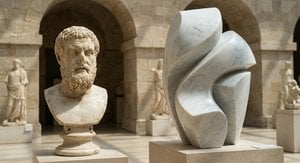
The Enduring Allure of Marble in Art History: From Classical Sculpture to Modern Abstraction
Explore the captivating history of marble sculpture from ancient Greece to modern art. Discover renowned artists like Canova & Michelangelo, carving techniques, and investment insights at ArtsDot.

The Enduring Form: Sculpture Across History, Technique & Emotional Resonance
Explore the rich history of sculpture with ArtsDot. Discover key techniques, influential artists & investment potential for discerning collectors. Expert insights into valuing and collecting timeless masterpieces.

The Enduring Form: Exploring Themes & Techniques in Sculpture Across Historical Periods
Explore the rich history of sculpture from ancient masterpieces to contemporary innovations. Discover key techniques, influential artists & investment potential for discerning art collectors.