


 Preview
 Send
Send Share
Share
 Details
 Guide
Guide

 Download
 Similars
 X-Ray
X-Ray Diaporama
 Stats
StatsNāve


 Read More
Hand Made Oil Reproduction
Hand-painted oil on canvas in your size and frame, made to order by our artists. ( Switch to Print Switch to Digital Image)




































Pick from our preset sizes that match the artwork's original proportions.

You may enter your own dimensions to fit a specific frame or space. If your selected size does not match the original image's proportions, we will either crop the artwork or extend the painting with additional hand-painted elements. A digital mockup will be sent for your approval before production begins.
Please note that the on-screen preview does not reflect the actual cropping or extension. Only the mockup will accurately show the final composition.
While custom sizes are available, we recommend selecting a dimension from the predefined list to preserve the original proportions.
After order, ArtsDot.com team will email client for instructions and provide a mockup preview
Worldwide Delivery () in 3/4 weeks instead of standard 5 weeks. (26 September). No compromise on quality.

Free Worldwide Express Shipping

High-Quality Linen Canvas

Full Shipping Insurance

Customs Tax Refund Guarantee

True Color Matching Guarantee

100-Day Return Policy (Defects Only)

100% Money-Back Guarantee

Bulk Discount Offer
 Glass option is only available in size under 110 CM

Nāve
Reproduction Medium
Reproduction Size
-


Total Price
$ 288
Understanding the Artist's Vision
Janis Rozentāls was a prominent Latvian artist known for his contributions to the development of Latvian art. His work often featured everyday scenes, portraits, and landscapes, but Nāve stands out for its unique blend of realism and symbolism. The painting depicts a woman holding a baby in her arms, surrounded by other elements that add to the overall meaning of the piece.- The woman's gentle gaze towards the baby conveys a sense of care and nurturing.
- The presence of a cat and bird in the scene may symbolize the cycle of life and death.
- The two bottles in the background could represent the duality of life and death.
Appreciating the Artistic Value
Nāve is not only a significant work by Janis Rozentāls but also an important piece in the history of Latvian art. Its themes and symbolism continue to fascinate art lovers today. For those interested in exploring more of Janis Rozentāls' work, https://ArtsDot.com offers high-quality reproductions of his paintings, including Nāve. Visit Nāve, 1897 by Janis Rozentāls to discover more about this captivating piece.The Latvian National Museum of Arts is home to an extensive collection of Latvian art, including works by Janis Rozentāls. To learn more about the museum and its collections, visit https://ArtsDot.com. For a deeper understanding of Janis Rozentāls' life and work, see his biography on Wikipedia.
Related Artworks


Artist Biography
A Pioneer of Latvian Painting: The Life and Art of Janis Rozentāls
Janis Rozentāls stands as a monumental figure in the history of Latvian art, a painter who helped forge a national artistic identity during a period of immense cultural and political change. Born on March 18, 1866, in the humble surroundings of Bebri Farmstead in Courland Governorate, then part of the Russian Empire, Rozentāls’s journey from the son of a blacksmith to a celebrated artist is a testament to his dedication and talent. His early life was deeply rooted in the Latvian countryside, an environment that would profoundly shape his artistic vision. He received his initial education at H. Krause's Elementary School in Saldus and later attended Kuldīga District School, but it was a burning desire for artistic expression that propelled him towards Riga at the age of fifteen. This marked the beginning of formal training, culminating in studies at the prestigious Saint Petersburg Academy of Arts starting in 1888. These academic years provided Rozentāls with a solid foundation in technique and exposed him to broader European art traditions, yet he never forgot the landscapes and spirit of his homeland. Visits back to Latvia were crucial, fueling his artistic development with the raw beauty and cultural richness of his native land.Blending Tradition and Modernity: Artistic Development and Style
Rozentāls is rightfully recognized as one of the founders of professional fine arts in Latvia. His work embodies a fascinating synthesis of influences, primarily Impressionism and Art Nouveau, but always filtered through a distinctly Latvian sensibility. He wasn’t merely adopting these styles; he was transforming them, imbuing them with a unique character that resonated with the burgeoning national consciousness of his time. A key characteristic of his compositions is an intentional asymmetry coupled with a flowing, wavelike rhythm – hallmarks of Art Nouveau. However, Rozentāls masterfully balanced this decorative quality with a subtle understanding of tonal variations and color relationships, preventing his work from becoming overly ornamental. He skillfully combined flatness with soft transitions, creating images that were both visually striking and emotionally evocative. His subject matter was diverse, encompassing portraits that captured the inner lives of his subjects, landscapes celebrating the beauty of Latvian nature – particularly vibrant spring scenes – and symbolic works inspired by biblical narratives and mythology. In 1910, he undertook a significant commission to create decorative friezes for the Riga Latvian Society, showcasing his ability to work on a monumental scale while maintaining his artistic integrity. Beyond painting, Rozentāls was also a prolific graphic artist, producing book designs, magazine illustrations, posters, and drawings, demonstrating the breadth of his creative talent.A Finnish Interlude: Marriage and Artistic Exchange
A pivotal moment in Rozentāls’s life occurred in 1902 when he met Elli Forssell, a Finnish singer, in Riga. Their marriage in 1903 proved to be more than just a personal union; it was a catalyst for artistic exchange and broadened horizons. The connection with Finland profoundly influenced his interests, leading him to deeply appreciate the work of Finnish artists such as Gallen-Kallela, Järnefelt, Halonen, and Saarinen. He wrote extensively about their art, recognizing in them a kindred spirit – a commitment to national identity expressed through innovative artistic forms. From 1905 to 1916, the family resided in Helsinki, providing Rozentāls with an immersive experience of Finnish culture and further enriching his artistic perspective. This period was marked by continued artistic productivity, as he seamlessly integrated his Latvian roots with the influences of his adopted environment.Lasting Legacy: Major Works and Historical Significance
Rozentāls’s legacy is cemented through a remarkable body of work that continues to captivate audiences today. His portraits, including those of A. Dombrovskis, Rūdolfs Blaumanis, and his beloved wife Elli Forssell, are not merely likenesses but insightful studies of character and personality. Landscapes like “From Church” (1894) and “Picnic” (1913) beautifully capture the serene beauty of the Latvian countryside, imbued with a sense of nostalgia and reverence for nature. His symbolic works, such as “Temptation” and “Eve with the Apple,” explore universal themes of morality, desire, and spirituality with a unique blend of realism and symbolism. He also created altar pieces for Latvian churches, adapting his style to suit a broader audience while maintaining artistic quality. Janis Rozentāls died on December 26, 1916, in Helsinki, Finland, but was later reburied in Forest Cemetery, Riga, in 1920. His impact extends far beyond his paintings; the Janis Rozentāls Art High School in Riga stands as a testament to his dedication to artistic education, and a memorial museum located in the building he designed in Saldus preserves his life and work for future generations. He remains a pivotal figure in Latvian art history, celebrated not only for his artistic achievements but also for his contribution to the development of a distinct national identity through art. He was truly a pioneer.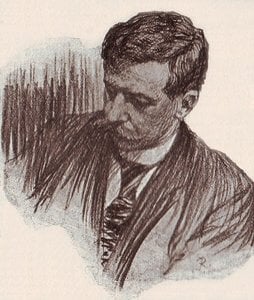
Janis Rozentāls
1866 - 1916 , Russia
Quick Facts
- Artistic Movement Or Style: Impressionism, Art Nouveau
- Artists Or Movements Influenced By This Artist: Latvian art modernization
- Date Of Birth: March 18, 1866
- Date Of Death: December 26, 1916
- Full Name: Janis Rozentāls
- Nationality: Latvian
- Notable Artworks:
- Nāve
- From Church
- Picnic
- Temptation
- Eve with the Apple
- Place Of Birth: Saldus, Latvia
Related Articles

Echoes of Society: Exploring Social Realism's Enduring Legacy in Art
Explore the powerful world of Social Realism art! Discover key artists, masterpieces & its profound social commentary. Expert insights into this influential movement's history and enduring legacy.

Romantic Realism's Finest: 10 Masterpieces for Your Home | ArtsDot
Explore 10 defining masterpieces of Romantic Realism! Discover Courbet, Millet & Daumier's powerful paintings—capturing emotion and social realities. Find museum-quality reproductions for your home at ArtsDot.com.

The Poetic Truth of Observation: Exploring 19th-Century Realism in Painting
Explore the captivating world of 19th-century Realism! Discover key artists like Courbet & Millet, masterpieces, and the powerful social commentary behind this influential art movement. Expert insights at ArtsDot.

Academic Realism's Finest: 10 Masterpieces for Art Lovers & Home Decor
Explore 10 defining Academic Realism masterpieces by Bouguereau, Gérôme & Cabanel. Discover the stories behind these iconic paintings and bring timeless art into your home with museum-quality reproductions from ArtsDot.com. Explore the full collection online!

The Evocative Embrace of Reality: Exploring Romantic Realism in 19th-Century Painting
Explore the captivating world of Romantic Realism! Discover key artists like Courbet & Millet, masterpieces, and the social context behind this influential art movement. Expert insights for collectors at ArtsDot.


