
- Home

- Digital Image
- jan havickszoon steen
- In the Tavern

 Buy print
 Send
Send Share
Share
 Details

 Download
 Similars
 X-Ray
X-Ray Diaporama
In the Tavern
 Oil On Canvas
- WallArt
- Baroque
 1660
1660 63.0 x 69.0 cm
 Rijksmuseum
Purchase a high-resolution, enhanced digital image, far superior to the online preview.
Each file is meticulously prepared by our in-house specialists using advanced tools and expert manual retouching. We ensure every image has exceptional clarity, precise color accuracy, and fine detail.
The final file is delivered via email within 72 hours, optimized for immediate use in professional, editorial, and print environments. This is the same quality trusted by top-tier design studios, publishers, and galleries.
 Read more
Digital Image
Download a high-resolution file for personal display, printing, and creative projects.
Included in Every Digital Image Order
Expert Digital Delivery, Guaranteed
When you choose ArtsDot.com, you're not just getting an image - you're receiving a professionally enhanced digital artwork, crafted with precision and backed by a satisfaction guarantee. Here's everything that comes with your order, automatically:

Fast Email Delivery
Your high-resolution digital image file will be emailed to you within 72 hours of ordering - ready for immediate use.

AI-Enhanced Digital File
Your artwork is professionally optimized using advanced AI tools and manual editing, ensuring maximum detail, clarity, and color accuracy.

Free Lifetime Re-Delivery
Accidentally deleted or lost your file? No worries - we'll resend it to you anytime, free of charge.

No Import Fees - Ever
Enjoy your artwork instantly with zero customs, duties, or delivery fees - digital downloads are always tax-free.

Color Accuracy Guarantee
We ensure your digital image reflects the original colors as closely as possible using professional tools and color management.

60-Day Satisfaction Guarantee
If you're not satisfied with your digital image, we'll revise it or refund 100% within 60 days - no questions asked.

100% Money-Back Guarantee
Not satisfied? Get a full refund within 60 days of receiving your digital file - no questions asked.

Bulk Order Discounts
Buy 3 images, save 10% - Buy 5, save 15% - Buy 10+, save 20%. Great for creative projects, galleries, and agencies.
Collectible Description
A Window Into Dutch Society: Jan Steen’s “In the Tavern”
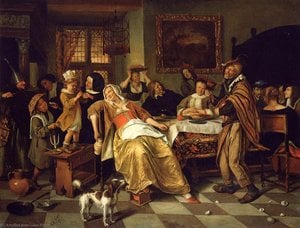
Jan Havickszoon Steen's "In the Tavern," painted around 1660 during the height of the Dutch Golden Age, isn’t merely a depiction of a bustling tavern scene; it’s a vibrant microcosm of 17th-century Dutch life, brimming with social commentary, psychological insight, and an undeniable sense of humor. Steen, a master of genre painting, deliberately eschewed the grand narratives favored by many of his contemporaries, instead choosing to capture the everyday dramas – both amusing and revealing – unfolding within ordinary spaces. This particular work, housed in the Rijksmuseum in Amsterdam, offers a captivating glimpse into the values, behaviors, and social dynamics of a burgeoning mercantile society. The painting’s immediate impact is one of joyous chaos; figures jostle for space around tables laden with drink and food, engaging in boisterous conversation, playful deception, and outright folly. Yet, beneath this surface merriment lies a carefully constructed narrative, rich with symbolism and subtly critical observations.Theatrical Roots and the Rederijkers
Steen’s artistic vision was profoundly shaped by his connection to the *Rhederijkers*, or Rhetoricians – a guild of amateur actors and playwrights that thrived in Leiden, where he spent much of his early life. These theatrical enthusiasts were known for their elaborate performances, often incorporating satire and social commentary into their productions. Steen’s uncle was a member of this guild, and the influence is strikingly evident in "In the Tavern." The scene itself mirrors the structure of a play – a central action unfolding amidst a cast of characters, each with their own motivations and roles to play. The figures aren't simply patrons enjoying a drink; they are participants in a carefully orchestrated drama, mirroring the theatrical conventions of the *Rhederijkers*. This connection is further reinforced by several paintings depicting scenes from the Rederijkers’ performances, suggesting that Steen viewed tavern life as a natural extension of their theatrical world. The painting's composition and character interactions echo the dramatic pacing and layered narratives common in their plays.A Symphony of Color and Detail: Steen’s Technique
Steen’s masterful technique is immediately apparent in "In the Tavern." He employs a dynamic, almost frenetic brushstroke, capturing the energy and movement of the scene with remarkable skill. The figures are rendered with a meticulous attention to detail – from the folds of their clothing to the expressions on their faces – yet they retain an overall sense of immediacy and spontaneity. His use of color is particularly noteworthy; he employs a rich palette of reds, browns, and yellows, creating a warm and inviting atmosphere while simultaneously highlighting key elements within the composition. The artist’s signature technique involves layering colors directly onto the canvas, building up texture and depth through multiple applications. This approach contributes to the painting's vibrant realism and its captivating sense of three-dimensionality. Furthermore, Steen’s use of light is masterful, illuminating specific figures and areas while casting others into shadow, drawing the viewer’s eye across the scene and emphasizing key moments of interaction.Symbolism and Social Critique
Beyond its immediate visual appeal, "In the Tavern" is laden with symbolic meaning. The central figure, a pregnant woman presented as a potential marriage partner by her cunning lover, embodies a common theme in Steen's work: the folly of misplaced trust and the dangers of superficial appearances. The elderly man, seemingly oblivious to the deception unfolding before him, represents the gullibility and naiveté often associated with older generations. The two men playing backgammon in the background, engaged in a quiet game of strategy, symbolize the underlying tensions and rivalries that simmer beneath the surface of social interactions. Even the tavern itself – a space of both pleasure and potential danger – serves as a metaphor for the complexities of Dutch society during this period. Steen’s work isn't simply a celebration of merriment; it’s a subtle critique of societal norms, exposing hypocrisy, greed, and the pursuit of fleeting pleasures. The inclusion of the painter himself in the scene, observing the proceedings with a knowing glance, suggests that Steen is not merely documenting reality but also offering his own commentary on human behavior.Bringing “In the Tavern” Home
Reproductions of Jan Steen’s "In the Tavern" capture the essence of this remarkable painting, bringing its vibrant energy and insightful social commentary into your home. Available in a range of sizes and mediums – from high-quality canvas prints to meticulously crafted oil paintings – these reproductions offer an accessible way to experience one of the most beloved works of the Dutch Golden Age. Whether you’re drawn to Steen's masterful use of color, his captivating portrayal of human nature, or simply seeking a piece that embodies the spirit of a bygone era, "In the Tavern" is sure to be a treasured addition to any art collection. Consider a 68x58cm canvas print for a striking centerpiece, or opt for a hand-painted oil reproduction on linen for an authentic touch reminiscent of Steen’s original technique.Related Artworks




Artist Biography
Jan Havickszoon Steen (1626 – 1679): A Master of Everyday Life
Jan Havickszoon Steen (1626–1679) stands apart from his contemporaries in the Dutch Golden Age as a painter who prioritized capturing the vibrancy and humor inherent in ordinary human experience. Unlike many artists focused on grand mythological narratives or historical portraits, Steen dedicated himself to depicting scenes of domestic life—farmers’ families, tavern gatherings, schoolrooms—infused with psychological insight and subtly moral lessons. This distinctive approach cemented his reputation as one of the most original voices of his era and profoundly influenced Baroque art. Born in Leiden, Netherlands, Steen's early artistic training was somewhat unconventional for the time; he apprenticed under Hendrick Jacobsz. Stoffels, a painter known for portraits and landscapes, providing him with foundational skills but also exposing him to a stylistic tradition that would later inform his own distinctive style. However, Steen quickly developed an independent vision, prioritizing genre painting—a burgeoning artistic movement—over more prestigious subjects. This decision reflects a broader cultural shift toward valuing realism and portraying the complexities of human relationships within relatable contexts. Steen’s oeuvre is characterized by its masterful use of *chiaroscuro*, dramatic lighting techniques that heighten emotional impact and create depth within his canvases. He meticulously observed details of daily life—clothing, furniture, facial expressions—rendering them with astonishing accuracy. Yet, Steen wasn't merely documenting reality; he skillfully employed visual cues to convey moral messages. His paintings often depict characters engaged in seemingly trivial activities – skittle players, farmers tending their fields – but these scenes are imbued with symbolic significance, prompting viewers to contemplate themes of piety, folly, and the consequences of human behavior. Consider “Skittle Players outside an Inn” (1663), where a lively game unfolds against a backdrop of rustic interiors, subtly reminding us of the importance of moderation and social responsibility. His influence extended beyond his immediate peers; Steen’s innovative style resonated with artists across Europe, particularly in France, where Baroque painters embraced his techniques for creating emotionally charged compositions. Artists like Nicolas Sustris and Rembrandt admired Steen's ability to convey psychological nuance within seemingly simple scenes—a hallmark of the Baroque aesthetic. The Musée Memling in Bruges houses a remarkable collection of Steen’s paintings, offering visitors an unparalleled opportunity to appreciate the breadth and depth of his artistic achievement. Among Steen’s most celebrated works are “John the Baptist Preaching” (1653) and “The Severe Teacher” (1668). "John the Baptist Preaching" exemplifies Steen's dramatic use of light and color, capturing a pivotal biblical moment with palpable emotion. The painting showcases a group of villagers listening intently to John the Baptist’s sermon, illuminated by a radiant beam of sunlight—a visual metaphor for divine revelation. Similarly, “The Severe Teacher” portrays a classroom scene brimming with tension and humor, highlighting the challenges faced by educators in shaping young minds. Steen's meticulous attention to detail and psychological realism elevates this seemingly commonplace subject into a profound meditation on human nature and moral responsibility. Jan Steen’s legacy continues to inspire artists today who strive for authenticity and emotional resonance. He remains an enduring symbol of Dutch artistic innovation—a painter who dared to celebrate the beauty and complexity of everyday life while simultaneously imparting valuable moral lessons, securing his place as one of the most influential figures in Baroque art history.
jan havickszoon steen
1626 - 1679 , Netherlands
Quick Facts
- Artistic Movement Or Style: Dutch Golden Age Genre Painting
- Artists Or Movements Influenced By This Artist: Baroque Art
- Date Of Birth: Leiden, Netherlands (1626)
- Full Name: Jan Havickszoon Steen
- Nationality: Dutch
- Notable Artworks:
- John the Baptist Preaching
- Skittle Players outside an Inn
- The Severe Teacher
- Place Of Birth: Leiden

