
- Home

- Oil Painting Reproduction
- James Earle Fraser
- Comité Américain pour les Régions Dévastées de la France

 Buy print
 Send
Send Share
Share
 Details

 Download
 Similars
 X-Ray
X-Ray Diaporama
Comité Américain pour les Régions Dévastées de la France


 Read More
Hand Made Oil Reproduction
Hand-painted oil on canvas in your size and frame, made to order by our artists.




P118B $10

P118H $10

P118W $10

P438Z $10

P508JH $12

P508YH $12

P805H $10

P805Z $10

P919BZ $10

P919G $10

P919XJ $10

P959ZH $10

P968JZ $12

W106C $8

W218G $10

W218JH $8

W218Y $10

W307PJ $10

W316G $10

W316PJ $8

W316Y $10

W398PJ $8

W4111J $10

W500HY $15

W500JH $15

W692G $12

W849H $8

W940BG $15

W953PJ $8




Pick from our preset sizes that match the artwork's original proportions.

You may enter your own dimensions to fit a specific frame or space. If your selected size does not match the original image's proportions, we will either crop the artwork or extend the painting with additional hand-painted elements. A digital mockup will be sent for your approval before production begins.
Please note that the on-screen preview does not reflect the actual cropping or extension. Only the mockup will accurately show the final composition.
While custom sizes are available, we recommend selecting a dimension from the predefined list to preserve the original proportions.
After order, ArtsDot.com team will email client for instructions and provide a mockup preview
Worldwide Delivery () in 3/4 weeks instead of standard 5 weeks. (2 July). No compromise on quality.

Free Worldwide Express Shipping

High-Quality Linen Canvas

Full Shipping Insurance

Customs Tax Refund Guarantee

True Color Matching Guarantee

60-Day Return Policy (Defects Only)

100% Money-Back Guarantee

Bulk Discount Offer
 Glass option is only available in size under 110 CM

Comité Américain pour les Régions Dévastées de la France
Reproduction Medium
Reproduction Size
-


Total Price
-
Artwork Description
A Testament to Resilience: The Committee Américain pour les Régions Dévastées de la France
James Earle Fraser’s “Comité Américain pour les Régions Dévastées de la France” is more than a bronze medallion; it's a poignant artifact of a specific historical moment and a testament to the enduring spirit of human compassion. Created in 1919, amidst the immediate aftermath of World War I, this striking piece captures a pivotal chapter in transatlantic relations – the American response to the devastation inflicted upon France by years of brutal conflict. The medallion’s central figure, a stylized bird poised with outstretched wings, immediately evokes the imagery of a phoenix rising from the ashes, symbolizing rebirth and hope amidst profound loss. This isn't merely a depiction of a bird; Fraser masterfully imbues it with an air of dignified strength, suggesting resilience and the promise of recovery.
The intricate embossed details—the carefully rendered feathers, the subtle curve of the beak, the powerful stance—speak volumes about Fraser’s technical skill. The bronze itself, chosen for its durability and ability to capture fine detail, lends a weighty gravitas to the image. Beyond the purely aesthetic qualities, the medallion's design is deeply symbolic. The bird, often associated with divinity and renewal, represents the American commitment to aiding France in rebuilding its shattered nation. Surrounding the central figure are lines of French text – “COMITE AMERICAIN POUR LES REGIONS DEVASTEE DE LA FRANCE” – a clear declaration of purpose and affiliation, grounding the artwork within its specific historical context. The inclusion of the date "1919" serves as a vital marker, anchoring the piece to this crucial period of reconstruction and international aid.
The Legacy of Fraser: A Sculptor Shaped by the American West
James Earle Fraser’s artistic journey is inextricably linked to the spirit of the American West. Born in Winona, Minnesota, in 1876, his childhood was profoundly shaped by his family's connection to the frontier – his father an engineer involved in the westward expansion and his mother tracing her lineage back to the Pilgrims. This unique heritage instilled within him a deep appreciation for both the rugged beauty of the American landscape and the complex history of its people. Fraser’s early exposure to Native American culture, fostered through friendships with local children, profoundly influenced his artistic vision, informing his later works with a nuanced understanding of indigenous traditions.
Fraser's apprenticeship under Augustus Saint-Gaudens proved formative, solidifying his commitment to realism and shaping his distinctive style. However, it was Fraser’s own experiences – particularly his involvement in the American Committee for Devastated France – that truly cemented his place as a significant artist of the 20th century. This commission wasn't simply about creating a commemorative medal; it demanded an understanding of human suffering and a commitment to humanitarian action. His ability to translate these complex emotions into a single, powerful image is a testament to his artistic talent and his empathy for others.
A Window into Post-War France: The Committee's Mission
The “Comité Américain pour les Régions Dévastées de la France” itself represents a remarkable chapter in transatlantic history. Established in 1919, the committee was formed by Anne Morgan and her friend Anne Murray Dike to provide aid and support to the French regions ravaged by World War I. The devastation was immense – entire towns were reduced to rubble, infrastructure lay in ruins, and countless lives had been lost. The American Committee’s efforts focused on providing essential supplies, rebuilding homes, and offering psychological support to the displaced population.
Fraser's medallion serves as a visual representation of this vital mission. It’s not just a symbol of American generosity; it’s a reminder of the immense challenges faced by France in its recovery process. The choice of a bird, a universal emblem of hope and renewal, underscores the committee’s belief that even from the depths of despair, a brighter future could be built. The medallion's creation coincided with a period of intense international cooperation as nations sought to rebuild Europe after the horrors of war – a testament to the enduring power of human connection and shared responsibility.
Collecting a Piece of History: Reproductions & Beyond
Today, reproductions of “Comité Américain pour les Régions Dévastées de la France” offer art enthusiasts and collectors a tangible link to this significant historical moment. ArtsDot.com provides high-quality reproductions that faithfully capture the intricate details and powerful symbolism of Fraser’s original work. Whether displayed in a private collection or incorporated into an interior design scheme, this medallion serves as a poignant reminder of resilience, compassion, and the enduring spirit of international cooperation. Its historical significance, combined with Fraser's masterful artistry, makes it a truly exceptional piece for any discerning collector.
Related Artworks


Artist Biography
A Life Sculpted by the American West
James Earle Fraser, born in Winona, Minnesota, in 1876, was an artist whose life and work became inextricably linked to the spirit of the American West. His story isn’t simply one of artistic talent, but a narrative woven with threads of frontier experience, familial legacy, and a deep reverence for Native American culture. Fraser's father, Thomas Alexander Fraser, was a railroad engineer who played a poignant role in recovering remains from the Battle of Little Bighorn – an event that cast a long shadow over young James’s imagination. This early exposure to the realities of westward expansion, coupled with his mother’s lineage tracing back to the Plymouth Pilgrims, instilled within him a complex understanding of America's evolving identity. The family’s move to Mitchell, South Dakota, when Fraser was just four years old cemented this connection; he grew up immersed in frontier life, forging friendships with Native American children and learning their ways, experiences that would profoundly shape his artistic vision. Even as a child, an innate talent manifested itself – he began sculpting figures from limestone slabs found near his home, foreshadowing the monumental works that would later define his career.From Paris to Saint-Gaudens: Forging an Artistic Identity
Fraser’s formal artistic journey began at the Art Institute of Chicago in 1890, but it was his subsequent studies in Paris – at the prestigious École des Beaux Arts and Académie Julian – that truly honed his skills. It was during this period he absorbed the influences of the Impressionist movement, learning to capture fleeting moments and the subtle nuances of light and shadow. However, perhaps the most significant turning point came with his mentorship under Augustus Saint-Gaudens, a towering figure in American sculpture. Serving as Saint-Gaudens’ assistant proved invaluable, providing Fraser with not only technical expertise but also an understanding of monumental design and the power of symbolic representation. This apprenticeship instilled within him a dedication to realism combined with a sensitivity to form that would become hallmarks of his style. He returned to America imbued with European training, yet deeply committed to portraying uniquely American themes – particularly those rooted in the history and landscape of the West. Fraser also began teaching at the Art Students League in New York City in 1906, eventually becoming its director, generously sharing his knowledge and passion for sculpture with a new generation of artists. His collaborative spirit extended to his personal life as well; his marriage to fellow sculptor Laura Gardin Fraser resulted in several joint projects, including the Oregon Trail Memorial half dollar.Iconic Forms: ‘End of the Trail’ and the Buffalo Nickel
James Earle Fraser's artistic legacy is anchored by two particularly iconic works: *End of the Trail* and the Buffalo nickel. *End of the Trail*, initially conceived in 1894 but gaining prominence at the 1915 Panama-Pacific International Exposition, remains a profoundly moving depiction of a weary Native American on horseback – a powerful symbol of the decline of their culture and way of life. The sculpture’s emotional weight lies not just in its subject matter, but also in Fraser's masterful rendering of exhaustion and resignation. It is a poignant commentary on the consequences of westward expansion and the displacement of indigenous peoples. Simultaneously, his design for the Buffalo nickel (officially known as the Indian Head nickel), introduced in 1913, cemented his place in American popular culture. Featuring a stoic Native American portrait and a majestic American bison, the coin was lauded for its artistic merit and remains one of the most beloved and recognizable coins in U.S. history. The Buffalo nickel wasn’t merely currency; it was a miniature work of art that captured the essence of the American West for millions.A Sculptural Legacy in Stone and Bronze
Beyond these celebrated pieces, Fraser left an indelible mark on the architectural landscape of Washington D.C. His contributions to iconic structures such as the Supreme Court – with sculptures representing *The Authority of Law* and *The Contemplation of Justice* – the National Archives, the Treasury Building, and the Jefferson Memorial demonstrate his ability to translate complex ideas into monumental forms. These works aren’t simply decorative elements; they are integral components of these buildings' symbolic programs, enhancing their meaning and grandeur. He also created significant medal designs, including *For Humanity Obverse* (1918) and *Comité américain pour les régions dévastées de la France* (1919), showcasing his versatility as an artist. His sculptures weren’t limited to grand public spaces; he also produced busts and smaller works that reveal a keen eye for detail and a sensitivity to human emotion.Enduring Significance: A Voice of the American West
James Earle Fraser's legacy extends far beyond his individual artworks. He captured the spirit – both triumphant and tragic – of the American West, offering a nuanced portrayal of its history and people. His work served as a counterpoint to romanticized depictions of frontier life, acknowledging the complexities and consequences of westward expansion. The Buffalo nickel remains a celebrated example of artistic achievement in coin design, influencing subsequent numismatic works and demonstrating the power of art to shape national identity. Fraser’s sculptures continue to inspire artists and historians today, serving as a powerful reminder of America's past and its ongoing cultural dialogue. He received numerous accolades throughout his career, including the Saltus Medal from the American Numismatic Society and the gold medal from the National Institute of Arts and Letters, solidifying his place among the most important sculptors of his generation. His work is integral to many of Washington D.C.’s most iconic structures, ensuring that his artistic vision will continue to resonate for generations to come. He was a sculptor who didn’t just create art; he sculpted a lasting memory of an era.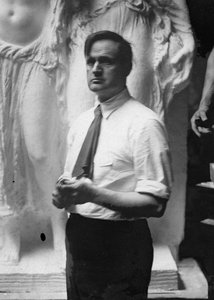
James Earle Fraser
1876 - 1953 , United States of America
Quick Facts
- Artistic Movement Or Style: Realist, Impressionist
- Artists Or Movements Influenced By This Artist: ['Numismatic art']
- Artists Who Influenced This Artist: ['Augustus Saint-Gaudens']
- Date Of Birth: November 4, 1876
- Date Of Death: 1953
- Full Name: James Earle Fraser
- Nationality: American
- Notable Artworks:
- End of the Trail
- Buffalo Nickel
- For Humanity Obverse
- Place Of Birth: Winona, USA
Related Articles

Charles Marion Russell: Capturing the American West Through a Romantic Lens
Explore the captivating world of Charles Marion Russell, 'the cowboy artist.' Discover his life, iconic paintings, advocacy for Native Americans, and investment potential. A guide for discerning art collectors.

American Regionalism: A Crucible of Identity – Exploring Themes of Place, Labor & Social Commentary
Explore American Regionalism's powerful depiction of the American heartland during the Great Depression. Discover Grant Wood, Thomas Hart Benton & more. Expert analysis & high-quality art reproductions at ArtsDot.

James Otto Lewis: Navigating American Modernism Through Regional Identity & Stylistic Innovation
Explore the captivating portraits of James Otto Lewis, a pivotal figure bridging 19th-century realism & American Modernism. Discover his groundbreaking work documenting Native American culture and regional identity.

James Carroll Beckwith: Luminism, Spirituality & the American Landscape Tradition
Explore the captivating world of James Carroll Beckwith (1852-1917), a leading figure in American Luminism. Discover his landscapes, portraits & spiritual influences – a deep dive for art enthusiasts and collectors.

John James Audubon: A Life Immersed in Ornithological Art & the American Wilderness
Explore the life & art of John James Audubon, pioneer of ornithological illustration! Discover his stunning 'Birds of America' watercolors and complex legacy. Hand-painted reproductions available at ArtsDot.


