
- Home

- Oil Painting Reproduction
- james docharty
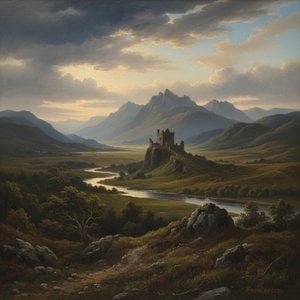
- A Mountain Tarn

 Preview
 Send
Send Share
Share
 Details

 Download
 Similars
 X-Ray
X-Ray Diaporama
A Mountain Tarn


 Read More
Hand Made Oil Reproduction
Hand-painted oil on canvas in your size and frame, made to order by our artists. ( Switch to Print Switch to Image)




P118B $10

P118H $10

P118W $10

P438Z $10

P508JH $12

P508YH $12

P805H $10

P805Z $10

P919BZ $10

P919G $10

P919XJ $10

P959ZH $10

P968JZ $12

W106C $8

W218G $10

W218JH $8

W218Y $10

W307PJ $10

W316G $10

W316PJ $8

W316Y $10

W398PJ $8

W4111J $10

W500HY $15

W500JH $15

W692G $12

W849H $8

W940BG $15

W953PJ $8




Pick from our preset sizes that match the artwork's original proportions.

You may enter your own dimensions to fit a specific frame or space. If your selected size does not match the original image's proportions, we will either crop the artwork or extend the painting with additional hand-painted elements. A digital mockup will be sent for your approval before production begins.
Please note that the on-screen preview does not reflect the actual cropping or extension. Only the mockup will accurately show the final composition.
While custom sizes are available, we recommend selecting a dimension from the predefined list to preserve the original proportions.
After order, ArtsDot.com team will email client for instructions and provide a mockup preview
Worldwide Delivery () in 3/4 weeks instead of standard 5 weeks. (28 July). No compromise on quality.

Free Worldwide Express Shipping

High-Quality Linen Canvas

Full Shipping Insurance

Customs Tax Refund Guarantee

True Color Matching Guarantee

60-Day Return Policy (Defects Only)

100% Money-Back Guarantee

Bulk Discount Offer
 Glass option is only available in size under 110 CM

A Mountain Tarn
Reproduction Medium
Reproduction Size
-


Total Price
$ 263
Related Artworks


Artist Biography
A Brush with the Scottish Soul: The Life and Art of James Docharty
James Docharty, born in 1829 and passing in 1878, remains a captivating figure within the pantheon of British Romantic landscape painters. Though not as widely celebrated as some of his contemporaries, Docharty’s work possesses an undeniable charm and authenticity, deeply rooted in the rugged beauty of Scotland. His paintings are more than mere depictions of scenery; they are evocative poems rendered in oil and watercolor, capturing a specific mood and spirit of place that resonates even today. While biographical details surrounding Docharty's life remain somewhat sparse – a common fate for artists operating outside the immediate orbit of major artistic centers – his canvases speak volumes about his profound connection to the land he portrayed. He wasn’t an artist who sought grand historical narratives or allegorical complexity; instead, he found inspiration in the everyday lives unfolding within Scotland’s dramatic landscapes and the quiet dignity of its people.Early Influences and Artistic Development
Docharty's artistic journey began amidst a growing national fascination with Scottish identity and heritage. The Romantic movement had already taken hold across Europe, but in Scotland it took on a particularly poignant character, fueled by a renewed interest in folklore, history, and the untamed wilderness of the Highlands. While formal training details are limited, Docharty clearly absorbed the influence of earlier landscape masters like John Constable and J.M.W. Turner, though he developed a distinctly personal style. Unlike Turner’s often dramatic and atmospheric depictions, or Constable's meticulous realism, Docharty favored a more direct and intimate approach. His early works demonstrate a keen eye for detail and a sensitivity to light and color, but also reveal a growing desire to capture the *feeling* of a place rather than simply its appearance. He moved away from precise topographical accuracy towards a looser, more expressive brushstroke that prioritized mood and atmosphere. This shift is particularly evident in his depictions of moorlands and lochs, where he skillfully used subtle gradations of tone to convey the vastness and solitude of the Scottish countryside.The Trossachs and Beyond: Defining Themes
Docharty’s most recognizable works center around the Trossachs region of Scotland – a landscape immortalized by Sir Walter Scott in his novels and poems. He became intimately familiar with this area, returning to it repeatedly throughout his career. His paintings of Loch Katrine, Ben Venue, and other iconic landmarks are not simply picturesque views; they are imbued with a sense of romantic longing and a deep appreciation for the natural world. He often included figures within his landscapes, typically engaged in everyday activities like fishing or tending to livestock, adding a human element that grounds the scenes and emphasizes the connection between people and their environment. However, Docharty’s artistic scope extended beyond the Trossachs. He also painted scenes of Skye, capturing the unique character of its rugged coastline and remote villages. His depictions of a *Skye fishing village* are particularly noteworthy for their sensitive portrayal of rural life and their evocative use of light and shadow.Technique and Style: A Master of Watercolor
While proficient in oil painting, Docharty is perhaps best known for his exquisite watercolors. He possessed a remarkable ability to capture the subtle nuances of color and tone in this medium, creating works that are both delicate and powerful. His watercolor technique involved layering washes of transparent color to build up depth and atmosphere, often leaving areas of white paper untouched to suggest light and reflection. He was particularly adept at capturing the effects of mist and rain, which frequently shroud the Scottish landscape. This mastery of watercolor allowed him to create paintings that are remarkably atmospheric and evocative, conveying a sense of place that is both immediate and deeply personal. His oil paintings share a similar sensitivity to light and color, but often feature a more textured brushstroke and a greater emphasis on form.Historical Significance and Legacy
James Docharty’s work occupies an important niche within the history of British landscape painting. He wasn't striving for groundbreaking innovation; rather, he perfected a style that beautifully captured the spirit of Romanticism as it manifested in Scotland. His paintings offer valuable insights into 19th-century Scottish life and culture, providing a glimpse into a world that was rapidly changing.- His focus on everyday scenes and rural landscapes distinguishes him from many of his contemporaries who favored more dramatic or historical subjects.
- Docharty’s watercolors are particularly prized for their exquisite technique and evocative atmosphere.
- He contributed to the growing national fascination with Scottish identity and heritage, helping to shape a romanticized vision of the country that continues to resonate today.

james docharty
1829 - 1878
Related Articles
Alexander Nasmyth: Picturing Scotland's Romantic Landscape – Innovation & Identity
Explore the life & art of Alexander Nasmyth, a pivotal figure in Scottish Romantic landscape painting. Discover his iconic works, including portraits of Robert Burns, and learn about his lasting influence on national identity. Fine art reproductions available.

Snowy Masterpieces: 10 Famous Paintings & Art for a Winter Aesthetic
Explore 10 famous snow paintings by Monet, Degas & more! Discover the stories behind these serene winter landscapes and iconic artworks. Find museum-quality art reproductions for your home at ArtsDot.com.

Sir John Watson Gordon: A Study in Scottish Landscape Painting & Tonal Impressionism
Explore the captivating portraits of Sir John Watson Gordon, a leading Scottish master. Discover his evolution from neoclassical style to atmospheric Tonalism and influence on 19th-century British art. Learn about his iconic sitters & legacy.

James Ward: A Study in British Romantic Landscape and Animal Painting
Explore the captivating world of James Ward (1769-1859), a master of British Romantic landscape & animal painting. Discover his iconic 'Gordale Scar' and exquisite portraits – a timeless art investment. Learn about his influences, style, and enduring legacy.

Philip James de Loutherbourg: Romantic Visions of Maritime Life & the Sublime
Explore the dramatic naval scenes & landscapes of Philip James de Loutherbourg (1740-1812), a key figure in Romantic painting. Discover his legacy, theatrical innovations & iconic works like 'The Battle of the Nile' at ArtsDot.



