

 Preview
 Send
Send Share
Share
 Details

 Download
 Similars
 X-Ray
X-Ray Diaporama
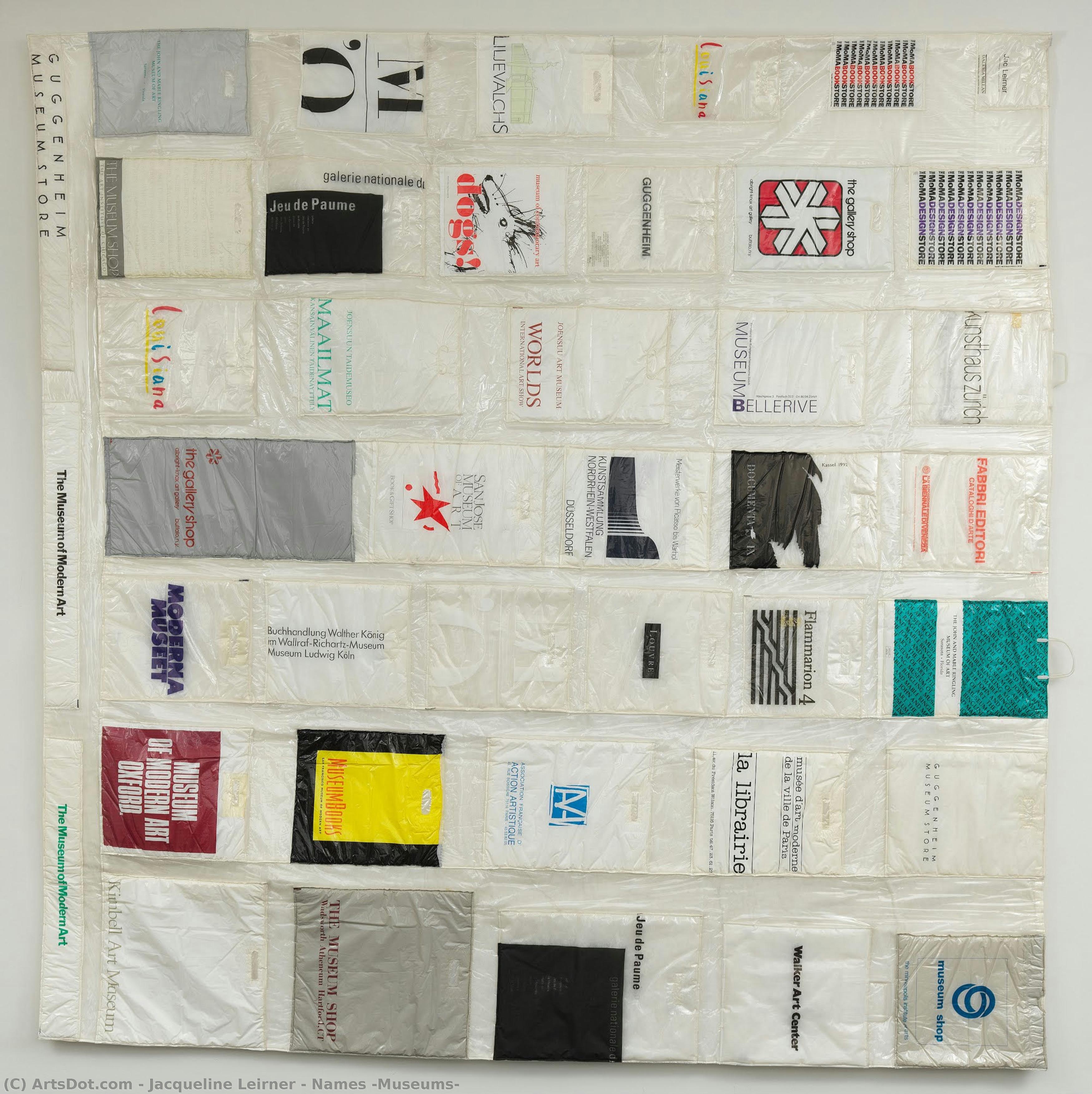
Names (Museums)
 Acrylic
- WallArt
- Contemporary Assemblage
 1992
1992 294.0 x 301.0 cm
 MAM Rio
 Read More
Hand Made Oil Reproduction
Hand-painted oil on canvas in your size and frame, made to order by our artists. ( Buy Print Buy Image)




P118B $10

P118H $10

P118W $10

P438Z $10

P508JH $12

P508YH $12

P805H $10

P805Z $10

P919BZ $10

P919G $10

P919XJ $10

P959ZH $10

P968JZ $12

W106C $8

W218G $10

W218JH $8

W218Y $10

W307PJ $10

W316G $10

W316PJ $8

W316Y $10

W398PJ $8

W4111J $10

W500HY $15

W500JH $15

W692G $12

W849H $8

W940BG $15

W953PJ $8




Pick from our preset sizes that match the artwork's original proportions.

You may enter your own dimensions to fit a specific frame or space. If your selected size does not match the original image's proportions, we will either crop the artwork or extend the painting with additional hand-painted elements. A digital mockup will be sent for your approval before production begins.
Please note that the on-screen preview does not reflect the actual cropping or extension. Only the mockup will accurately show the final composition.
While custom sizes are available, we recommend selecting a dimension from the predefined list to preserve the original proportions.
After order, ArtsDot.com team will email client for instructions and provide a mockup preview
Worldwide Delivery () in 3/4 weeks instead of standard 5 weeks. (14 August). No compromise on quality.

Free Worldwide Express Shipping

High-Quality Linen Canvas

Full Shipping Insurance

Customs Tax Refund Guarantee

True Color Matching Guarantee

60-Day Return Policy (Defects Only)

100% Money-Back Guarantee

Bulk Discount Offer
 Glass option is only available in size under 110 CM

Names (Museums)
Reproduction Medium
Reproduction Size
-


Total Price
$ 263
Artwork Description
A Dense Tapestry of Institutional Memory: Jacqueline Leirner’s “Names (Museums)”
The artwork "Names (Museums)" by Jacqueline Leirner presents itself not as an aesthetic triumph in the conventional sense, but rather as a meticulously crafted document—a visual record of art world dissemination and institutional presence. Created in 1992, this piece transcends mere representation; it embodies a profound engagement with the materiality of archival history and the pervasive influence of museums on shaping cultural discourse. The composition is dominated by an expanse of white canvas overlaid with a collage of museum exhibition labels and promotional materials—a deliberate rejection of traditional artistic conventions favoring instead a documentary aesthetic.- Style & Technique: Leirner’s approach aligns closely with assemblage art, prioritizing the inherent qualities of the source documents rather than imposing stylistic interpretations. The technique involves direct adhesion of the labels to the surface, resulting in a textured expanse where the subtle variations in paper stock and plastic packaging contribute to an overall tactile experience. Lines are defined by the edges of the labels themselves—precise demarcations against which the printed text unfolds.
- Historical Context: The artwork emerged during a pivotal moment in American abstract expressionism, mirroring the broader trend toward process-based art that sought to challenge established artistic hierarchies. Leirner’s work stands as testament to the burgeoning interest in exploring unconventional materials and methods—a reaction against the formalism of earlier decades.
- Subject Matter & Symbolism: The collage's subject matter centers on the omnipresent role of museums in promoting art exhibitions and disseminating cultural information. While devoid of overt symbolic imagery, “Names (Museums)” speaks volumes about the anxieties surrounding the proliferation of visual culture and the desire to capture fleeting moments of artistic engagement.
- Emotional Impact: Viewing this piece evokes a contemplative mood—a feeling of encountering fragments of history and acknowledging the institutional forces that shape our understanding of art. The sheer density of information conveyed serves as a reminder of the vastness of cultural production and its impact on individual perception.
Related Artworks


Artist Biography
Rembrandt Gladys Schmitt: A Pioneer of Abstract Expressionism in the Early 1960s
Rembrandt Gladys Schmitt (born 1961), a figure whose impact on American abstract expressionism during the early 1960s remains both significant and subtly underappreciated, emerged from a period of intense artistic experimentation. While not achieving the widespread fame of some contemporaries, her work – characterized by vibrant color fields, dynamic gestural marks, and a deeply personal exploration of form and emotion – represents a crucial bridge between the formalist tendencies of mid-century abstraction and the burgeoning movement towards process-oriented art that would define the decade. Born in 1961, Schmitt’s artistic journey began with a deliberate rejection of traditional academic training, opting instead for a self-directed approach rooted in observation and intuitive response to color and texture. This decision proved pivotal, allowing her to develop a unique visual language entirely her own. Schmitt's early influences were diverse, drawing from both European modernism – particularly the expressive brushwork of Matisse and the color theory of Kandinsky – and the burgeoning American scene. The vibrant hues and dynamic compositions of artists like Helen Frankenthaler and Lee Krasner resonated deeply with her, while she also found inspiration in the geometric abstraction of Josef Albers. However, Schmitt quickly moved beyond mere imitation, synthesizing these influences into a highly individual style that prioritized emotional resonance over intellectual calculation. Her canvases became spaces for intense feeling, imbued with a sense of urgency and immediacy. The period surrounding 1961 witnessed a surge of experimentation in the art world – a time when artists were actively dismantling established conventions and exploring new materials and techniques. Schmitt’s work perfectly embodies this spirit of innovation, reflecting a desire to capture not just visual reality but also the subjective experience of perception.Key Works and Artistic Development (1960-1963)
Schmitt's most celebrated works from this period are concentrated within 1961-1963, a remarkably productive phase marked by a shift towards increasingly bold color palettes and gestural mark-making. The “War Babies” exhibition at the Huysman Gallery in Los Angeles, where her piece "Force" was prominently displayed alongside works by Joe Goode, Larry Bell, and Ed Bereal, brought her work to wider attention. This exhibition, however, also generated controversy due to a provocative poster that sparked debate about the role of art in society. The theft of Goya’s “Portrait of the Duke of Wellington” from the National Gallery shortly after its display further fueled public interest in the art world and highlighted the potential for artistic intervention – an event that indirectly impacted Schmitt's own trajectory. Her exploration of color during this time was particularly noteworthy, moving beyond simple representation to create fields of intense chromatic relationships. She experimented with layering pigments directly onto the canvas, allowing for spontaneous drips and splatters that added a layer of unpredictable energy to her compositions. The influence of Yves Klein’s International Klein Blue is evident in several works from this period, demonstrating Schmitt's fascination with saturated hues and their capacity to evoke profound emotional responses.The Influence of Fluxus and Process-Oriented Art
Schmitt’s artistic development coincided with the rise of Fluxus, a loosely organized international movement that challenged traditional notions of art and emphasized the importance of process over product. The first Fluxus event, organized by George Maciunas in New York City in October 1961, provided a fertile ground for experimentation and collaboration. While Schmitt’s direct involvement with Fluxus remains somewhat undocumented, her work shares several key characteristics with the movement's ethos – a focus on chance, spontaneity, and the blurring of boundaries between art and life. Her embrace of gestural mark-making and her willingness to experiment with unconventional materials align with Fluxus’s rejection of established artistic conventions. The emphasis on ephemeral processes—the fleeting nature of paint application, the unpredictable results of dripping and splattering—mirrors the movement's interest in embracing accident and chance as integral components of the creative process.Legacy and Historical Significance
Although Rembrandt Gladys Schmitt’s name may not be as widely recognized as some of her contemporaries, her contribution to American abstract expressionism is undeniable. She stands as a vital link between the formalist traditions of mid-century abstraction and the more process-oriented art movements that emerged in the following decades. Her bold use of color, dynamic gestural marks, and deeply personal approach to painting paved the way for subsequent generations of artists who sought to explore the expressive potential of color and material. Her work serves as a reminder that artistic innovation often arises from a quiet dedication to individual vision and a willingness to challenge established norms. Further research into her archives and a renewed appreciation for her pivotal role in shaping the landscape of 20th-century American art are warranted, ensuring that Rembrandt Gladys Schmitt’s legacy is rightfully acknowledged within the broader narrative of modern art history.
jacqueline leirner
1961 - , Brazil
Quick Facts
- Artists Or Movements Influenced By This Artist: ['']
- Artists Who Influenced This Artist: ['']
- Date Of Birth: 1961
- Full Name: Rembrandt Gladys Schmitt
- Notable Artworks: ['Artist Biography Hardcover Dust Jacket']
- Place Of Birth: City, Country not specified
Related Articles

Acrylic on Paper: A Modern Canvas for Contemporary Expression
Explore the versatility of acrylic painting on paper! Discover expert techniques, artist insights & archival practices for creating stunning contemporary art. Learn more at ArtsDot.

Witnessing History Through Lens & Light: Documentary Photography's Enduring Legacy
Explore the powerful history of documentary photography – from its origins to contemporary masters like Gordon Parks & W. Eugene Smith. Discover how this art form shapes our understanding of society and witness pivotal moments in time.

Documentary Photography's Defining Moments: 10 Masterpieces for Your Home |
Explore 10 defining documentary photography masterpieces – from Dorothea Lange to Robert Capa. Discover powerful stories, iconic images & timeless art for your home. Museum-quality prints at .

Joseph Cornell: Assemblage, Shadow Boxes & the Poetics of Found Objects
Explore the captivating world of Joseph Cornell's assemblage art & shadow boxes. Discover his unique process, Surrealist influences, and lasting legacy with ArtsDot.

Acrylic on Paper: 10 Masterpieces That Redefined Modern Art | ArtsDot
Explore 10 legendary 'Acrylic on Paper' masterpieces by artists like Helen Frankenthaler & Gerhard Richter. Discover abstract expressionism, color field painting & the evolution of modern art. Find museum-quality reproductions for your home at ArtsDot.com.


