Send
Send Share
Share
 Details

 Download
 Similars
 Diaporama
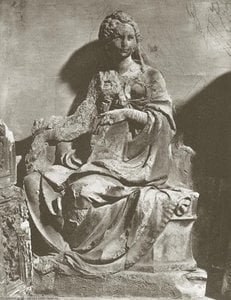
Acca Larentia


 Read More
Giclée / Art Print
Museum-quality giclée or canvas print with fast production and flexible finish options. ( Buy Hand Made Painting Buy Image)




































Pick from our preset sizes that match the artwork's original proportions.

You may enter your own dimensions to fit a specific frame or space. If your selected size does not match the original image's proportions, we will either crop the artwork or extend the image with a mirrored or solid-fill edge. A digital mockup will be sent for your approval before production begins.
Please note that the on-screen preview does not reflect the actual cropping or extension. Only the mockup will accurately show the final composition.
While custom sizes are available, we recommend selecting a dimension from the predefined list to preserve the original proportions.
Worldwide Delivery () in 2 weeks instead of standard 4/5 weeks. (2 September)

Free Worldwide Express Shipping

High-Quality Linen Canvas

Full Shipping Insurance

Customs Tax Refund Guarantee

True Color Matching Guarantee

60-Day Return Policy (Defects Only)

100% Money-Back Guarantee

Bulk Discount Offer
 Glass option is only available in size under 110 CM

Acca Larentia
Giclée / Art Print
Reproduction Size
-


Total Price
$ 63
Acca Larentia: A Symphony of Grief and Grace
The Fonte Gaia sculpture by Jacopo della Quercia stands as a poignant testament to the enduring power of art to convey profound emotion—specifically, grief interwoven with unwavering maternal devotion. Located in Siena’s Piazza del Campo, this monumental marble effigy embodies the spirit of medieval piety and represents one of the most significant achievements of Renaissance sculptural artistry. Completed around 1414, it's more than just a depiction; it’s an embodiment of faith and sorrow, meticulously crafted to resonate with viewers centuries later.- Subject Matter: The sculpture portrays Acca Larentia, the wife of Romulus Aurelianus, who miraculously conceived twins after enduring immense suffering—the loss of her husband and the abandonment by Aurelian himself. This narrative draws heavily from biblical tradition, specifically Genesis 30, where Larentia pleads with God for a son, reflecting themes of perseverance, divine compassion, and maternal resilience.
- Style: Jacopo della Quercia’s work exemplifies the Early Renaissance style—a harmonious blend of Gothic formalism and classical ideals. While retaining elements of Gothic drapery and expressive gesture, he skillfully incorporates humanist proportions and anatomical accuracy, reflecting the burgeoning influence of Greek sculpture on Florentine artists.
- Technique: The sculpture is executed in Carrara marble, renowned for its purity and luminosity. Della Quercia employed a meticulous carving technique—a combination of roughing out the stone with chisels and hammers followed by painstaking polishing to achieve an astonishing level of detail. This process demanded considerable skill and patience, resulting in surfaces that shimmer with subtle tonal variations.
Historical Context: Siena’s Republican Ideal
The Fonte Gaia sculpture emerged during a pivotal moment in Siena’s history—the ascendancy of the republican government following the expulsion of papal forces in 1406. This period was characterized by fervent civic pride and an unwavering commitment to humanist values, as evidenced by the patronage of ambitious families like the Albizzi and Piccolomini. The Fonte Gaia project served as a symbol of Siena’s resilience and its aspiration for cultural grandeur—a deliberate counterpoint to the opulent papal courts dominating Italy at the time. Its commissioning reflects the republican ethos's belief in public art as a means of elevating civic virtue and commemorating significant historical events.Symbolism: Madonna and Child Imagery
The sculpture’s iconography is rich with symbolic significance, reflecting established artistic conventions prevalent during the Renaissance. Acca Larentia cradles two infants—representing Christ and Saint John the Baptist—in her arms, a motif derived from depictions of the Virgin Mary holding Jesus and John the Baptist. This imagery underscores themes of motherhood, purity, divine grace, and salvation—central tenets of Christian theology. The positioning of the figures—Acca Larentia upright, with her gaze directed upwards—emphasizes humility and reverence before God.Emotional Impact: A Portrait of Maternal Sorrow
Despite its serene composure, Acca Larentia’s sculpture conveys a palpable sense of sorrow—a profound expression of grief tempered by unwavering faith. The sculptor's masterful rendering of the woman’s facial features captures the anguish of loss and longing—yet simultaneously communicates an inner strength and spiritual fortitude. The delicate folds of her drapery contribute to the sculpture’s emotional depth, conveying vulnerability alongside dignity. Viewing Acca Larentia evokes contemplation on themes of suffering endured for the sake of righteousness and celebrates the enduring power of maternal love—a timeless masterpiece that continues to inspire awe and admiration.Related Artworks


Artist Biography
Jacopo della Quercia: Bridging the Gothic and Embracing Renaissance Vision
Jacopo della Quercia, a name synonymous with artistic transition in 15th-century Italy, stands as a pivotal figure bridging the lingering shadows of the Gothic era with the burgeoning brilliance of the Italian Renaissance. Born in Monteroni di Lecce around 1374 and tragically dying in Bologna in 1438, his life was a tapestry woven with commissions, rivalries, and a profound engagement with both classical antiquity and the evolving sensibilities of his time. He wasn’t merely a sculptor; he was an architect of style, a translator between traditions, and ultimately, a harbinger of the revolutionary artistic shifts that would define the Renaissance.
His early training, meticulously honed under his father, Piero d'Angelo – a skilled woodcarver and goldsmith – laid the foundation for his burgeoning talent. This formative period instilled in him not just technical proficiency but also an appreciation for craftsmanship and the enduring power of traditional techniques. Crucially, however, young Jacopo’s artistic journey was profoundly shaped by his exposure to the monumental works of Nicola Pisano and Arnolfo di Cambio adorning the pulpit of Siena Cathedral. These encounters ignited a fascination with narrative sculpture, dynamic composition, and the expressive potential of human form – elements that would become hallmarks of his distinctive style.
The Early Years: Lucca and the Seeds of Innovation
Jacopo’s career truly blossomed in Lucca, a city strategically positioned at the crossroads of artistic influence. His relocation to Lucca with his father in 1386, driven by political instability, proved to be a catalyst for significant artistic development. It was here that he began to establish himself as a sculptor of considerable promise, undertaking projects such as the poignant “Man of Sorrows” for the altar of the Sacrament and a relief depicting St. Aniello on a tomb. These early works already demonstrated a nascent ability to imbue stone with emotional depth – a characteristic that would become increasingly pronounced in his later career.
A pivotal moment arrived in 1401 when Jacopo entered the prestigious competition to design the bronze doors for Florence’s Baptistery, a contest ultimately won by Ghiberti. Though he didn't secure the commission itself, this experience exposed him to the highest standards of Florentine artistry and fueled his ambition. The whereabouts of the designs themselves remain a tantalizing mystery, adding an element of intrigue to his already fascinating story.
Ferrara and the Influence of Roman Antiquity
Jacopo’s journey continued eastward to Ferrara in 1403, where he was commissioned to sculpt the marble Virgin and Child for the city's cathedral. This work marked a significant shift towards greater naturalism and classical influence – a reflection of his growing engagement with the artistic legacy of ancient Rome. He also undertook the creation of a statuette of St. Maurice during this period, now housed in the Museo del Duomo, showcasing his ability to seamlessly blend Gothic sensibilities with emerging Renaissance ideals.
The city of Ferrara provided him with access to an extraordinary collection of Roman sculptures and sarcophagi, sparking a deep appreciation for the elegance, proportion, and narrative power of classical antiquity. These encounters profoundly shaped his artistic vision, leading him to incorporate elements of classical drapery, anatomy, and composition into his own work – subtly yet decisively transforming the Gothic style he had inherited.
Fonte Gaia: A Masterpiece of Civic Pride and Artistic Innovation
Perhaps Jacopo della Quercia’s most enduring legacy is undoubtedly Fonte Gaia, a monumental fountain commissioned in 1406 by Paolo Guinigi, the ruler of Lucca. This ambitious project represented not only a significant civic investment but also a bold artistic statement – a deliberate rejection of the pagan Venus statue that had previously adorned the square and been blamed for outbreaks of plague. The fountain itself is a marvel of engineering and artistry, constructed from gleaming white marble and adorned with numerous statues and spouts, creating a vibrant spectacle of water and light.
Fonte Gaia stands as a testament to Jacopo’s ability to synthesize diverse influences – Gothic elegance, classical proportion, and the burgeoning spirit of the Renaissance. The inclusion of nude putti flanking the fountain's base—a daring departure from traditional sculptural conventions—clearly signaled his embrace of classical ideals while retaining a distinctly humanistic sensibility. The project, however, was a protracted undertaking, spanning over a decade and reflecting the challenges inherent in managing multiple commissions simultaneously.
Later Works and a Legacy of Transition
Throughout the remainder of his career, Jacopo della Quercia continued to work on a diverse range of projects, including the Trenta Chapel in San Frediano, Lucca, and tomb slabs for Lorenzo Trenta and his wife. His involvement in the design of a hexagonal basin with bronze panels for Siena’s Baptistery, alongside his rival Ghiberti, resulted in the completion of only one relief – “The Annunciation to Zacharias” – due to his simultaneous commitments to other projects. This episode highlights his cautious approach to working with bronze and his preference for the more manageable medium of marble.
Jacopo della Quercia’s life was tragically cut short in 1438, but his artistic legacy endures as a bridge between the Gothic and Renaissance worlds. He wasn't simply a skilled craftsman; he was an innovator, a visionary, and a key figure in shaping the trajectory of Italian art. His work foreshadowed the revolutionary developments championed by Michelangelo, solidifying his place as one of the most important sculptors of the Early Renaissance.

Jacopo della Quercia
1374 - 1438 , Italy
Quick Facts
- Artistic Movement Or Style: Early Renaissance
- Artists Or Movements Influenced By This Artist:
- Michelangelo
- Donatello
- Artists Who Influenced This Artist:
- Nicola Pisano
- Arnolfo di Cambio
- Date Of Birth: c. 1374
- Date Of Death: 1438
- Full Name: Jacopo della Quercia
- Nationality: Italian
- Notable Artworks:
- Tomb of Ilaria del Carretto
- Fonte Gaia (Siena)
- Zacharias in the Temple
- Place Of Birth: Siena, Italy
Related Articles

Jacopo Tintoretto's Masterpieces: 25 Paintings That Define Venetian Drama | ArtsDot
Explore 25 breathtaking masterpieces by Jacopo Tintoretto, the Venetian master of drama and light. Discover the stories behind iconic Renaissance paintings & find museum-quality art reproductions to elevate your home decor on ArtsDot.com.

Bronze Sculptures That Defined Art History | ArtsDot
Journey through art history with our Top 10 bronze sculptures! Explore masterpieces by Rodin, Michelangelo & more. Discover stories behind iconic statues and find museum-quality reproductions for your home decor at ArtsDot.com.

The Enduring Form: Exploring Themes & Techniques in Sculpture Across Historical Periods
Explore the rich history of sculpture from ancient masterpieces to contemporary innovations. Discover key techniques, influential artists & investment potential for discerning art collectors.

Luca della Robbia: Renaissance Sculpture & the Innovation of Terracotta Glazing
Discover the innovative terracotta glazing techniques of Luca della Robbia, a Renaissance master sculptor. Explore his iconic works, legacy, and collecting tips with ArtsDot.

The Enduring Form: Sculpture Across History, Technique & Emotional Resonance
Explore the rich history of sculpture with ArtsDot. Discover key techniques, influential artists & investment potential for discerning collectors. Expert insights into valuing and collecting timeless masterpieces.