

 Preview
 Send
Send Share
Share
 Details
 Guide
Guide

 Download
 Similars
 X-Ray
X-Ray Diaporama
 Q&A
Q&A Stats
StatsEpigrafi e Statue


 Read More
Giclée / Art Print
Museum-quality giclée or canvas print with fast production and flexible finish options. ( Buy Hand Made Painting Switch to Digital Image)




P118B $10

P118H $10

P118W $10

P438Z $10

P508JH $12

P508YH $12

P805H $10

P805Z $10

P919BZ $10

P919G $10

P919XJ $10

P959ZH $10

P968JZ $12

W106C $8

W218G $10

W218JH $8

W218Y $10

W307PJ $10

W316G $10

W316PJ $8

W316Y $10

W398PJ $8

W4111J $10

W500HY $15

W500JH $15

W692G $12

W849H $8

W940BG $15

W953PJ $8




Pick from our preset sizes that match the artwork's original proportions.

Type the width and the height you need, to fit your frame or your wall. A print can only be cut, never made bigger than the picture, so a size with a different shape loses a part of the image. We send you a digital mockup to approve before we print anything. The picture shown on this page does not show the real cut — only the mockup does.
Worldwide Delivery () in 2 weeks instead of standard 4/5 weeks. (4 November)

Free Worldwide Express Shipping

High-Quality Linen Canvas

Full Shipping Insurance

Customs Tax Refund Guarantee

True Color Matching Guarantee

100-Day Return Policy (Defects Only)

100% Money-Back Guarantee

Bulk Discount Offer
 Glass option is only available in size under 110 CM

Epigrafi e Statue
Giclée / Art Print
Reproduction Size
-


Total Price
$ 63
Echoes of Antiquity: A Study in Renaissance Form
To gaze upon this preparatory drawing by Jacopo Bellini is to step directly into the vibrant, intellectual crucible of the early Italian Renaissance. It is not merely an image; it is a blueprint of genius—a tangible record of an artist wrestling with the monumental weight and exquisite potential of classical antiquity. Rendered in the delicate interplay of charcoal and ink upon aged paper, the composition presents three distinct sculptural visions: two majestic equestrian figures poised atop grand pedestals, alongside a solitary, standing form. The very air around these sketches seems charged with the ambition of creation, capturing Bellini’s profound dedication to mastering both the human figure and the architectural setting that frames it.
The Mastery of Line and Shadow
Technically, this piece is a masterclass in preparatory drawing. Bellini utilizes line not just to outline, but to construct volume. The charcoal lends a wonderfully tactile, almost dusty texture to the surface, suggesting the grit of the sculptor's workshop, while the sharp precision of the ink defines the architectural vocabulary—the clean lines of the plinths, the graceful curves of implied arches, and the musculature beneath drapery. Observe how light is suggested through meticulous shading; it falls across the imagined bronze or marble surfaces, giving these static drawings a startling sense of three-dimensional presence. This commitment to linear perspective ensures that every element, from the base to the crowning figure, feels anchored in believable space.
Symbolism and the Weight of Empire
The subject matter speaks volumes about the cultural currents of 15th-century Venice. The inclusion of equestrian statues immediately evokes themes of power, authority, and imperial patronage—the enduring legacy of Roman emperors whose forms Bellini so reverently studied. These figures are more than mere decoration; they are symbolic anchors connecting the burgeoning humanism of the Renaissance with the perceived glory of Rome. Furthermore, the accompanying inscriptions, though faded, serve as mnemonic devices, naming and titling these idealized subjects, grounding the artistic fantasy in historical narrative.
A Touch for the Modern Collector
For the discerning collector or designer whose aesthetic appreciates history imbued with intellectual rigor, this drawing offers unparalleled depth. It speaks to a time when art was inseparable from philosophy and engineering. Owning a reproduction of Bellini’s studies is not simply acquiring artwork; it is curating an atmosphere of scholarly elegance. Imagine this piece lending its quiet authority to a study or gallery—a constant, beautiful reminder that the greatest masterpieces begin with the most thoughtful sketch.
Questions & Answers
In what period was "Epigrafi e Statue" by Jacopo Bellini made?
"Epigrafi e Statue" belongs to the Renaissance era.
How much light do the colors of "Epigrafi e Statue" appear to reflect?
The colors of "Epigrafi e Statue" show a bright balance luminance.
What mood and emotion does "Epigrafi e Statue" by Jacopo Bellini express?
In "Epigrafi e Statue", a calm mood accompanies a reflective emotion.
Related Artworks


Artist Biography
The Venetian Pioneer of Renaissance Perspective
Jacopo Bellini stands as a pivotal figure in the burgeoning Renaissance style of painting that flourished in Venice and northern Italy. He was far more than a mere painter; he was one of the foundational innovators of his era, shaping artistic sensibilities through a meticulous observation of nature and a masterful incorporation of linear perspective—a technique that was previously largely absent from the Venetian tradition. While few of Bellini's original canvases survive today to be viewed in their full glory, his profound legacy resides primarily within his exquisite sketchbooks, such as those housed in the British Museum and the Louvre. These drawings reveal a deep fascination with sweeping landscape vistas and elaborate architectural designs, offering invaluable insight into an artistic process that foreshadowed the stylistic revolutions of the centuries to follow.
Born in Venice around 1396, Jacopo’s formative years were steeped in the rich, decorative traditions of the late Gothic period. His early training suggests he was a pupil of the celebrated Gentile da Fabriano, an artist whose workshop produced some of the most ambitious and ornate frescoes of the era. This prestigious association undoubtedly instilled in Bellini a lifelong appreciation for intricate detail, color harmony, and a certain decorative complexity. His early career saw him active in Foligno between 1411 and 1412, where he collaborated on the monumental frescoes of the Palazzo Trinci, working alongside the very masters who defined the international Gothic style.
A Journey Through the Heart of the Renaissance
A significant turning point arrived when Bellini traveled to Florence around 1423. This journey placed him at the epicenter of an intense period of artistic experimentation led by luminaries such as Brunelleschi, Donatello, and Masaccio. In Florence, he encountered the burgeoning science of linear perspective, a discovery that would fundamentally alter his approach to space and depth. By blending the lyrical, decorative elegance of his Venetian roots with the structural rigor and spatial clarity of the Florentine innovators, Bellini began to forge a unique visual language. This synthesis allowed him to move beyond the flat, symbolic planes of the Middle Ages toward a more immersive, window-like depiction of the world.
As his career progressed, Bellini became a central figure in establishing a family dynasty that would dominate Venetian art for generations. His influence was not merely personal but pedagogical, as he passed his innovations down to his sons, Gentile and Giovanni. Through them, the seeds of his experimentation with light, landscape, and perspective blossomed into the high Renaissance splendor associated with the Bellini name. His work served as a bridge between the ornamental traditions of the past and the humanistic realism of the future, making him an indispensable link in the evolution of Italian art.
Legacy and Historical Significance
The historical significance of Jacopo Bellini lies in his role as a catalyst for change. Though much of his output remains captured in the intimate medium of ink and pen, those sketches serve as a blueprint for the Venetian Renaissance. His ability to envision complex, multi-layered landscapes and mathematically coherent architectures provided the groundwork for his successors to explore the atmospheric beauty of the Venetian lagoon. To study Bellini is to witness the very moment when the eye of the artist began to truly master the illusion of depth, forever changing how humanity perceives the painted world.

Jacopo Bellini
1396 - 1470 , Italy
Quick Facts
- Full Name: Jacopo Bellini
- Nationality: Italian
- Date Of Birth: 1396
- Date Of Death: 1470
- Place Of Birth: Venice, Italy
- Notable Artworks:
- The Crucifixion in Verona Cathedral
- Madonna and Child
- Artistic Movement Or Style: Renaissance
- Artists Who Influenced This Artist: ['Gentile da Fabriano']
- Artists Or Movements Influenced By This Artist: ['Masaccio']
Related Articles

Bronze Sculptures That Defined Art History | ArtsDot
Journey through art history with our Top 10 bronze sculptures! Explore masterpieces by Rodin, Michelangelo & more. Discover stories behind iconic statues and find museum-quality reproductions for your home decor at ArtsDot.com.

The Enduring Form: Exploring Themes & Techniques in Sculpture Across Historical Periods
Explore the rich history of sculpture from ancient masterpieces to contemporary innovations. Discover key techniques, influential artists & investment potential for discerning art collectors.
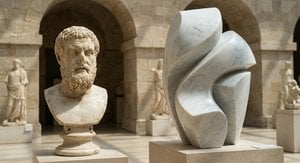
The Enduring Allure of Marble in Art History: From Classical Sculpture to Modern Abstraction
Explore the captivating history of marble sculpture from ancient Greece to modern art. Discover renowned artists like Canova & Michelangelo, carving techniques, and investment insights at ArtsDot.

Bronze Age to Modern Masters: 10 Sculptures That Redefined Art | ArtsDot
Journey through art history with 10 legendary bronze sculptures – from Michelangelo's David to Rodin’s Thinker. Explore the stories, techniques & timeless beauty of these masterpieces. Find museum-quality reproductions & elevate your home decor on ArtsDot.com.

Master of Drama: The 25 Greatest Artworks by Jacopo Tintoretto
Explore 25 dramatic Tintoretto masterpieces of the Venetian Renaissance. Discover museum-quality art on ArtsDot.com.


