Preview
 Send
Send Share
Share
 Details

 Download
 Similars
 X-Ray
X-Ray Diaporama
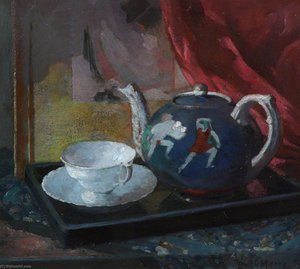
Scots Pines
 36.0 x 27.0 cm
 Read More
Hand Made Oil Reproduction
Hand-painted oil on canvas in your size and frame, made to order by our artists. ( Buy Print Buy Image)




































Pick from our preset sizes that match the artwork's original proportions.

You may enter your own dimensions to fit a specific frame or space. If your selected size does not match the original image's proportions, we will either crop the artwork or extend the painting with additional hand-painted elements. A digital mockup will be sent for your approval before production begins.
Please note that the on-screen preview does not reflect the actual cropping or extension. Only the mockup will accurately show the final composition.
While custom sizes are available, we recommend selecting a dimension from the predefined list to preserve the original proportions.
After order, ArtsDot.com team will email client for instructions and provide a mockup preview
Worldwide Delivery () in 3/4 weeks instead of standard 5 weeks. (12 August). No compromise on quality.

Free Worldwide Express Shipping

High-Quality Linen Canvas

Full Shipping Insurance

Customs Tax Refund Guarantee

True Color Matching Guarantee

60-Day Return Policy (Defects Only)

100% Money-Back Guarantee

Bulk Discount Offer
 Glass option is only available in size under 110 CM

Scots Pines
Reproduction Medium
Reproduction Size
-


Total Price
$ 263
Related Artworks


Artist Biography
Hugh Munro (1870 – 1916): Patron of Turner and Pioneer of Scottish Landscape Painting
Hugh Andrew Johnstone Munro of Novar was a British art collector and amateur painter who left an indelible mark on the artistic landscape of his time, primarily through his fervent patronage of J.M.W. Turner and his contribution to establishing Scottish landscape painting as a respected genre. Born in London in 1870, he descended from Hector Munro, 8th Earl of Novar—a prominent figure in Highland history—and inherited the vast estate of Novar House in Ross-shire upon his father’s death in 1810. Despite facing challenges like a mentally unsound brother and a lack of formal academic qualifications (he pursued studies at Oxford without obtaining a degree), Munro possessed an unwavering passion for art, surpassing political ambitions in its importance to him. His formative years were shaped by the turbulent Highland Clearances—a period of forced eviction of tenant farmers from their ancestral lands—which profoundly impacted his worldview and fueled his commitment to preserving Scotland’s cultural heritage. However, Munro's artistic journey began not with grand landscapes but with a fascination for Greuze-style still lifes, reflecting a meticulous attention to detail and capturing the quiet dignity of rural life. He exhibited his work in London, demonstrating considerable talent as an amateur artist and establishing himself as a connoisseur of Old Masters alongside Turner. The relationship between Munro and Turner was particularly remarkable—a friendship forged through shared artistic sensibilities and cemented by extensive travel. Turner recognized Munro’s discerning eye for beauty and championed his vision for capturing the sublime grandeur of nature. Their collaboration resulted in iconic paintings like “Venice from the Porch of Madonna della Salute” (1837) and “The Lake of Zug” (1843), though Munro's critical assessment of Turner’s work—specifically “The Lake of Zug”—revealed a spirited debate about artistic interpretation. Notably, Ruskin, Turner’s rival collector and critic, documented Munro’s dissatisfaction with the painting, highlighting the complexities inherent in artistic judgment. Adding another layer to Munro’s artistic pursuits was his involvement in commissioning artworks from other artists, including “Storm in the St. Gotthard Pass: The First Bridge Above Altdorf” (1845), which Ruskin also disliked. This exchange underscored Munro's willingness to engage in reciprocal artistic endeavors—trading Turner’s paintings for Scottish subjects he himself admired. Intriguingly, Dr. Thomas Monro, a distant kinsman of Munro’s, played an early role in supporting Turner’s career, demonstrating the interconnectedness of artistic circles and influencing Turner’s stylistic development. Hugh Munro died suddenly at Novar House in 1916 without leaving a will, leaving behind a legacy as one of Scotland's most influential art collectors and a pivotal figure in shaping Turner’s oeuvre. His papers, though carefully guarded by him, offer invaluable insight into his artistic tastes and intellectual convictions—a testament to a man who prioritized beauty and preservation above all else.
hugh munro
1870 - 1916
Quick Facts
- Artistic Movement Or Style: Greuze Style
- Artists Or Movements Influenced By This Artist: ['J.M.W. Turner']
- Artists Who Influenced This Artist: ['George Reid']
- Date Of Birth: 1870
- Date Of Death: 1916
- Full Name: Hugh Andrew Johnstone Munro
- Nationality: British
- Notable Artworks:
- Venice from the porch of Madonna della Salute
- Lake of Zug
- Storm in the St. Gotthard Pass
- Place Of Birth: London