- Home

- Oil Painting Reproduction
- Henry Herbert La Thangue
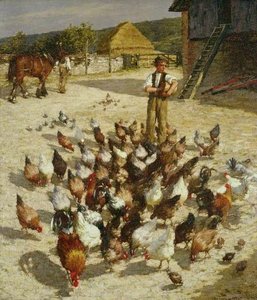
- Fetching Water from Lake Garda

 Buy print
 Send
Send Share
Share
 Details

 Download
 Similars
 X-Ray
X-Ray Diaporama
Fetching Water from Lake Garda


Hand Made Oil Reproduction
Hand-painted oil on canvas in your size and frame, made to order by our artists.




































 Read more
Pick from our preset sizes that match the artwork's original proportions.

You may enter your own dimensions to fit a specific frame or space. If your selected size does not match the original image's proportions, we will either crop the artwork or extend the painting with additional hand-painted elements. A digital mockup will be sent for your approval before production begins.
Please note that the on-screen preview does not reflect the actual cropping or extension. Only the mockup will accurately show the final composition.
While custom sizes are available, we recommend selecting a dimension from the predefined list to preserve the original proportions.
After order, ArtsDot.com team will email client for instructions and provide a mockup preview
Worldwide Delivery () in 3/4 weeks instead of standard 5 weeks. (1 July). No compromise on quality.

Free Worldwide Express Shipping

High-Quality Linen Canvas

Full Shipping Insurance

Customs Tax Refund Guarantee

True Color Matching Guarantee

60-Day Return Policy (Defects Only)

100% Money-Back Guarantee

Bulk Discount Offer
 Glass option is only available in size under 110 CM

Fetching Water from Lake Garda
Reproduction Medium
Reproduction Size
-


Total Price
-
Related Artworks


Artist Biography
Henry Herbert La Thangue: A Vision of Rural England
Henry Herbert La Thangue (1859 – 1929) stands as a pivotal figure in British realist landscape painting, particularly associated with the burgeoning Newlyn School movement. Born in Croydon, Surrey, his artistic journey began amidst the intellectual ferment of Victorian London, nurtured by connections to fellow artists like Stanhope Forbes and Frederick Goodall at Dulwich College. This formative period instilled a deep appreciation for observation and meticulous detail—qualities that would define his distinctive style. La Thangue’s formal training encompassed both Lambeth School of Art and the Royal Academy in London, culminating in a prestigious gold medal awarded in 1879. This recognition propelled him towards a scholarship at Jean-Léon Gérôme's atelier in Paris, exposing him to the Barbizon School’s ethos of plein air painting and fostering an enduring fascination with capturing the immediacy of natural light and atmosphere. Despite critiques from his instructor regarding the movement’s romantic tendencies, La Thangue absorbed its principles, blending them seamlessly with his own unwavering commitment to realism. Between 1881 and 1882, he undertook expeditions to Brittany and Donzère in the Rhône Valley, immersing himself in the landscapes of France—experiences that undoubtedly broadened his artistic horizons. Membership in the Royal Institute of Oil Painters solidified his position within the British art establishment, and he returned to England in 1886, exhibiting extensively across London galleries and regional venues. Notably, La Thangue’s involvement in a failed attempt to reform the Royal Academy fueled the formation of the New English Art Club (NEAC), where he championed a more democratic approach to artistic patronage and showcased his evocative depictions of rural life. His relocation to South Walsham in Norfolk marked a significant shift in his creative focus, evidenced by “Return of the Reapers” (1886)—a painting that deliberately incorporated photographic techniques, reflecting an interest in documenting reality with unprecedented accuracy. Settling in Bosham, Sussex, La Thangue continued producing monumental genre scenes—works that often provoked debate regarding their social commentary and artistic merit. Tate acquired "The Man With The Scythe" (1896), cementing his legacy as a chronicler of the British countryside. He was elected an Associate of the Royal Academy in 1898, ascending to Full Membership in 1912—a testament to his enduring contribution to British art history. Finally, he established Haylands Estate in Graffham, Sussex, where he continued painting prolifically until his death in 1929, leaving behind a substantial body of work that continues to captivate viewers with its masterful rendering of rural England and its profound engagement with the visual language of the era.
Henry Herbert La Thangue
1859 - 1929 , United Kingdom
Quick Facts
- Artistic Movement Or Style: Realist Landscape & Genre Painting
- Artists Or Movements Influenced By This Artist: ['Newlyn School']
- Artists Who Influenced This Artist:
- Jean-Léon Gérôme
- Bastien Lepage
- Dagnan Bouveret
- Date Of Birth: 1859
- Full Name: Henry Herbert La Thangue
- Nationality: English
- Notable Artworks:
- The Mulberry Tree
- Return of the Reapers
- The Man with the Scythe
- Place Of Birth: Croydon, United Kingdom
Related Articles
Pale Goldenrod Masterpieces: 10 Famous Paintings & Timeless Art Decor Ideas
Explore 10 famous paintings bathed in 'Pale Goldenrod' tones! From Van Gogh’s sunflowers to Monet’s haystacks, discover the stories & artistry behind these iconic artworks. Find museum-quality reproductions and curated decor ideas at ArtsDot.com.


Cultivating Visions: A Historical Journey Through Rural Landscapes in Art
Explore the rich history of rural landscape painting with ArtsDot. Discover Impressionist masterpieces, key artists & movements. Find your perfect serene artwork and bring nature's beauty home.

David Cox the Elder: Landscape, Light & the Romantic Vision of Rural England
Explore the captivating landscapes of David Cox the Elder, a pivotal figure in British Romanticism. Discover his masterful watercolour techniques, enduring legacy & find timeless art for your home at ArtsDot.

Impressionistic Landscapes: 10 Masterpieces That Changed Art & Decor
Journey into the heart of Impressionism! Explore 10 masterpieces by Monet, Renoir & Degas that revolutionized landscape art. Discover their stories, techniques & find museum-quality reproductions to elevate your home decor on ArtsDot.com.

Top 10 Masterpieces for Your Living Room: Iconic Paintings & Art Decor Ideas |
Transform your living room with iconic art! Explore our guide to the Top 10 most famous paintings – from Van Gogh's Starry Night to Mona Lisa. Discover artist stories, techniques & find museum-quality reproductions for timeless decor. Explore the full collection on