
 Preview
 Send
Send Share
Share
 Details
 Guide
Guide

 Download
 Similars
 X-Ray
X-Ray Diaporama
 Q&A
Q&A Stats
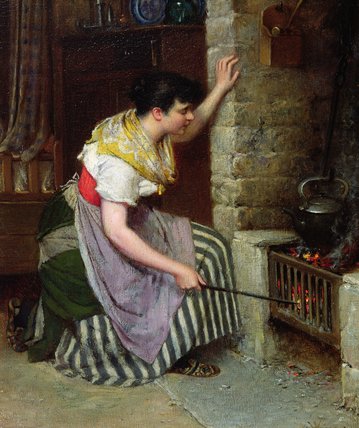
StatsBy The Hearth
 Read More
Giclée / Art Print
Museum-quality giclée or canvas print with fast production and flexible finish options. ( Buy Hand Made Painting Switch to Digital Image)




































Pick from our preset sizes that match the artwork's original proportions.

Type the width and the height you need, to fit your frame or your wall. A print can only be cut, never made bigger than the picture, so a size with a different shape loses a part of the image. We send you a digital mockup to approve before we print anything. The picture shown on this page does not show the real cut — only the mockup does.
Worldwide Delivery () in 2 weeks instead of standard 4/5 weeks. (15 November)

Free Worldwide Express Shipping

High-Quality Linen Canvas

Full Shipping Insurance

Customs Tax Refund Guarantee

True Color Matching Guarantee

100-Day Return Policy (Defects Only)

100% Money-Back Guarantee

Bulk Discount Offer
 Glass option is only available in size under 110 CM

By The Hearth
Giclée / Art Print
Reproduction Size
-


Total Price
$ 63
Related Artworks


Artist Biography
A Life Painted in Genre: The Story of Haynes King
Haynes King, born in the distant warmth of Barbados in December 1831, embarked on a journey that would lead him to become a notable figure within the Victorian art scene as an English genre painter. His early life offered little hint of the artistic path he would forge; it was only at the age of twenty-three that King made the pivotal decision to relocate to London and immerse himself in the world of art, enrolling at Leigh's Academy – later known as Heatherley’s – a respected institution for aspiring artists. This marked the beginning of his formal training, a period dedicated to honing his skills and developing a style that would ultimately capture the essence of everyday life with remarkable sensitivity. He quickly found a community within the Society of British Artists, becoming a member in 1864, and began exhibiting regularly, steadily gaining recognition for his evocative depictions of domestic interiors, landscapes, and coastal scenes populated by carefully observed figures.The Influence of Faed and the Rise to Prominence
King’s artistic development wasn't solely shaped by formal education; a significant influence came in the form of Thomas Faed, another genre painter whose work resonated deeply with King. The impact of Faed is discernible in King’s compositions – a shared focus on narrative detail and an ability to imbue seemingly ordinary moments with emotional weight. Between 1860 and 1904, King consistently showcased his talent at the prestigious Royal Academy, presenting forty-eight works that garnered critical attention and solidified his position within the art world. His paintings weren’t merely representations of scenes; they were windows into Victorian society, offering glimpses of middle-class life, rural customs, and the quiet dramas unfolding within homes and communities. He became known for capturing a particular mood – often one tinged with nostalgia or gentle melancholy – that resonated with audiences seeking art that reflected their own experiences and values.Themes and Techniques: A Master of Narrative Detail
King’s oeuvre is characterized by its diversity, yet unified by a consistent focus on narrative detail. Works like Looking Out (1860) invite viewers to become voyeurs into intimate moments, while The Laco Maker (1866) and A Water-Carrier, Rome (1869) demonstrate his ability to depict scenes from both British and continental life with equal skill. He wasn’t afraid to tackle more poignant subjects either, as evidenced by paintings like Homeless (1872), which offered a sympathetic portrayal of social hardship. His technique was meticulous, characterized by careful brushwork and a keen eye for light and shadow. He excelled at creating atmospheric interiors, using color and composition to draw the viewer’s attention to key elements within the scene and subtly convey emotional nuances. His paintings were not grand historical statements but intimate studies of human experience.Later Life and Legacy: A Tragic End
Despite his professional success, King's personal life was marked by a quiet solitude. He resided in Finchley Road, London, with fellow artist Henry Yeend King, and married Annie Elizabeth Wilson in 1866, though the union produced no children. Tragically, after months of declining health, Haynes King took his own life on May 17th, 1904, bringing a premature end to a promising career. While his death was a personal tragedy, it did little to diminish the value of his artistic contributions. His works continue to be admired for their skillful execution, narrative depth, and insightful portrayal of Victorian life. Paintings like Jealousy and Flirtation, now held in the collection of the Victoria and Albert Museum, serve as enduring testaments to his talent and provide a valuable window into the social and emotional landscape of 19th-century England. His ability to capture the subtleties of human interaction and imbue everyday scenes with meaning ensures that Haynes King remains a significant, if often overlooked, figure in the history of British genre painting.
Haynes King
1831 - 1904 , Barbados
Quick Facts
- Full Name: Haynes King
- Nationality: English
- Date Of Birth: 1831
- Date Of Death: 1904
- Place Of Birth: France
- Notable Artworks:
- Looking Out
- Homeless
- Latest Intelligence
- Artistic Movement Or Style: Genre painting
- Artists Who Influenced This Artist: ['Thomas Faed']


