Send
Send Share
Share
 Details
 Guide
Guide

 Download
 Similars
 Diaporama
 Stats
StatsDaphne


 Read More
Giclée / Art Print
Museum-quality giclée or canvas print with fast production and flexible finish options. ( Buy Hand Made Painting Switch to Digital Image)




































Pick from our preset sizes that match the artwork's original proportions.

You may enter your own dimensions to fit a specific frame or space. If your selected size does not match the original image's proportions, we will either crop the artwork or extend the image with a mirrored or solid-fill edge. A digital mockup will be sent for your approval before production begins.
Please note that the on-screen preview does not reflect the actual cropping or extension. Only the mockup will accurately show the final composition.
While custom sizes are available, we recommend selecting a dimension from the predefined list to preserve the original proportions.
Worldwide Delivery () in 2 weeks instead of standard 4/5 weeks. (23 September)

Free Worldwide Express Shipping

High-Quality Linen Canvas

Full Shipping Insurance

Customs Tax Refund Guarantee

True Color Matching Guarantee

100-Day Return Policy (Defects Only)

100% Money-Back Guarantee

Bulk Discount Offer
 Glass option is only available in size under 110 CM

Daphne
Giclée / Art Print
Reproduction Size
-


Total Price
$ 63
A Moment Frozen in Marble: The Eternal Flight of Daphne
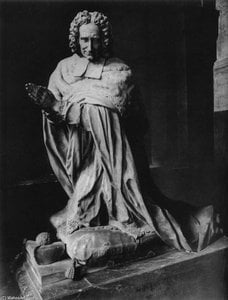
In the hallowed halls of the Louvre Museum, amidst the silent whispers of antiquity, stands a masterpiece that breathes life into cold stone. Guillaume Coustou the Elder’s “Daphne,” executed in 1713, is far more than a mere sculpture; it is a breathtaking capture of a single, desperate heartbeat. The work depicts the poignant climax of a Greek myth: the nymph Daphne, fleeing the relentless pursuit of the god Apollo, praying for escape only to find herself undergoing a harrowing metamorphosis into a laurel tree. Through Coustou’s masterful hands, the marble ceases to be inanimate, instead vibrating with the kinetic energy of flight and the profound terror of transformation.
The emotional resonance of this piece lies in its ability to balance theatrical grandeur with a delicate, haunting vulnerability. As viewers approach the sculpture, they are met with a composition defined by dynamic movement. Daphne’s body is angled diagonally, creating a sense of unstable, leaping motion that draws the eye upward through her twisting torso and outstretched limbs. Her hair flows wildly, mirroring the chaos of her flight, while the subtle tension in her musculature speaks to the sheer desperation of her plight. It is a work that invites the observer to feel the weight of her fear and the bittersweet tragedy of her loss of humanity.
The Mastery of Baroque Elegance and Technique
Coustou the Elder, deeply influenced by the dramatic legacies of Bernini, utilizes the Baroque style to push the boundaries of what marble can achieve. The technique employed here is nothing short of miraculous; the sculptor has achieved a remarkable realism in the rendering of drapery folds that seem to flutter with the wind of her escape. There is a sophisticated interplay between textures—the smooth, polished skin of the nymph contrasts beautifully with the more rugged, organic textures representing the emerging bark and leaves of the laurel. This tactile variety adds a layer of depth that makes the sculpture feel alive under shifting lights.
For the discerning collector or interior designer, "Daphne" offers an unparalleled sense of classical sophistication. The piece embodies the Louis XIV style, characterized by its refined elegance and monumental presence. Whether viewed as a study in light and shadow or as a centerpiece of mythological storytelling, the sculpture provides a profound focal point for any space dedicated to fine art. It serves as a testament to an era where art sought to bridge the gap between the divine and the mortal, making it an enduring inspiration for those who appreciate the intersection of strength, beauty, and the ephemeral nature of life.
Related Artworks


Artist Biography
A Legacy Forged in Stone: The Life and Art of Guillaume Coustou the Elder
Guillaume Coustou the Elder emerged from a Lyon steeped in artistic tradition, born in 1677 into a family that would leave an indelible mark on French sculpture. His lineage was one of creative prowess; his uncle, Antoine Coysevox, already enjoyed renown as a royal sculptor, and his brother, Nicolas Coustou, would also achieve significant acclaim. This familial environment provided the fertile ground for young Guillaume’s artistic development, instilling in him a deep understanding of traditional techniques and an appreciation for the power of form. While initial training likely occurred within this close-knit circle, Coustou's ambition led him to Paris and ultimately, a period of study – albeit unconventional – in Rome. Though he initially won the prestigious *Prix de Rome*, his independent spirit clashed with the rigid discipline of the French Academy there, prompting him to pursue his artistic vision outside its confines. This early act of defiance foreshadowed a career marked by both technical mastery and a dynamic energy that set him apart from many of his contemporaries.Bridging Baroque Grandeur and Rococo Grace
Coustou’s artistic journey unfolded during a fascinating period of transition in French art, poised between the dramatic intensity of the High Baroque and the emerging elegance of the Rococo style. His work beautifully embodies this shift. Early pieces reveal the influence of the Baroque – a grandeur of scale, emotional depth, and theatricality that echoed the reign of Louis XIV. However, Coustou didn’t simply replicate the past; he gradually incorporated elements of the burgeoning Rococo aesthetic, infusing his sculptures with a newfound lightness, grace, and playful ornamentation. This synthesis is particularly evident in his masterful handling of anatomy and composition. He possessed an exceptional ability to capture movement and emotion within the constraints of marble, imbuing his figures with a sense of life and vitality. While pinpointing direct influences proves challenging, the dramatic flair and technical virtuosity of Gian Lorenzo Bernini undoubtedly served as inspiration, particularly in Coustou’s ambitious undertakings.The Triumph of Marly: A Symbol of Royal Power
Coustou's career flourished under the patronage of the French monarchy, reaching its zenith with his commission to create the monumental “Horse Tamers” (Chevaux de Marly) in 1739 for the gardens of the Château de Marly. These sculptures are arguably his most celebrated achievement and remain iconic symbols of royal authority and artistic ambition. Originally intended to flank the entrance to the château, they depict powerful horsemen forcefully subduing wild horses – a potent allegory of royal control over nature and untamed forces. The sheer scale of these works is breathtaking, but it’s the dynamic energy captured within the marble that truly captivates. Each muscle strains with effort, each expression conveys determination, and the entire composition exudes a sense of raw power. Beyond the “Horse Tamers,” Coustou's portfolio includes striking portraits such as his marble sculpture of Louis XIII, capturing the regal presence of the king with dignified precision, and the exquisitely detailed Bust of Samuel Bernard, showcasing his skill in portraiture. His neoclassical marble statue of Mars, the Roman god of war, further demonstrates his versatility and mastery of classical forms.A Lasting Influence on French Sculpture
Guillaume Coustou the Elder played a pivotal role in shaping the landscape of 18th-century French sculpture. His works epitomized the opulence and grandeur of the French court, reflecting the artistic tastes of an era defined by extravagance and refinement. The “Horse Tamers,” in particular, transcended their original function as garden ornaments to become enduring symbols of royal power and national pride. Coustou’s ability to bridge the gap between the Baroque and Rococo styles proved profoundly influential on subsequent generations of sculptors, including his own son, Guillaume Coustou the Younger, who continued the family tradition and further developed their artistic legacy. His emphasis on dynamic composition, anatomical accuracy, expressive detail, and a masterful understanding of marble ensured that his influence would resonate long after his death in 1746. He left behind not merely sculptures, but testaments to an era’s ambition and artistry – works that continue to inspire awe and admiration centuries later.
Guillaume Coustou the Elder
1716 - 1777 , France
Quick Facts
- Artistic Movement Or Style: Baroque & Rococo
- Artists Or Movements Influenced By This Artist: ['Guillaume Coustou the Younger']
- Artists Who Influenced This Artist: ['Gian Lorenzo Bernini']
- Date Of Birth: November 29, 1677
- Date Of Death: February 22, 1746
- Full Name: Guillaume Coustou the Elder
- Nationality: French
- Notable Artworks:
- Horse Tamers
- Louis XIII
- Bust of Samuel Bernard
- Statue des Mars
- Place Of Birth: Lyon, France
Related Articles

The Enduring Form: Exploring Themes & Techniques in Sculpture Across Historical Periods
Explore the rich history of sculpture from ancient masterpieces to contemporary innovations. Discover key techniques, influential artists & investment potential for discerning art collectors.
The Enduring Allure of Marble in Art History: From Classical Sculpture to Modern Abstraction
Explore the captivating history of marble sculpture from ancient Greece to modern art. Discover renowned artists like Canova & Michelangelo, carving techniques, and investment insights at ArtsDot.

Bronze Age to Modern Masters: 10 Sculptures That Redefined Art | ArtsDot
Journey through art history with 10 legendary bronze sculptures – from Michelangelo's David to Rodin’s Thinker. Explore the stories, techniques & timeless beauty of these masterpieces. Find museum-quality reproductions & elevate your home decor on ArtsDot.com.

Bronze Sculptures That Defined Art History | ArtsDot
Journey through art history with our Top 10 bronze sculptures! Explore masterpieces by Rodin, Michelangelo & more. Discover stories behind iconic statues and find museum-quality reproductions for your home decor at ArtsDot.com.

The Enduring Form: Sculpture Across History, Technique & Emotional Resonance
Explore the rich history of sculpture with ArtsDot. Discover key techniques, influential artists & investment potential for discerning collectors. Expert insights into valuing and collecting timeless masterpieces.